MUSEUMS AND EXHIBITIONS

|
The Museum of the Romanian Peasant,
|
The Village and Folk Art Museum,
|
|
|
|
|
|
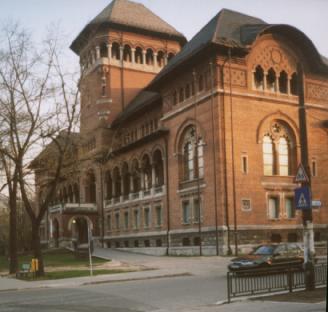 The Museum of the Romanian Peasant is one of the most important sights in
Bucharest. In 1996 it was the winner of the European Museum of the Year Award.
The Museum of the Romanian Peasant is one of the most important sights in
Bucharest. In 1996 it was the winner of the European Museum of the Year Award.
It houses 18,000 pieces of pottery from different regions of Romania. The old
ceramic item existing in this museum bears the inscription 1746. There are also
20,000 objects representing highly valuable folk costume pieces from all over
the country and 10,000 carpets, decorative towels and wall hangings, not to
mention glass icons, furniture, magnificent "troite" (crosses placed at the
edges of villages or at crossroads) as well as films and photos of rural life
customs.
There is also a timber church (without its roof) inside one of the galleries.
The foreign countries collection of traditional objects is original and highly
valuable, too.
We strongly recommend that you visit the Museum of the Romanian Peasant.
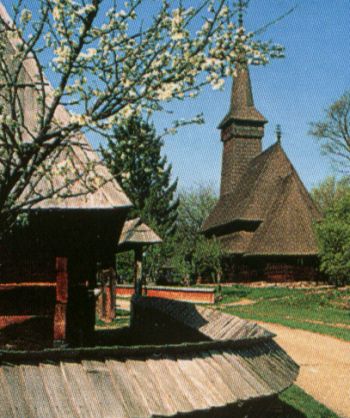
The Village and Folk Art Museum
The sayings" Home, sweet home" and "My home is my castle" are well
illustrated by the Romanian peasant homes that you can see at The Village and
Folk Art Museum (the second most important in Europe after the one in
Stockholm).
Everything in this open-air museum is original. The peasant homes and all the
things in them were brought piece by piece from all the regions of Romania. The
houses in Dobrogea and the Danube Delta are not high and have thatched roofs.
Those in Transylvania are quite tall and made of wood. Their verandahs are full
of flowers and climbing plants.
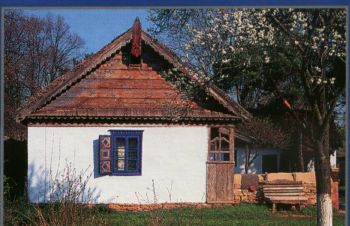
When you go into the houses you can admire the Romanian
traditional folk costumes, the old pieces of furniture and the hand-made carpets
on the walls and floors.
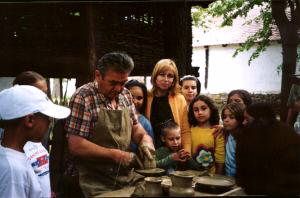 We strongly recommend that you visit this wonderful museum.
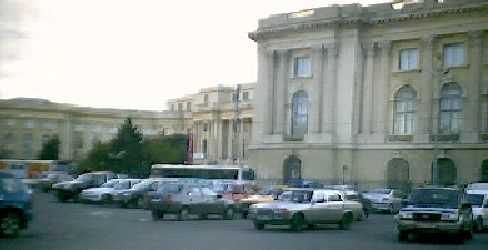 The National Art Museum (housed by the
Royal
Palace) is Romania's largest and most representative gallery of European,
Oriental and national art. Here you can admire paintings by Italian,
German, Spanish, Flemish, Dutch and French masters of the 14th - 18th centuries.
There are also valuable collections of Chinese jade carvings and Japanese
prints.
The National Art Museum (housed by the
Royal
Palace) is Romania's largest and most representative gallery of European,
Oriental and national art. Here you can admire paintings by Italian,
German, Spanish, Flemish, Dutch and French masters of the 14th - 18th centuries.
There are also valuable collections of Chinese jade carvings and Japanese
prints.
The Gallery of National Paintings contains works by N. Grigorescu, I.Andreescu, St. Luchian, N. Tonitza and other Romanian masters. There are also several sculptures by Brancusi, a Romanian sculptor who is world-famous.
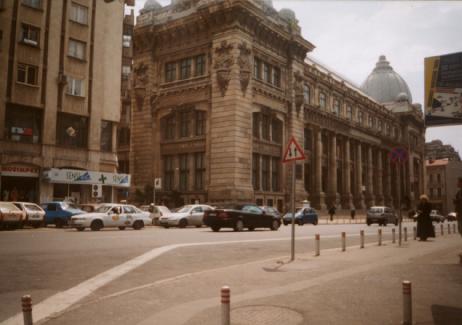 The
National History Museum was built between 1896-1900. It
is opposite the Savings' Bank Palace.
The
National History Museum was built between 1896-1900. It
is opposite the Savings' Bank Palace.
If you like history and archeology you should go and visit it. You can find out
many interesting things here. You can also admire Romania's archeological
treasure. The jewels are terrific.
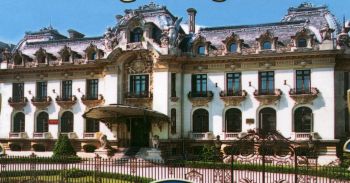
George Enescu Museum was built in the early 20th century, in the French baroque style by the architect Dimitrie Berindei, for Prince Cantacuzino. The last owner of this house which is now a museum was George Enescu's wife who was a member of the Cantacuzino family.
George Enescu lived between 1881 and 1955. He enjoyed world fame as a composer, violinist and conductor. He is looked upon as Romania's greatest musician.
This museum houses collections illustrating the history of music composition and documents from the life of the greatest Romanian musician George Enescu.
It is one of the first natural history museums established in the world. There are 30,000 items including unique and controversial skeletons of Deinotherium Gigantissimus, 15 feet high.
Facts collected by the 6th grade students
Photos by the 6th grade students and Andreea S.
Many thanks to Bianca I.