Introduction to TCP/IP
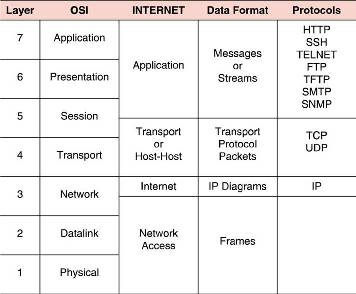
TCP/IP (Transmission Control Protocol/Internet Protocol) is an entire suite of protocols used to provide communication on a variety of layers between widely distributed different types of computers. TCP/IP are just two of the protocols contained within the family of protocols more properly known as the Internet Suite of Protocols. It was developed in 1970 by the DARPA (Defense Advanced Research Projects Agency) in order to be able to inter-operate and communicate between different computers. TCP/IP became available to the universities and agencies and has become the de-facto standard for communication between heterogeneous networked computers. In a small department several computers can use TCP/IP protocol on the same LAN. IP component provides routing from the department to the enterprise network, then to the regional network and then to the global internet. The OSI model and TCP/IP model are functionally equivalent, up through the transport layer. The OSI model continues with the session, presentation and applications layers, the TCP/IP model has only the application layer remaining.
The IP protocol is the most commonly used protocol. It is used on the World Wide Web. All the browsing, e-mailing, etc. is carried by IP. Most currently used is version 4. However Internet Engineering Task Force has created an updated version known as IPv6 because IPv4 is hitting its limits.
TCP provides connection-oriented, reliable data transmission. It is responsible for verifying the correct delivery of data from client to server. Data can be lost in the intermediate network. TCP adds support to detect errors or lost data and to trigger retransmission until the data is correctly and completely received.
I consider this topic significant because I have a network set up at home and it�s really important to understand how TCP/IP works if you work with networking. I think this project is an opportunity to get more educated about TCP/IP.
Here are some additional online sites for further information on TCP/IP: