IMPACT ISSUES REFERENCES ENTERTAINMENT*
There are many different scientists and companies that work with cancer drug discovery, yet I noticed that most of them had a similar process. The long process seems to be painstaking and tedious, yet scientists continue to persevere because cancer affects many people today. Since many need cancer treatment, those who can create the newest and most improved drug will yield not only satisfaction, but PROFITS.
The Process
1. Research
Years and years of research are needed to create potential cancer drugs.
2. Pre-Clinical Testing
Continuous in vitro (use of an artificial environment) screenings are needed to test the efficiency and effects of the potential drug.
3. Clinical Trial Testing
Once proven to have some beneficial results, animal testing is used. Generally, mice are injected with human tumors and the drug is put to the test using in vivo (use of actual living organisms) screenings.
4. Regulatory Approval
After much screening, tests, and modifications, the potential drug may be approved for human testing. If results prove that the drug is efficient and safe for cancer patients, the drug is mass produced and presented to the public.
The Products/Services
Screening
1. High-throughput screening (HTS)
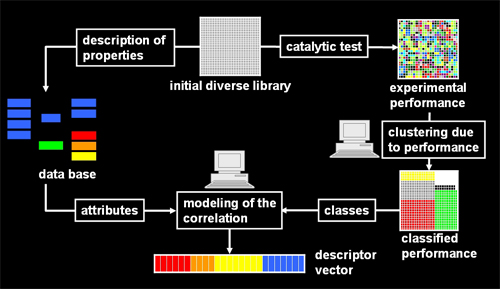
In drug discovery, HTS is the scientific method of collecting mass data to determine exactly which chemicals are needed for a specific target.
2. Structure-activity relationships (SAR)
SAR is the process by which scientists will revise a potential drug or chemical in order to increase its efficiency to a particular �target� and to decrease its efficiency to unwanted targets.
3. Natural resources and combinations
Scientists today are continuously discovering �new� cancer treatments in our very own rain forests and other natural environments. Some scientists are even trying to create new cancer drugs by combining previous drugs.
4. Virtual high-throughput screening
VHTS involves the use of computer models to zone in on a specific target.
Products
1. Protein Kinase B (PKB)
PKB is a natural enzyme that prevents cellular suicide. Many cancer cells have allowed the transfer of the PKB enzyme to its surface, resulting in tumors. Professor Jeremy Tavar� and associates of ProXara Biotechnology Limited claim to have found a �drug-like compound� that stops PKB from helping the cancer cells, forcing the cancer cells to self-destruct. The drug will primarily be used to target lung cancer, but will most likely be expanded to other typed of cancer cells. The drug took about five years of research to develop.
2. Gossypol
Gossypol is a drug created from cottonseed oil and it was once used as a male contraceptive. Most recently, Dr. Liang Xu and his team from University of Michigan discovered that gossypol helps small molecule inhibitors of Bcl-2/xL to make cancerous cells more susceptible to self-destruction itself, chemotherapy, and radiotherapy. More research is required, but the drug is showing signs of success.
3. Tamoxifen
Tamoxifen was also originally developed as a female contraceptive, but is now one of the most effective breast cancer drugs. Tamoxifen basically block the necessary supply of estrogen to cancerous cells in the breast.
4. Combination drugs work better together
Studies have shown that two drugs work even better together. Using a drug that boosts the immune system with another drug that cuts off supplies to cancerous cells may increase the human body�s response to treatment.
Ex: Interferon alpha (immune system booster) + Nexavar (stops supply) = combination cancer drug