


The samples we used are monodisperse colloids made of polystyrene
spheres suspended in
water. In order to avoid sedimentation, we used a mixture of water and
heavy water with a weigh fraction of about 0.5. The diameters of the
two colloids we used are
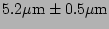 and
and
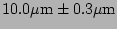 , whose polydispersity
is negligible. The diameters are quite large, since NFS gives
advantages with respect to classical LS for small wavevectors.
, whose polydispersity
is negligible. The diameters are quite large, since NFS gives
advantages with respect to classical LS for small wavevectors.
The colloids we measured are held in a cell with plane parallel
windows. The diameter is about
 ,
since the sample and the beam intensity must be uniform on a
length
,
since the sample and the beam intensity must be uniform on a
length  , where is given by Eq.
(3.64). The thickness is
about
, where is given by Eq.
(3.64). The thickness is
about
 . We selected the tickness and the particle
concentration in order to have a suitable attenuation of the
main beam, about 1%. For ONFS measurements, the thickness of the cell
and the volumetric particle density are enough to fulfill
Eq. (3.55).
. We selected the tickness and the particle
concentration in order to have a suitable attenuation of the
main beam, about 1%. For ONFS measurements, the thickness of the cell
and the volumetric particle density are enough to fulfill
Eq. (3.55).
The liquid is held between the two windows by an O-ring; the parallelism between the windows is not critical, nor the optical quality of them. Since the measured scattered light comes from different regions of the sample, we must provide that it is homogeneous. This implies that the thickness must be uniform, but an optical quality allignment is far beyond what is needed.