| ADDRESS AND PHONE NUMBER: |
| LEGAL SERVICES BY DAVID W. NEW |
| EDUCATION AND BAR MEMBERSHIPS: |
| 6701 DEMOCRACY BLVD. SUITE 300 BETHESDA, MARYLAND 20817 301-468-4905 |
| 1989: Juris Doctor (JD) degree from the Georgetown University Law Center in Washington, D.C. 1978: B.S. degree in Accounting and a B.A. degree in Economics from Humboldt State University in Arcata, California. Member Maryland Bar (1989) and the Washington, D.C. Bar (1991), the Fourth Circuit Court of Appeals, the District of Columbia Circuit Court of Appeals and the American Bar Association. |
| HOW MAY I SERVE YOU? |
| BANKRUPTCY LAW: I provide legal services for personal or business bankruptcy. Will file Chapter 7, 11 or 13 bankruptcy cases in Maryland or Washington, D.C. More Information COPYRIGHT AND TRADEMARK LAW: I provide legal services in intellectual property rights and all matters related to intellectual property whether in print, electronic or on the Internet. BUSINESS LAW: I provide legal services in all matters related to business law for issues concerning a corporation, a partnership or a sole proprietorship. More Information CONSTITUTION LAW: My practice is concentrated in cases involving church/state law, the separation of church and state, the right to the freedom of religion for individuals, religious groups and other related issues. |

|
 |
|
 |
 |
| "Congress shall make no law respecting an establishment of religion, or prohibiting the free exercise thereof; or abridging the freedom of speech, or of the press, or the right of the people peaceably to assemble, and to petition the Government for a redress of grievances." The First Amendment to the Bill of Rights. Interesting Facts About The First Amendment. The First Amendment has 45 words. It was first proposed by James Madison in its embryonic form on June 8, 1789. The First Amendment was sent by Congress to the states for ratification on September 25, 1789. Originally, the First Amendment was third on a list of 12 amendments sent by Congress to the states. The first two amendments did not pass. Only the third to the twelfth amendments passed. These ten amendments became known as the Bill of Rights. The Bill of Rights was ratified on December 15, 1791. |
| ALL RIGHTS RESERVED. CONTENTS MAY NOT BE REPRODUCED IN WHOLE OR IN PART IN ANY FORM WITHOUT THE WRITTEN CONSENT OF DAVID W. NEW. |
 |
| 2002-2005 DAVID W. NEW |
   |
| COPYRIGHT |
| Would you like to read a good introduction to the New Testament? Read my booklet and you will: "The New Testament for Beginners" |
| The material posted on this website is for information purposes only and does not constitute legal advice. Further, the act of sending an email message does not create an attorney-client relationship. |
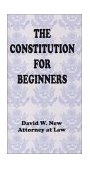
| Would you like to understand the U.S. Constitution? Read my booklet and you will: "The Constitution for Beginners" |
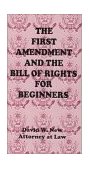
| Would you like to understand the First Amendment? Read my booklet and you will: "The First Amendment and the Bill of Rights for Beginners" |
 |
|
 |
 |
 |
| GOOD LINKS Visit the web's No. 1 legal web site. It is full of free downloads and subscriptions: Visit the official web portal for the U.S. Government: |
 |
|
|
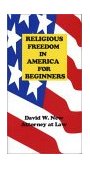
| Would you like to understand why America has more religious freedom than any other country in the world? Read my booklet and you will: "Religious Freedom in America for Beginners" |
|
 |
 |
 |
 |
| Would you like to understand how the Ten Commandments and monotheism became the foundation for American law and government? Read my booklet and you will: "The Ten Commandments for Beginners" |
|
|
|
 |
|
 |