| BANKRUPTCY INFORMATION FOR CHAPTERS 7, 13 AND 11 BANKRUPTCY |
| CHAPTER 7 BANKRUPTCY INFORMATION: Bankruptcy for an individual should be the last possible option to consider. A bankruptcy filing can be on your credit report for 10 years. In addition, obtaining future credit will be difficult. Before proceeding with a bankruptcy, you should consider contacting a consumer credit counseling service to see if you can pay off your debts under an agreed upon plan. However, if you need a "fresh start" financially speaking, then a Chapter 7 bankruptcy may be the best choice. Most debts will be discharged in a Chapter 7 proceeding. An individual filing Chapter 7 bankruptcy is asking the Bankruptcy Court to discharge his/her debts. A discharge is a legal release from most of your debts. When you file Chapter 7, the Bankruptcy Court will appoint a Chapter 7 Trustee. The Trustee will liquidate your assets and distribute the proceeds to your creditors. In many cases, the Trustee will not find any assets to liquidate and distribute. These cases are called "No Asset Cases." Most personal bankruptcy filings in the United States are "no asset cases." An individual filing for bankruptcy is known as a "Debtor." The Debtor is allowed to keep some property. The amount of property you are allowed to keep depends upon the state you live in. A Debtor can even keep a home providing the Debtor has little or no equity in the home and the Debtor is current on the mortgage/Deed of Trust. If you are behind in your mortgage/Deed of Trust payments, and you cannot get caught-up with your lender, a Chapter 13 bankruptcy may be the best option. A corporation going out of business can use the Chapter 7 bankruptcy process to terminate the business. Even a corporation that was profitable can use the Chapter 7 bankruptcy process to liquidate the business. The Chapter 7 bankruptcy process offers a corporation a quick procedure with legal notice nationwide to any and all creditors of the termination of the business. |
| CHAPTER 13 BANKRUPTCY INFORMATION: Chapter 13 bankruptcy is for individuals who are behind in their mortgage/Deed of Trust payments for their home. Unlike Chapter 7, a Chapter 13 Debtor surrenders no property to a Trustee for liquidation. The Chapter 13 Debtor proposes a Chapter 13 Plan. The Chapter 13 Plan is a financial plan that states how you will cure any arrearage on your home mortgage/Deed of Trust. A Chapter 13 bankruptcy can be used to cure an arrearage for other secured creditors like your car. The Plan may last from 3 to 5 years. The Debtor must have sufficient income to make the current mortgage/Deed of Trusts payment plus an amount extra to cure the arrearage over a 3 to 5 year period. Another advantage of a Chapter 13 bankruptcy is the nature of the discharge. There are many kinds of debts that do not go away in a Chapter 7 bankruptcy. These debts may be discharged in a Chapter 13 bankruptcy. A corporation cannot file Chapter 13 bankruptcy. A corporation may only file Chapter 7 bankruptcy or Chapter 11 bankruptcy. |
| CHAPTER 11 BANKRUPTCY INFORMATION: Chapter 11 bankruptcy is intended primarily for corporations. A Chapter 11 bankruptcy is a very complex and expensive process. An individual may file Chapter 11 bankruptcy. An individual should only file Chapter 11 bankruptcy if the individual's debt exceeds the limits for a Chapter 13 bankruptcy. "As of April 1, 2001, to qualify as a Chapter 13 debtor, an individual must owe noncontingent, liquidated secured debt of less than $871,550 and noncontingent, liquidated, unsecured debt of less than $290,525. The debt limits are updated every three years." See Ellen Cosby, "Evaluation of Chapter 13-The Trustees Perspective.", Vol. 35, The Maryland Bar Journal, p. 32 (2002). This debt limit for Chapter 13 bankruptcy applies to all jurisdictions in the United States. There are no debt limits in Chapter 7 bankruptcy or Chapter 11 bankruptcy. I hope you found this information useful. For more information contact: David W. New, Esq. 6701 Democracy Blvd. Suite 300 Bethesda, MD 20817 301-468-4905 |

|
| ALL RIGHTS RESERVED. CONTENTS MAY NOT BE REPRODUCED IN WHOLE OR IN PART IN ANY FORM WITHOUT THE WRITTEN CONSENT OF DAVID W. NEW. |
| COPYRIGHT 2002-2005 DAVID W. NEW |
 |
 |
| The material posted on this website is for information purposes only and does not constitute legal advice. Further, the act of sending an email message does not create an attorney-client relationship. |
 |
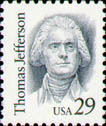
Thomas Jefferson (1743-1826) A FAMOUS BANKRUPTCY Thomas Jefferson had financial difficulties during most of his lifetime. Toward the end of his life, he effectively went bankrupt. Bankruptcy law as we know it today did not exist in Jefferson's time. Congress passed the first bankruptcy law in 1800. This law however was repealed in 1803. Congress did not pass another bankruptcy law until 1841. Jefferson died in 1826.Thus, when Jefferson "effectively" went bankrupt in his later years there was no federal bankruptcy law in existence. Jefferson could not for example "file" a Voluntary Petition in bankruptcy which is done today. In addition, the bankruptcy law of 1800 was for the benefit of the creditor, not the debtor. The bankruptcy law at that time did not offer the debtor any protection from creditors unlike today. Jefferson can be said to have "effectively" went bankrupt in the sense that he had to liquidate some of his assets to pay his creditors. All of his debts however would not be paid off until after his death with the foreclosure of Monticello and the liquidation of other assets. However, even in hard times, a silver lining can come with the trials of life. Here is a short but amazing story of a famous bankruptcy. In 1800, Congress decided to establish a library for the members of Congress and the public to use. On August 24, 1814, the British set fire to the U.S. Capitol where the library was located. The library was looking for some new books to rebuild its collection. Jefferson needed to sell some of his most precious possessions to pay off his creditors. He decided to sell his world class library to Congress. On January 30, 1815, Congress approved the purchase of Jefferson's library for $23,950.00, a very large sum of money at the time. Jefferson sold 6,487 volumes to Congress. It took 10 wagon loads to carry Jefferson's books from Monticello to Washington City. These volumes formed the core of a great library we know as the Library of Congress. Even though the Library of Congress was founded in 1800, Jefferson is considered to be the founder because of his collection. Sadly, a great fire on Christmas Eve in 1851 destroyed two thirds of Jefferson's collection. However, all the volumes have been replaced except for 900 books. |
 |
 |
|
| EMAIL ME |
 |
| BANKRUPTCY COURT PHONE NUMBERS AND WEB PAGES: MARYLAND 301-344-8018 www.mdb.uscourts.gov/ WASHINGTON, D.C. 202-565-2500 www.dcb.uscourts.gov/ |
| BANKRUPTCY LINKS |
 |
| Would you like to understand why America has more religious freedom than any other country in the world? Read my booklet and you will: "Religious Freedom in America for Beginners" |
 |
| Would you like to understand the First Amendment? Read my booklet and you will: "The First Amendment and the Bill of Rights for Beginners" |
|
 |
| Would you like to understand the U.S. Constitution? Read my booklet and you will: "The Constitution for Beginners" |
 |
|
|
| Would you like to understand how the Ten Commandments and monotheism became the foundation for American law and government? Read my booklet and you will: "The Ten Commandments for Beginners" |
 |
|
 |