Carbon Dioxide as a Byproduct of Energy Production (Combustion)

| Type of Fuel | Reason for Combustion | ||
|
Production of electricity. Also for cooking and warming
homes.
|
||
|
Fuel for transportation
|
||
|
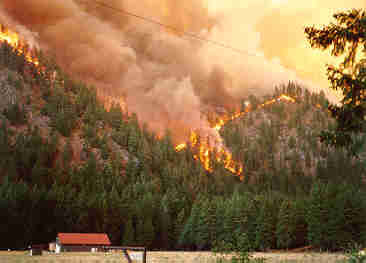
Fuel for Forest Fires
|


There are a number of web sites that discuss the effects of pollution caused by the release of large amounts of CO2. The web site http://cdiac.esd.ornl.gov/trends/emis/em_cont.htm contains a large number of tables and text which explains why there is so much CO2 in the atmosphere and how much more will be present in the future.
The CO2 in the atmosphere can interact with the environment in different ways.
|
Location |
Description of the Interaction |
Effect on the Environment |
| Plants | Plants combine CO2, H2O, and light energy to form plant mass. | Solar light energy is converted to chemical energy for animals. |
| Oceans and Lakes | Carbon dioxide dissolves in H2O (properties). | Marine organisms use dissolved CO2 to form shells. |
| Atmosphere | Carbon dioxide traps heat that is given off from sunlight. | Temperature on the earth increases and weather changes. |
Global Warming
Carbon dioxide can trap heat from the sun.
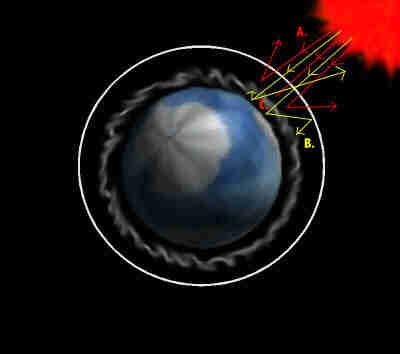
While there are other gases that can also trap solar heat, carbon dioxide by far traps the most heat. When the heat is trapped, the earth warms up and global weather patterns are changed. These changes are described in a federal government report released in June of 2000 called 'Climate change in America'. According to the report, continued release of CO2 at current levels will result in:
 |
Alpine meadows, many coastal wetlands, and barrier islands will disappear. |
|
The demand for air conditioners will increase because cities will be hotter and more humid. |
|
Ski runs will be scarcer. |
|
Scientists will have to combat an increase in insect-borne diseases such as malaria. |
|
The water levels in the Great Lakes will decline. |
|
Entire ecosystems might shift northward as temperatures increase. |
|
Coastal cities will face rising sea levels and possible flooding. |
Project Leap- IDEM
The Indiana Dept. of Environmental Management invites students in grades 3 - 12 to investigate air pollution in Indiana.
http://www.in.gov/idem/your_environment/education/leap/
Other Classroom Activities
Students and teachers can use this link to calculate how much carbon dioxide they contribute per year to global warming. http://www.carbonfootprint.com/calculator.html
Air pollution word search with 25 words associated with air pollution http://www.tceq.state.tx.us/assets/public/assistance/education/air/search_puzzle.pdf
A classroom play where middle school age students assume the role of various atmospheric pollutants- http://www.tceq.state.tx.us/assets/public/assistance/education/air/awful8.pdf