| STRINGS |
| String instruments have four strings. These strings are stretched between the tailpiece and the tuning pegs. Each string is tightened by turning that strings tuning peg. Sound is produced on all string instruments by bowing or plucking the string causing it to vibrate. It is the strings vibration that causes the instrument to produce sound. When the string vibrates the body of the instrument vibrates and the sound is projected through the f shaped holes found on each instrument. |
| VIOLIN |
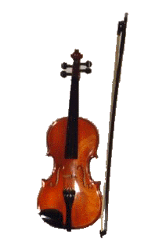 |
| The Violin is the soprano (highest) instrument of the string family. It is the melody instrument of the family. In the Orchestra there are more Violins than any other instrument. The Violin is held between the chin and the shoulder when played. |
| VIOLA |
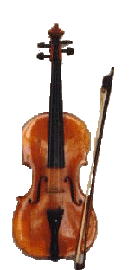 |
| The Viola is bigger than the violin and is the alto (medium high) instrument of the string family. It is used to accompany the violin and occasionally has the melody. The Viola is held and played the same way as the violin. |
| CELLO |
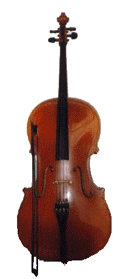 |
| The Cello is the tenor (medium low) instrument of the string family. It has a large powerful tone and is also used to accompany the violin. The Cello provides a warm sound and adds power to any string section. The Cello stands up straight and is played by placing the instrument between the legs. The Cellist needs to be seated when performing on this instrument. |
| DOUBLE BASS |
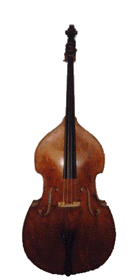 |
| The Double Bass is the largest and lowest of the string family. Because of it's size, the Bassist needs to stand when performing on this instrument. The Bass provides the low sound of the string family and acts as the foundation for the orchestra. |