| PERCUSSION |
| The Percussion family offers the rhythmic drive of the orchestra and ads excitement to the music. Sound is produced on percussion instruments through the striking of a beater to the surface of the instrument causing a vibration. The beater can be either your hand or a stick. There are two types of percussion instruments which are Pitched percussion (NOTES) and Non-pitched percussion (NO NOTES). |
| SNARE DRUM |
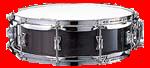 |
| The Snare drum is one of the popular non-pitched percussion instruments. The name Snare comes from the metal wires attached to the bottom of the drum that vibrate when the top of the drum is struck. The snare drum has a unique sound and can be heard over any orchestra. |
| BASS DRUM |
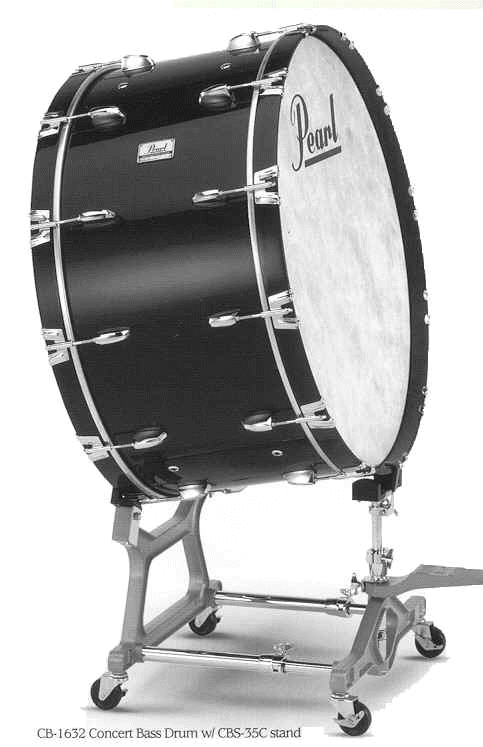 |
| The Bass drum is a large low sounding non-pitched drum that assists the low foundation of the orchestra. This instrument is played with sticks that have felt balls on the end. |
| CYMBALS |
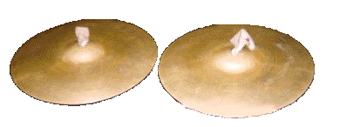 |
| The Cymbals are two flat, brass plates that are hit together to produce a crash - we say a cymbal crash. Cymbals are non-pitched and come in many sizes from small to very large. They can also be attached to a stand and struck with sticks. |
| AUXILARY PERCUSSION |
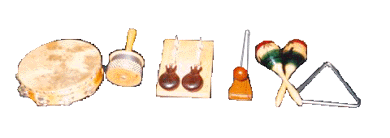 |
| There are many other hand percussion instruments used in the orchestra to ad sound effects and nuances. Some of these auxilary percussion instruments are tambourines, triangles, maracas, sleighbells, windchimes, cowbells, cabasa, and claves. |
| TIMPANI |
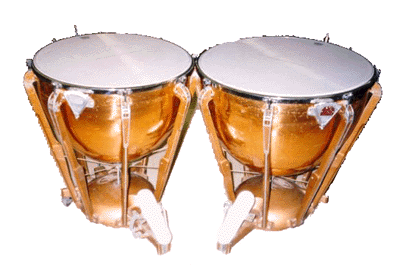 |
| The Timpani (or Kettle Drums) are pitched percussion instruments. They are usually found in pairs - one pitched lower than the other. Timpanis are usually made of copper with a large head across the top. You tune the head by means of the tuning pedal that activates 6 rods. |
| XYLOPHONE |
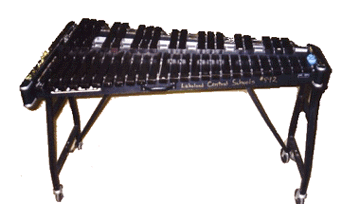 |
| The Xylophone is a pitched percussion instrument. The Xylohone is usually confused with the glockenspiel. The Xylophone, arranged like a keyboard, uses wooden bars where the glockenspiel uses metal. You play the xylophone by striking the bars with a felt or wooden stick. |