| BRASS |
| The Brass family ads power and strength to any orchestra. Sound is produced on brass instruments by buzzing the lips on a mouthpiece causing the air to vibrate through the pipes and out of the bell. Together the vibration of the lips, air, and the brass instrument itself produces that unique rich sound you hear. Brass instruments also use valves to change the pitches. Valves are devices on brass instruments that allow the instruments to play chromatic notes by increasing or decreasing the length of the tubing. |
| TRUMPET |
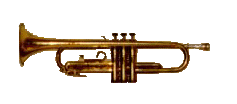 |
| The Trumpet is the smallest and highest of the brass orchestra instruments. When buzzing the mouthpiece on the trumpet the lips are shaped the same as saying the word "Dim," with a small opening in the center for the air to pass. |
| TROMBONE |
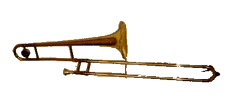 |
| The Trombone is the only brass instrument that does not have valves. Instead, moving the slide to increase or decrease the length of the tubing allows the pitches to change. The Trombone is bigger then the Trumpet so the sound will be lower. |
| FRENCH HORN |
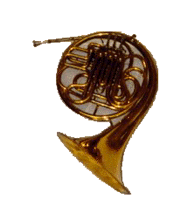 |
| The French Horn uses a different type of valve then the Trumpet. The "Rotary Valves" on the French Horn are flat and when pressed, a small string wrapped around a pulley opens up one of the three lengths of tubes to raise and lower the pitches. |
| TUBA |
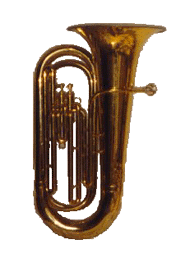 |
| The Tuba is the largest and lowest of the brass family. Along with the String Bass, the Tuba provides the low foundation for the rest of the orchestra. |