|
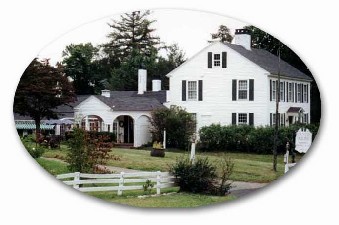
Killingworth, the
birthplace of Yale University, was founded in 1667. It was originally
called Kenilworth, after the township in Warwick, England. By corrupt
spelling, or mispronounciation, the present name came to be adopted. Killingworth
remains the only town so-named in the United States. The Country Squire
was built in 1794, home to Squire Nathan Evarts. In 1991, we, too, came
to call The Country Squire our home.
|

|
Tomorow Became Yesterday:
Born December 25, 1912, artist and author Ruth Warner Robinson was one
of the 9 Warner siblings who called The Country Squire their home in the
1920's. The Warners were the last family to homestead the 100-acre farm
prior to it becoming an inn. Among Robinson's available works and words
is "Tomorrow Became Yesterday", written about life at The Country Squire
in the early 20th Century.
|

|
The Country Squire
Wagon: Appropriately, the family car in which you'd take that infamous
Sunday afternoon drive to this charming old country inn was a Country
Squire wagon. This classic car was among the finest of the "woodies",
providing luxurious cruising while still accomodating the kids. Local
lore is that the Country Squire wagon was names for This Country Squire.
Got one you'd like to donate to the cause?
|

|
Waverly-Schumacher
Designs: This famous textile design house produced a fabric and companion
wallpaper entitled "The Country Squire" in 3 "colorways", as they are
called in the trade. Among the vignettes featured are signage for the
Old Lyme Creamery, the Clinton Silversmiths, and Westbrook Road - "3 miles",
leaving little doubt about exactly what Country Squire the designers were
dreaming about!
|
|
|
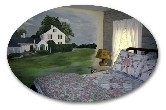
The
Flying Tiger Paints: Among the original works exhibited at The Country Squire
are those of WW2 fighter pilot Malcolm Thompson. When naval operations transported
him to the Mediterranean, Thompson had ample opportunity to indulge in Europe's
lavish repositories of fine art. By the time his stint with the Navy ended,
Thompson had concluded that art was life to him. Studies in Paris and the
Art Student's League developed the largesse of his ability which is amply
displayed among The Country Squire's fine art collection. |
|
"The
Birds of Killingworth": That giant of American classicism, William Wadsworth
Longfellow, wrote a poetic diatribe against the willful destruction of those
guardians against pestilence, the birds. Part of the collection Tales of
a Wayside Inn, the poem is appropriately important to environmentally conservative
Killingworth, blessed habitat to bird and birder alike, and to this current
wayside inn, where Audobon contributor Ed Ricciuti's book Backyards are
for the Birds is available for purchase. |