| | Index 9 | | DEWs | | Space | | Lasers | | Scalar | | Microwaves | | Antennas | | Verse | | PDFs | | EMF | | Exit |

 |
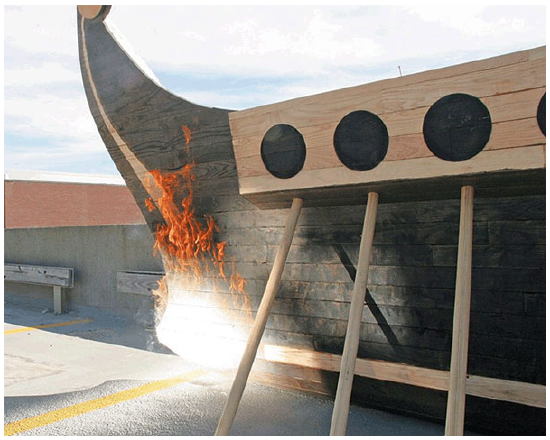
.: DIRECTED ENERGY WEAPONS :. A directed energy weapon (DEW) system, with the exception of LIPC weapons,primarily uses directed energy in the form of concentrated beam of electromagneticenergy, or atomic or subatomic particles in the targeted direction to cause intendeddamage to the enemy’s equipment, facilities, and personnel. Intended damage couldbe lethal or nonlethal. Ever since H.G. Wells published War of the Worlds in 1898, directed energyweapons (DEWs) have been a recurring theme in science fiction literature. Idea of adeath ray, which can instantly destroy or burn a target at a distance, in fact, datesback to a belief that Archimedes used a burning glass to set afire Roman ships duringthe siege of Syracuse in 212 B.C. Although many images of the death ray depictArchimedes with a parabolic mirror, use of a set of individual flat mirrors appropri-ately positioned seemed to be a more practical implementation of the concept asillustrated in Fig. 1.1. |
| Though the story has long been dismissed as a myth, interest generated by it hasled to a number of experiments being conducted to verify the technical feasibility ofsuch an event. Experiments conducted by Comte de Buffon and Dr. Ioannis Sakkas,and more recently by students of Massachusetts Institute of Technology (MIT),USA, have established the feasibility of such an occurrence. See Fig. 1.2. Buffon assembled 168 mirrors, 20.3 cm 25.4 cm (8 in. 10 in.) each, adjustedto produce the smallest image 45.7 m (150 ft) away. The array turned out to be aformidable weapon. With this elaborate setup, he performed several experiments. Hedemonstrated igniting a creosoted plank at 20.1 m (66 ft) distance using only40 mirrors. 128 mirrors could ignite a pine plank instantly and, in another experi-ment, 45 mirrors melted 2.7 kg (six pounds) of tin at 6.1 m (20 ft).
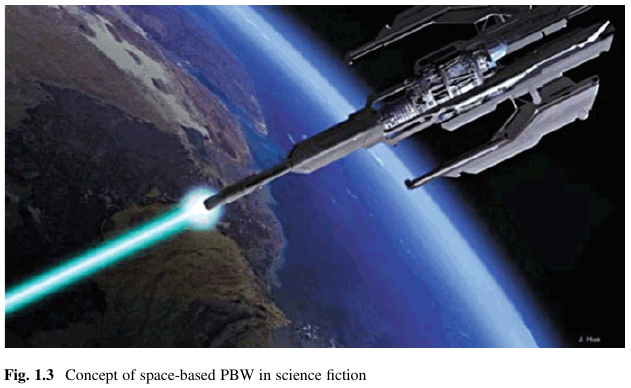
Directed Energy Weapons (DEWs) Versus Kinetic Energy Weapons (KEWs) At the most fundamental level, directed energy weapons (DEWs) share the conceptof delivering a large amount of stored energy from the weapon to the target toproduce structural and incendiary damage effects. Kinetic energy weapons (KEWs)deliver this effect at subsonic or supersonic speeds while directed energy weapons(DEWs) do so at the speed of light. Both kinetic energy weapons (KEWs) and directed energy weapons (DEWs)need to address two fundamental issues. The first major concern is related to travel orpropagation through the atmosphere and hitting the target. In the case of KEWs, it isgetting the projectile to successfully travel through the atmosphere and hit the target. In the case of directed energy weapons (DEWs), it is the propagation of high-energybeams such as high-power electromagnetic radiation or high-energy particle beamsthrough the atmosphere and directing these to hit the target.The second major concern is to produce sufficient damage to the intended target.This is where interaction of high energy with matter comes into play. This impliesthat having a high-power laser or a HPM emitter alone does not make a directedenergy weapon (DEW). Three important constituents of directed energy weapons (DEW) therefore are thehigh-energy sources influencing operational range, target-tracking and beam-pointing technology determining probability of target hit, and interaction of high-energy beams with matter that determines lethality. Types of Directed Energy Weapons (DEWs) Four major categories of DEWs are: 1. Particle beam weapons (PBWs) 2. High-power microwave (HPM)-based DEWs 3. High-energy laser (HEL)-based DEWs 4. Laser-induced plasma channel (LIPC) weapons However, this author is suggesting the fifth category that is known as scalar longitudinal wave (SLW). A PBW uses a high-energy beam of atomic or subatomic particles to inflictintended damage to the target by disrupting its atomic and/or molecular structure.It is the least mature of the four directed energy weapon (DEW) technologies and receives by far the least amount of research effort. It is not a true DEW. Unlike high-energy laser weapons and high-power microwaves that direct electromagneticenergy towards the target, it delivers kinetic energy into the target’s atomic structureand is only a hard-kill weapon. See Figs. 1.3 and 1.4. A microwave-based directed energy weapon (DEW) system is designed toproduce the equivalent of electromagnetic interference to damage enemy’s electron-ics systems. Due to concerns regarding unintended side effects on the host platform,it is usually preferred to put such weapons only on unmanned combat air vehicles.Also, under consideration is the use of high-power microwaves as a weapon to attackunderground and deeply buried targets that are resistant to high explosives. At the core of the laser-based DEW is a high-power laser that has enough powerin the case of continuous wave laser, or sufficient pulse energy in the case of pulsedlaser, to inflict physical damage to the target. Though the lasers intended for alreadyestablished applications such as range finding, target designation for munitionguidance, and more will continue to improve as newer technologies evolve anddevelop, it is the use of lasers as weapon that is going to rewrite the military balancein the next 15–20 years.
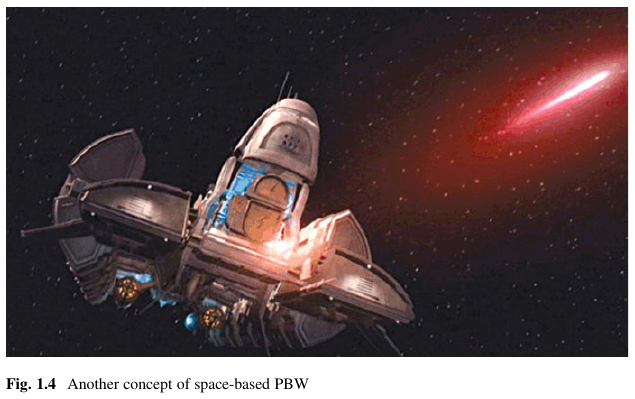
Another conceptual aspect of space-based particle beam weapon (PBW) is depicted in Fig. 1.4.Introduction of laser-based directed energy weapons (DEWs) is set to dramatically alter the war-fighting capabilities of nations by making possible execution ofmissions that would be extremely complex, if not impossible, to realize withconventional KEWs. These include ground-based laser systems for disabling lowearth orbit satellites and destroying missiles, airborne laser systems for destroying
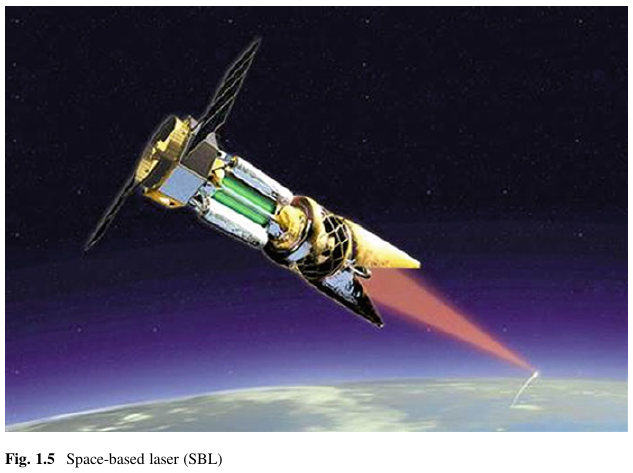
ballistic missiles, and space-based laser systems for neutralizing theater and inter-continental ballistic missiles. A large number of experiments with laser-based directed energy weapons (DEWs) to demonstrate these or similar capabilities have been carried out in different parts of the world. Realizability of these weapons has been established beyond doubt, and these weapons have been projected by strategists as the weapons of the twenty-first century. See Fig. 1.5, where a laser fires from space towards earth in this artistic rendering. The Air Force Research Laboratory’s Directed Energy Directorate is conducting research in a wide variety of laser weapon technologies. Laser-induced plasma channel (LIPC) weapons are hybrid weapons that use a laser to ionize a path of molecules to the target, via which an electric charge can be delivered into the target to cause damaging effects. These can be used to destroy anything that conducts electricity better than the air or ground surrounding it. This works as follows: • A high-intensity train of picosecond laser pulses is used to create a powerful electromagnetic pulse around itself that strips electrons from air molecules, thereby creating a plasma channel through the air. Since the air is composed of neutral particles that act as insulators, LIPC is relatively a good conductor. A high-voltage current discharge is sent down this conducting filament to the target rather than arcing unpredictably through the air—a phenomenon similar to lightening that finds its way from clouds to ground via the path of least resistance.
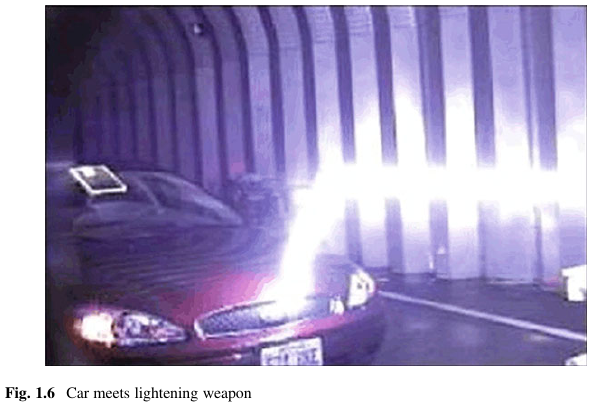
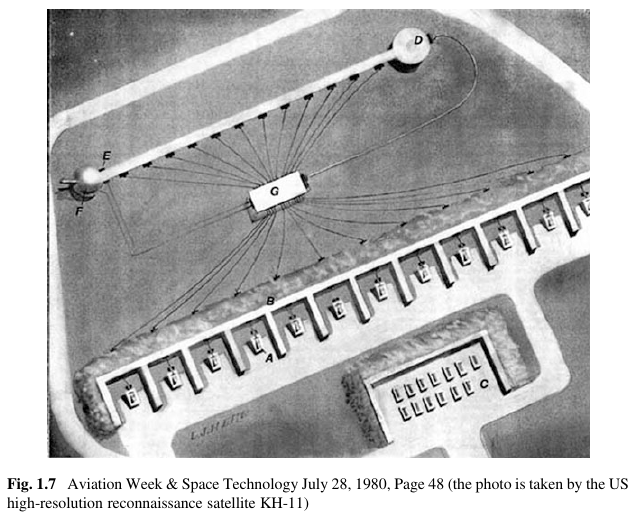
An electro-laser is a type of electroshock weapon that is also a directed energyweapon. It uses lasers to form an electrically conductive laser-induced plasmachannel (LIPC). A fraction of a second later, a powerful electric current is sentdown this plasma channel and delivered to the target, thus functioning overall as alarge-scale, high-energy, long-distance version of the Taser electroshock gun. Alternating current is sent through a series of step-up transformers, increasing thevoltage and decreasing the current. The final voltage may be between 108 and 109 V.This current is fed into the plasma channel created by the laser beam. Over at Picatinny Arsenal, the research and development facility and provingground for the US Army’s weaponry, engineers are developing a device that shootslightning bolts along a laser beam to annihilate its target. That’s right: lightning boltsshot down laser beams. This story could easily end right here and still be the coolestthing we’ve written today, but for the scientifically curious we’ll continue. See Fig. 1.6. As it can be observed in Fig. 1.6, the LIPC weapon is capable of emitting “huge”power as the researchers on this type of directed energy weapon are claiming. The laser-induced plasma channel (LIPC) is designed to hit targets that conductelectricity better than the air or ground that surrounds them. The weapon went through extensive testing in January 2012. George Fischer, lead scientist on the project, said: “We never got tired of thelightning bolts zapping our simulated targets.” Details of the weapon were released on the US Army’s website. Mr. Fischer explained how the usually unpredictable lightning bolts can be controlled. “If a laser puts out a pulse with modest energy, but the time is incredibly tiny, thepower can be huge,” Mr. Fischer said. “During the duration of the laser pulse, it can be putting out more power than alarge city needs, but the pulse only lasts for two-trillionths of a second.” This is a 50 billion watts energy, which means as Mr. Fischer says the air could be manipu-lated to “act like lens.” He claims that they use an ultrashort-pulse laser of modestenergy to make a laser beam so intense that it focuses on itself in air and staysfocused in a filament.” A laser-induced plasma channel (LIPC) is formed by the following process: •••A laser emits a laser beam into the air. The laser beam rapidly heats and ionizes surrounding gases to form plasma.The plasma forms an electrically conductive plasma channel. Because a laser-induced plasma channel relies on ionization, gas must existbetween the electro-laser weapon and its target. If a laser beam is intense enough, its electromagnetic field is strong enough to rip electrons off of air molecules, or whatever gas happens to be in between, creating plasma. Similar to lightning, the rapid heating also creates a sonic boom. Methods of the usage of this weapon are summarized as below: ••••••To kill or incapacitate a living target through electric shock. To seriously damage, disable, or destroy any electric or electronic devices in the target. As electro-lasers and natural lightning both use plasma channels to conduct electric current, an electro-laser can set up a light-induced plasma channel foruses such as to study lightning. During a thunderstorm, to make lightning discharge at a safe time and place, as with a lightning conductor [2]. Directing atmospheric lightning to a terrestrial collection station for the purposeof electrical power generation. As a weapon, to make a thunder head deliver a precise lightning strike onto a target from an aircraft; in this case, the aircraft and laser can be compared to a triggered spark gap, in that the relatively minor amount of initial input from the laser allows a large amount of energy to flow between the cloud and the ground. Because of the plasma channel, an electro-laser may cause an accident if there is a thunder storm (or other electricity sources such as overhead powerlines). (See Taserfor more information—principles of operation, controversies, etc.) An electro-laser is not presently practical for wireless energy transfer due todanger and low efficiency. Of these four categories mentioned above, high-energy laser weapons have the greatest potential in the near term to become worthy of a potent weapon system. However, evidences are presented by certain researchers that scalar longitudinal wave (SLW) has been in use by countries such as previous Soviet Union (USSR) since early 1980, through a photo that was taken by the US high-resolution recon-naissance satellite KH-11 as depicted in Fig. 1.7 [1].
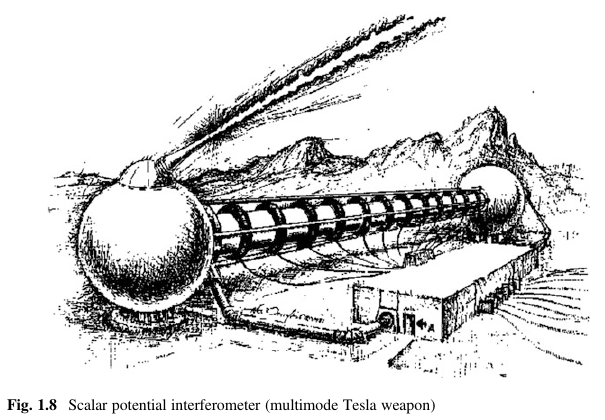
According to Tom Bearden [3], a department of defense scientist, the scalar interferometer is a powerful superweapon that the Soviet Union used for years to modify weather in the rest of the world [7]. It taps the quantum vacuum energy, using a method discovered by T. Henry Moray in the 1920s [8]. It may have brought down the Columbia spacecraft [9, 10]. However, some conspiracy theorists believe that Bearden is an agent of disinformation on this topic, and thus we leave this matter to the reader to make their own conclusions and be able to follow up their own finding and this author does not claim that any of these matters are true or false. However, in the 1930s Tesla announced other bizarre and terrible weapons: a deathray, a weapon to destroy hundreds or even thousands of aircraft at hundreds of miles range, and his ultimate weapon to end all war—the Tesla shield, which nothing could penetrate. However, by this time no one any longer paid any real attention to the forgotten great genius. Tesla died in 1943 without ever revealing the secret of these great weapons and inventions. Tesla called this superweapon as scalar potential howitzer or death ray as artistically depicted in Fig. 1.8 and later it was demonstrated by Soviets in their Sary Shagan Missile Range during pick of Strategic Defense Initiative (SDI) time period and mentioned it during SALT treaty negotiation.
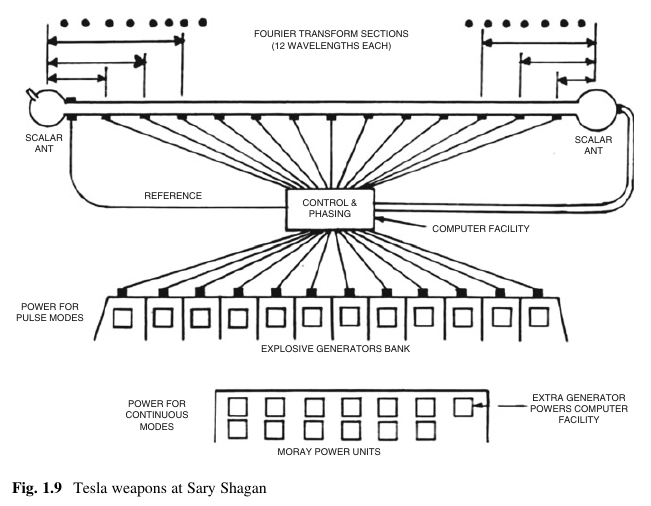
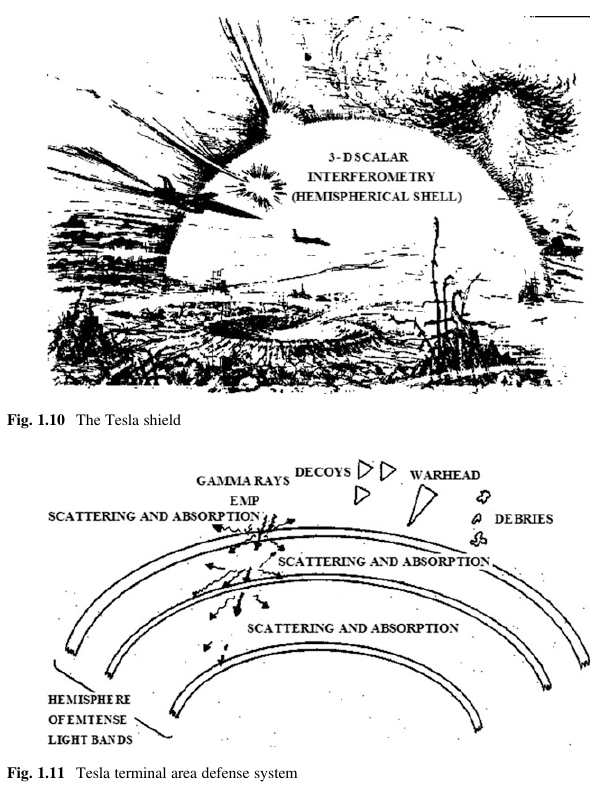
Bearden claims that in 1981 the Soviet Union has long since discovered and weaponized the Tesla scalar wave effects. Here we only have time to detail the mostpowerful of these frightening Tesla weapons—which Brezhnev undoubtedly wasreferring to in 1975 when the Soviet side at the SALT talks suddenly suggestedlimiting the development of new weapons “more frightening than the mind of manhad imagined.” One of these weapons is the Tesla howitzer recently completed at theSary Shagan, a ballistic missile range near the Sino-Soviet border in SouthernRussia, according to high-level US officials and presently considered to be either ahigh-energy laser or a particle beam weapon (see Aviation Week & Space Technol-ogy, July 28, 1980, p. 48, for an artistic conception). As Fig. 1.7 illustrates, the Sary Shagan howitzer has four modes of operation. He also claims that the Sary Shagan howitzer actually is a huge Tesla scalar interferometer with four modes of operation. One continuous mode is the Teslashield, which places a thin, impenetrable hemispherical shell of energy over a large defended area. The 2-dimensional shell is created by interfering two Fourier-expansion, 2-dimensional scalar hemispherical patterns in space so they pair-coupleinto a dome-like shell of intense, ordinary electromagnetic energy. The air moleculesand atoms in the shell are totally ionized and thus highly excited, giving off intense,glowing light. Anything physical which hits the shell receives an enormous dis-charge of electrical energy and is instantly vaporized—it goes pfft! like a bug hittingone of the electrical bug killers now so much in vogue. See Fig. 1.9.Bearden goes on further to say that if several of these hemispherical shells areconcentrically stacked, even the gamma radiation and EMP from a high-altitudenuclear explosion above the stack cannot penetrate all the shells due to repetitiveabsorption and reradiation and scattering in the layered plasmas.
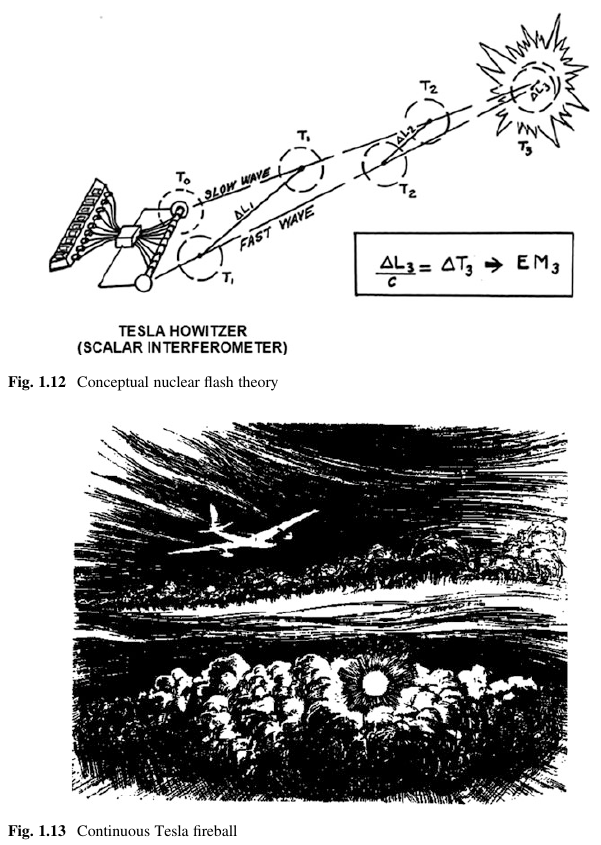
In the continuous shield mode, the Tesla interferometer is fed by a bank of Morayfree energy generators, so that enormous energy is available in the shield. A diagramof the Sary Shagan-type Tesla howitzer is shown in Fig. 1.9. Hal Crawford’s finedrawing of the interferometer end of the Tesla howitzer is shown in Fig. 1.8. Hal’sexceptional rendition of the Tesla shield produced by the howitzer is shown inFigs. 1.10 and 1.11 as well. In the pulse mode, a single intense 2-dimensional scalar phi-field pulse form isfired, using two truncated Fourier transforms, each involving several frequencies, toprovide the proper 2-dimensional shape (Fig. 1.12). This is why two scalar antennasseparated by a baseline are required. After a time delay calculated for the particulartarget, a second and faster pulse form of the same shape is fired from the interfer-ometer antennas. The second pulse overtakes the first, catching it over the target zoneand pair-coupling with it to instantly form a violent EMP of ordinary vector(Hertzian) electromagnetic energy. There is thus no vector transmission loss betweenthe howitzer and the burst. Further, the coupling time is extremely short, and theenergy will appear sharply in an “electromagnetic pulse (EMP)” strikingly similar tothe two-pulsed EMP of a nuclear weapon. This type of weapon is what actually caused the mysterious flashes off thesouthwest coast of Africa, picked up in 1979 and 1980 by Vela satellites. The secondflash, e.g., was in the infrared only, with no visible spectrum. Nuclear flashes do notdo that, and neither does super-lightning, meteorite strikes, meteors, etc. In addition,one of the scientists at the Arecibo Ionospheric Observatory observed a gravitational
wave disturbance—signature of the truncated Fourier pattern and the time-squeezingeffect of the Tesla potential wave—traveling towards the vicinity of the explosion.The pulse mode may be fed from either Moray generators or—if the Moraygenerators have suffered their anomalous “all fail” malfunction—ordinary explosivegenerators. Thus, the Tesla howitzer can always function in the pulse mode, but itwill be limited in power if the Moray generators fail. In the continuous mode, two continuous scalar waves are emitted—one fasterthan the other—and they pair-couple into vector energy at the region where they
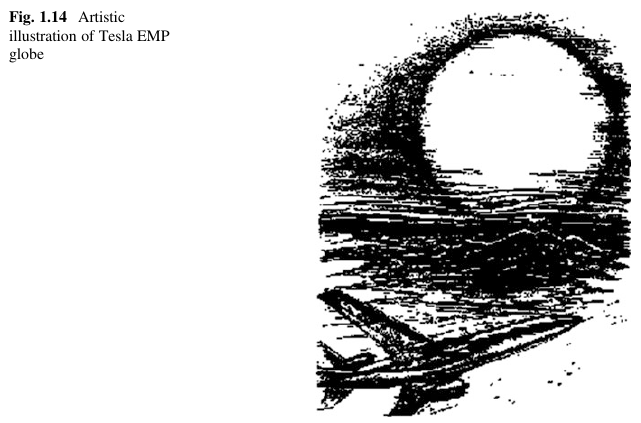
approach an in-phase condition. In this mode, the energy in the distant “ball” orgeometric region would appear continuously and be sustained—and this is Tesla’ssecret of wireless transmission of energy at a distance without any losses. It is alsothe secret of a “continuous fireball” weapon capable of destroying hundreds ofaircraft or missiles at a distance. This mode of operation is shown in Fig. 1.13.
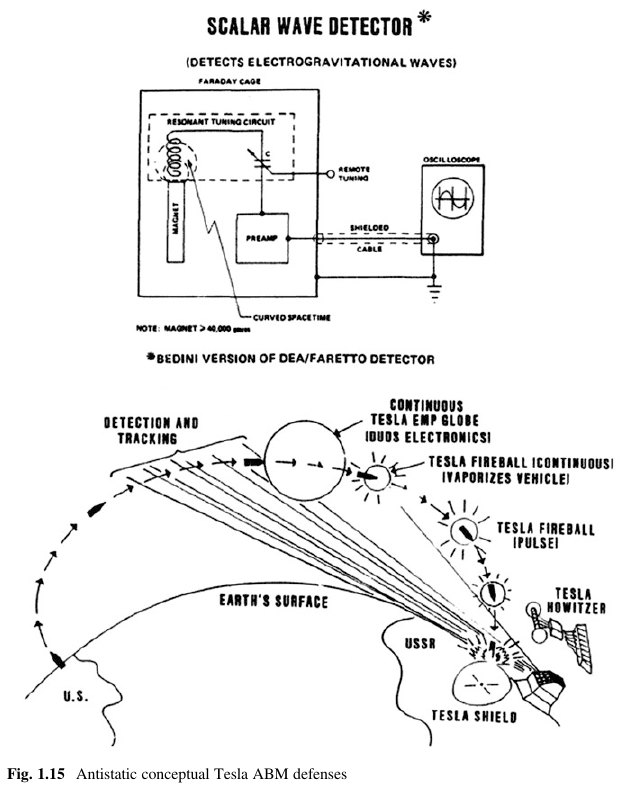
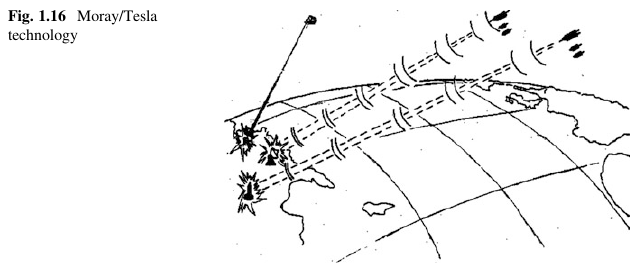
The volume of the Tesla fireball can be vastly expanded to yield a globe whichwill not vaporize physical vehicles but will deliver an EMP to them to dud theirelectronics. An artistic test of this mode is shown in Fig. 1.14. If the Moray generators fail anomalously, then a continuous mode limited inpower and range could conceivably be sustained by powering the interferometerfrom more conventional power sources such as advanced magnetohydrodynamicgenerators. Typical strategic ABM uses of Tesla weapons are shown in Fig. 1.15. In addition,of course, smaller Tesla howitzer systems for anti-tactical ballistic missile defense oftactical troops and installations could be constituted of more conventional fieldmissile systems using paired or triplet radars, of conventional external appearance,in a scalar interferometer mode. Bearden also suggests that with Moray generators1 as power sources andmultiple-deployed reentry vehicles with scalar antennas and transmitters, ICBMreentry systems now can become long-range “blasters” of the target areas, fromthousands of kilometers distance (Fig. 1.16). Literally, “Star Wars” is liberated bythe Tesla technology. And in air attack, jammers and ECM aircraft now become“Tesla blasters.” With the Tesla technology, emitters become primary fightingcomponents of stunning power.
The potential peaceful implications of Tesla waves are also enormous. Byutilizing the “time squeeze” effect, one can get antigravity, materialization anddematerialization, transmutation, and mind-boggling medical benefits. One canalso get subluminal and superluminal communication, see through the earth andthrough the ocean, etc. The new view of phi field also provides a unified field theory,higher orders of reality, and a new super-relativity, which need to be investigated andtested as well.
1.7.4 Directed Energy Weapons Weapon systems that fall under this category include lasers, linear particle acceler-ators or particle-beam-based weaponry, microwaves, and plasma-based weaponry.Particle beams involve the acceleration of charged or neutral particles in a streamtowards a target at extremely high velocities, the impact of which creates a reactioncausing immense damage. Most of these weapons are theoretical or impractical toimplement currently, aside from lasers which are starting to be used in terrestrialwarfare. That said, directed energy weapons are more practical and more effective ina vacuum (i.e., space) than in the earth's atmosphere, as in the atmosphere theparticles of air interfere with and disperse the directed energy.
A linear particle accelerator is a type of particle accelerator thataccelerates charged subatomic particles or ions to a high speed by subjectingthem to a series of oscillating electric potentials along a linear beamline. Theprinciples for such machines were proposed by Gustav Ising in 1924, whilethe first machine that worked was constructed by Rolf Widerøe in 1928 atthe RWTH Aachen University. Linacs have many applications: they generateX-rays and high-energy electrons for medicinal purposes in radiationtherapy, serve as particle injectors for higher energy accelerators, and areused directly to achieve the highest kinetic energy for light particles forparticle physics. Particle Beam Weapon A particle beam weapon uses a high-energy beam of atomic or subatomicparticles to damage the target by disrupting its atomic and/or molecularstructure. A particle beam weapon is a type of directed energy weapon,which directs energy in a particular and focused direction usingparticles with miniscule mass. Some particle beam weapons have potentialpractical applications, e.g., as an antiballistic missile defense system forthe United States and its cancelled Strategic Defense Initiative. The vastmajority, however, are science fiction and are among the most commonweapon types of the genre. They have been known by myriad names: phasers,particle accelerator guns, ion cannons, proton beams, lightning rays, rayguns, etc. High-power microwave (HPM) past few years is also drawing a lot of attention asa kind of directed energy beam weapon as well. Microwave
Microwaves are a form of electromagnetic radiation with wavelengthsranging from about 1 m to 1 mm, with frequencies between 300 MHz (1 m)and 300 GHz (1 mm). Different sources define different frequency ranges asmicrowaves; the above broad definition includes both UHF and EHF (milli-meter wave) bands.A more common definition in radio engineering is the range between 1 and100 GHz (wavelengths between 0.3 m and 3 mm) [2]. In all cases, microwavesinclude the entire SHF band (3–30 GHz, or 10–1 cm) at minimum. Frequen-cies in the microwave range are often referred to by their IEEE radar banddesignations, S, C, X, Ku, K, or Ka band, or by similar NATO or EUdesignations. Plasma-Based Weapon When discussing weapons in science fiction, a plasma weapon is a type of raygun that fires a stream, bolt(s), pulse, or toroid of plasma (i.e., very hot, veryenergetic excited matter).The primary damage mechanism of these fictional weapons is usuallythermal transfer; it typically causes serious burns, and often immediatedeath of living creatures, and melts or evaporates other materials. Incertain fiction, plasma weapons may also have a significant kinetic energycomponent, that is to say, the ionized material is projected with sufficientmomentum to cause some secondary impact damage in addition to causinghigh thermal damage. In some fictions, like Star Wars, plasma is highlyeffective against mechanical targets such as droids. The ionized gas disrupts their systems. Particle Beam A particle beam is a stream of charged or neutral particles, in many casesmoving at near the speed of light. There is a difference between the creationand control of charged particle beams and neutral particle beams, as only thefirst type can be manipulated to a sufficient extent by devices based onelectromagnetism. Nazi Germany had a project for such a weapon, considered a wunderwaffe, thesun gun, which would have been an orbital concave mirror able to concentrate thesun’s energy on a ground target. Wunderwaffe
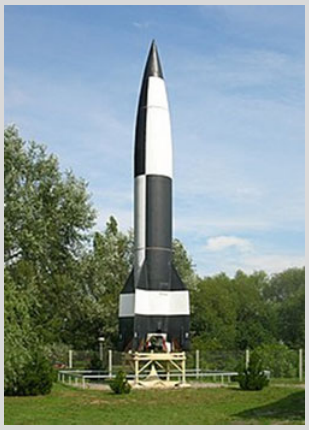
Wunderwaffe is German for “miracle weapon” and was a term assignedduring World War II by the Nazi Germany propaganda ministry to somerevolutionary “superweapons.” Most of these weapons however remainedprototypes, which either never reached the combat theater or, if they did,were too late or in too insignificant numbers to have a military effect.The V-weapons, which were developed earlier and saw considerabledeployment, especially against London and Antwerp, trace back to the samepool of highly inventive armament concepts. Therefore, they are alsoincluded here.As the war situation worsened for Germany from 1942, claims about thedevelopment of revolutionary new weapons which could turn the tide becamean increasingly prominent part of the propaganda directed at Germans by theirgovernment. Airborne-Based Laser (ABL)
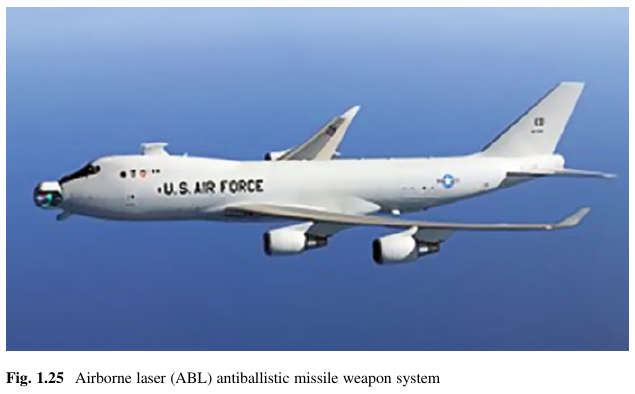
The Boeing YAL-1 Airborne Laser Testbed (formerly Airborne Laser) weaponsystem as illustrated in Fig. 1.25 was a megawatt-class chemical oxygen iodinelaser (COIL) mounted inside a modified Boeing 747-400F. It was primarily designedas a missile defense system to destroy tactical ballistic missiles (TBMs) while inboost phase. The aircraft was designated YAL-1A in 2004 by the US Department of Defense. The Boeing YAL-1 Airborne Laser Testbed (formerly Airborne Laser) weaponsystem was a megawatt-class chemical oxygen iodine laser (COIL) mounted inside amodified Boeing 747-400F. It was primarily designed as a missile defense system todestroy tactical ballistic missiles (TBMs) while in boost phase. The aircraft wasdesignated YAL-1A in 2004 by the US Department of Defense. The YAL-1 with a low-power laser was test-fired in flight at an airborne target in2007.9 A high-energy laser was used to intercept a test target in January 2010,10 andin the following month successfully destroyed two test missiles [13]. Funding for theprogram was cut in 2010 and the program was canceled in December 2011.11 Itmade its final flight on February 14, 2012, to Davis–Monthan Air Force Base inTucson, Arizona, to be kept in storage at the “Boneyard” by the 309th Aerospace Maintenance and Regeneration Group. It was ultimately scrapped in September2014 after all usable parts were removed. Ground-Based Laser (GBL)
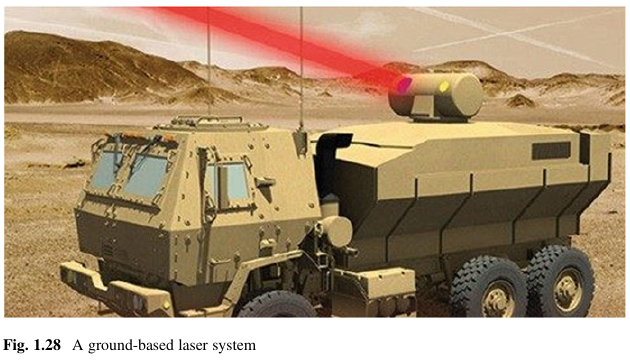
As it is illustrated in Fig. 1.28, a second major alternative to destroying theaterballvehicleistic missiles with laser weapons is to place the laser on the ground and relay thebeam to the missile with large mirrors in space.The distinct advantage of this architecture is that the high-energy laser is kept onthe ground, which eliminates the need to fit a laser platform onto an existing launch vehicle and the need to refuel the laser weapon's chemicals in space.In addition, the complex and maintenance-intensive equipment, i.e., the laser,fuels, and pumping systems, are left on the ground. If problems develop with theground laser systems, the equipment is readily accessible without the need for planning, funding, and recovering satellites from orbit. A further benefit is that theground laser and beam director are not as constrained by diameter, weight, or volumeas is the case for a space platform that must fit within a launch vehicle. Unlike the space-based laser architecture, the ground-based laser system conceptutilizes large optical systems in space to pass the laser beam from a ground laser tothe ballistic missile. However, as with the space-based laser, the ground-based laserconcept evolved during the Strategic Defense Initiative era but received far lessemphasis than the space-based laser system given the technological challengesinvolved with this architecture. The earlier cited Strategic Defense Initiative-typescenario for the ground-based laser system suggested that the system would berequired to kill 40 missiles per second, if the Soviets attacked with 2000 simulta-neously launched ICBMs. This scenario drove the architecture requirements for atleast 150 ground telescopes and 50 powerful ground lasers. Since then the threat haschanged dramatically and so have the technologies. This section presents an archi-tecture that is based on this reduced threat and an evaluation of the technologicalfeasibility, maturity, and cost of this operational concept. |