|
||||||||||||||
 |
||||||||||||||
|
||||||||||||||
          |
||||||||||||||
 |
||||||||||||||
|
Movies
that were a copy of quotidian life became more
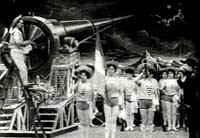
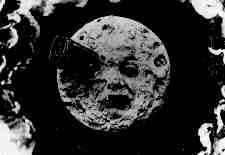
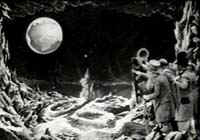
elaborated and it rises fiction. Georges Méliès was a great launcher of this kind of cinema. Being a great magician, e tryed to put some of his magic to film and he got it. Proving it is his famous movie “A trip to the moon”(1902), which was very long and elaborated but it wasn't very profitable, and also “A journey through the impossible”(1904).
Across
the times, Cinema is no long a thing to the workers
class, but also to the higher classes. For these,
started to do some culture films. In France the project
known as Films d'Art consisted in producing movies based
on literary works like “La reine Elisabeth” (1912)
and “The birth of a Nation” (1915) using famous
actores of theater. In
France, Charles Pathé has given his contribute to the
industrialization of cinema. His association with the
director Ferdinand de Zecca allowed his films to achieve
a great quality level. In Pathé's productions is
launched one of the firsts comediant Max Linder which is
thought to be the first international star in comedy
cinema. Also in France rises Léon Gaumont that hires
the director Louis Feuidalle, a specialist in terror
genre. Also
in this time, Italy has great quality in it movies,
prefering historic genre with movies like
“Cabiria”(1913) by Giovanni Pastrone. Day
after day, there more and more independent producing
companies that try to brake the union of enterprises
like the Motion Pictures Patents Company, Edison's
company. Is in this time that through publicity it rise
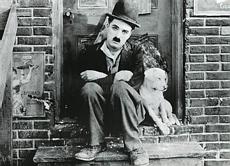
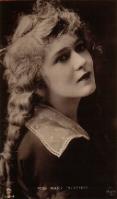
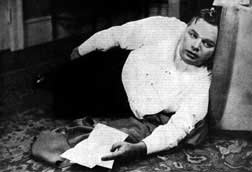
some stars like Charlie Chaplin, Mary Pickford and
Roscoe Arbuckle. World
War First had its influence in Cinema. Til its begin
french and american productions were dominant, but now
european productions reduced. With the end of war,
actors and directors became public stars and are free to
make their job as they understand to, as we can see in
1919 by the creation of the United Artists by Charlie
Chaplin, Mary Pickford, D.W. Griffith and Douglas
Fairbanks.
The
war of Trademarks (1897-1906), which locked theaters,
confiscated material, and has despited even some
violence and over with Edison's victory, left
independent producers weak. They went to California and
Hollywood is now alive.
|
||||||||||||||