|
|||||||
 |
|||||||
|
|||||||
          |
|||||||
 |
|||||||
|
The
end of the world war second made several changes in the
history of cinema in lots of ways. Ina
recked Italy rises the neorealistyc cinema, about the
reality of the moment made with few material but lots of
humanity that concerns about the problems of the
individual and streets. This kind of cinema had
influence lots of directores allover the world. In
the USA were everything but optimistics representing the
sadness that was passed in war and came some comedys and
musicals trying to make people forget their problems.
With the beginning of Cold War between Occident and URSS
it begins, in the USA, the one that was known as
“witch Hunting” in which there is a period of
chassing and some comdentions of all who have something
to do in the Industry of cinema who defend “left”
ideas, and some people chose exile. Television
had a great power in the 50's and cinema needs to
innovate to compete with tv. The attempt of bring
spectacularity to cinema makes higher screens, higher
colors and stereo sound. It
grows the music genre e begun superproductions. It's the
time of the great dramas and it appears “thriller”
with titles like “Vertigo”(1958) and “Rear
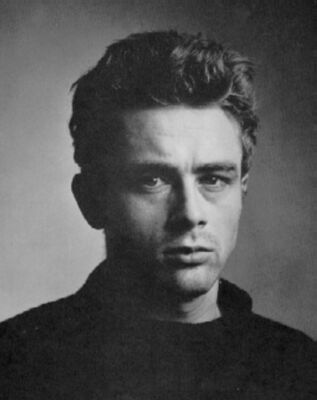
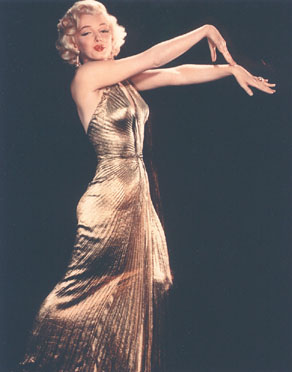
Window””(1954). Young people become a potential important group. Appears new miths who're different from the conventional like Marlon Brando, James Dean or Marilyn Monroe.
Some
other places in the world, cinema is also produced. Some
african countries like India or Egipt had a great
capacity of production, and Japan has distinguished by
the quality of many of their productions like the films
of Mizoguchi or Kurosawa (The seven Samurai, 1954). French
cinema was essentialy made of classic productions but a
new wave of directors appeared with the name of
“nouvelle vague”. And it appears the “cinéma
verité” that shows life in the way it is. Ingmar
Bergman, in Sweden, creates an introspectiv genre. In
Italy creators
like Fellini, Bertolucci e Antonioni chose a more
unrealistic genre. In
the United Kingdom, Free
Cinema was also getting big with name like Lindsay
Anderson e Tony Richardson. In
Federal Germany the “new german cinema” creates
directors like Herzog or Wenders that were influenced by
the “68 May”. In
Latin America, cinema shows the social awakening with
creators like Glaubert Rocha and Pereira Dos Santos in
Brasil, Gutiérrez Alea, Octavio Gómez in Cuba and
Solanas in Argentina and we can get an alliance between
stetics and social commitment. In
european countries with non-democratic regim, appeared
liberty defensors like Polanski in Poland, Szabo in
Hungary, Forman in Czechoslovaquia, Barden in Spain and
Kozintsev in URSS. After
the 60's, in USA, appears a new generation of creators
with experience in television. This generation is the
creator of the underground cinema, a non-commercial
cinema. |
|||||||