Global Warming
Last Update: 12/02/2001

Global Warming
|
|
| Solutions
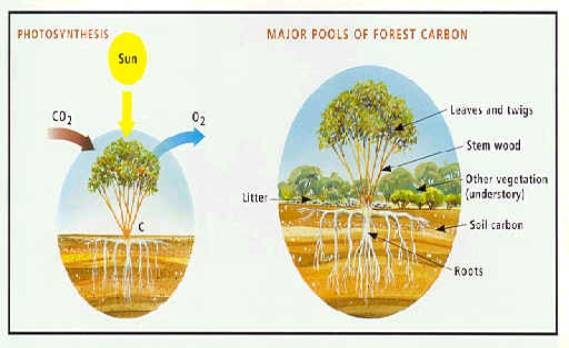
It is rather absurd to wonder how the birth of our industrial revolution which led to our economic boom, has led to our environmental downfall. If measures are not soon taken seriously, then our world as we know it will slowly but surely cease to exist, unless we as a unified people come up with new sources of energy, which do not harm our environment. With the right procedures and solutions, our world will continue to live for the future of our children and their children. There are solutions, it is just up to us to use the right ones. Scientists have presented many ideas to reduce human contributions to global warming. The bottom line is that the emissions of greenhouse gases must be reduced drastically. One way to this is by reforestation and planting trees. It is estimated that by replanting forests we could recycle as much as two billion tons of carbon dioxide. But in order to this we need to spend at least 200 billion dollars and reforestation requires a massive area.10 Replanted forests, however, do not reduce the concentration of carbon dioxide permanently. When the trees die and decompose, the carbon dioxide stored will be released into the atmosphere.
nother
method is the use of nuclear energy. Unfortunately, nuclear energy has its own
problems, it is unsafe and the nuclear waste is environmentally hazardous.
Nuclear energy can be a good option if we could use and dispose of the waste
safely. We
can also use other sources of energy but they have proven to be expensive to
produce at large scales. Solar energy, hydro and wind are all good replacements
if we could find a cheap way to develop them. They all produce energy without
effecting the ecosystem. If we switch from fossil fuels to these sources of
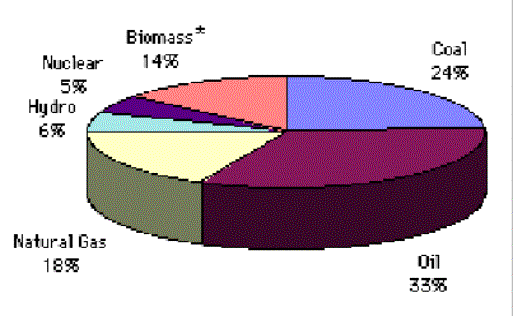
energy we could cut down on carbon dioxide emission by 700 million tons.12
With
the increase in population, the demand for food and lumber is increasing. This
results in more methane gas being produced and less trees to recycle the carbon
dioxide. If we were to cut down on
population growth our environment would benefit greatly.
Unfortunately, this is a hard task to do because its almost impossible to
reach out to the population of many third world countries and try to educate
them. If cars can be powered by solar electricity, hydrogen, or other renewable fuels instead of fossil fuels, we could cut down our greenhouse gas emission by a significant amount. Among cars now on the road, a number stand out for their impressive gas mileage. These cars use less gas because they are build with lightweight materials, which allow a smaller engine to be used without sacrificing performance; they use aerodynamic styling, which cuts wind resistance; they employ better transmission and engine designs, which convert less fuel into more power; and they use tires with less rolling resistance.14 CONCLUSION Global warming is a generally accepted phenomenon which will affect human civilization throughout the next century. While scientists have devised several possible scenarios for the course of global warming, all scenarios seem to stress the importance of human behaviour in reacting to this phenomenon. The frontier we have to cross is within ourselves. Industrial societies typically have a history or shallow ecological, reactive policy-making as opposed to deep ecological, pro-active planning. With this tradition, how can we realistically expect to survive in the years to come? Yes, perhaps we will survive this threat. But what will the quality of life be while the interconnected environmental manipulation proceeds on the scale it does today? Energy usage and trade may be radically different within a few generations simply due to the energy crunch. However, combined with the reshaping of the environment by current resource extraction, it is wondered if there will be a solid foundation of resources to provide for the billions of people yet to be born? What if this already precipitous situation is combined with the adverse effects of global warming? The prospects of the future generations being born into the world affected by human-induced warming seem probable unless we act pro-actively as an international community and examine how we contribute to global warming on an individual basis. It is suspected that this is only one of many new frontiers on the horizon for the human race. Maybe if we stop running for a moment, we will discover what lies ahead.
|
 13
13