Global Warming
Last Update: 12/02/2001

Global Warming
|
|
| Impacts
Possible
ramifications of global warming include a wide variety of disastrous problems in
which we might have to deal with. If
we do not act to reduce our emissions of greenhouse gases, it is predicted that
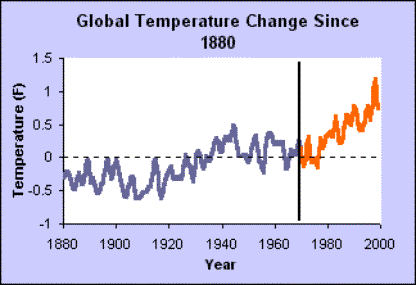
global average temperature could rise from 1.5° to 5.8° C in the next 100
This
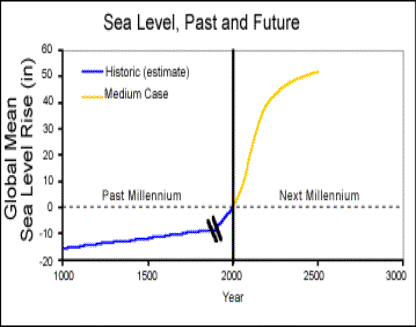
could lead to the potential melting of our polar ice caps, which in turn would
raise the water levels of our oceans. The main problem with the rising of our sea level is the fact
that low lying island and coastal areas such as New York, and Japan where
millions of people live will experience permanent flooding and will have to move
to higher ground. The cost of this problem will surely be in the billions.
Patterns
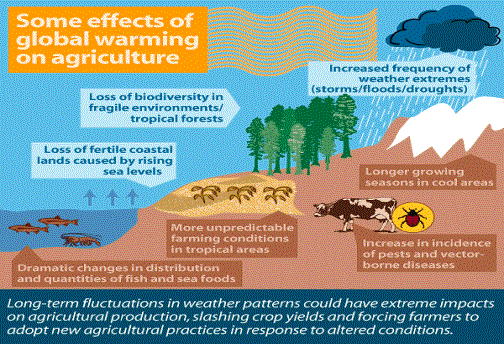
of rainfall and snowfall are also expected to change.9
Many plants and animals may not be able to adjust to such shifts in
climate, and human societies could also face serious disruptions.
The displacement of habitat would affect the natural selection of local
flora, which feed the fauna that human
communities ultimately depend upon for food or money.
9
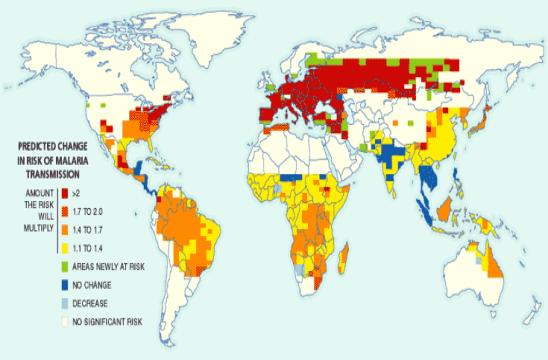
Other problems include an increase in heat waves especially in city areas, along with an emergence of more tropical diseases such as yellow fever, dengue fever and malaria.9 Whether or not we have the foresight to change to more sustainable practices before or after such cataclysms may happen is yet to be seen.
9
Ultimately, the complexity of global warming lessens the distinction between the living and the nonliving systems as distinct entities. In addition, the interdependence of human communities and inhuman systems would be forced into the open. For example, our dependence upon nonhuman species would become evident if the food chain is disrupted in a local community via habitat loss. A probable response to this would be an increased dependency on trade with non-local economies to acquire locally diminishing resources. It would be an interesting but lengthy task to extrapolate on how the food chain/trade scenario would alter both society and ecosystems in the open systems that civilization and the planet really are. Global warming is a crisis of human perception in competition with natural cycles which we have ignored for far too long. 10
|