ChineseBinlingual Program at Pierce
Chinese Language Class at Pierce
About China

A Fascinating Country
China has the most
people in the world. China is the third biggest country, next to Russia and Canada. Its history
dates back four thousands, which makes 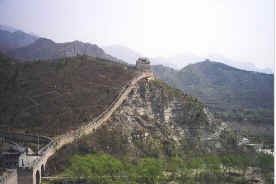 China the oldest
civilized country. The world's
highest mountains are the Himalayas on the border between China and Nepal. The tallest of
these is Mount Everest. The Grand Canal of China is the longest canal in the world. The
largest structure is the Great Wall, which is the only structure made by human beings that
can be seen from the moon!
China the oldest
civilized country. The world's
highest mountains are the Himalayas on the border between China and Nepal. The tallest of
these is Mount Everest. The Grand Canal of China is the longest canal in the world. The
largest structure is the Great Wall, which is the only structure made by human beings that
can be seen from the moon!
~~~~~~~~~~~~ * ~~~~~~~~~~~~
A Question for You
Do you know any other superlatives that
we can use when we talk about China?
A Land of Many Variations
China's natural landscape is one of the world's most dramatic, ranging from the peak of the world's highest mountain (Mt. Everest, 29,028 feet high) to one of the lowest sub aerial depressions (Turpan Depression, 505 feet below sea level) and from tropical rainforest in the south to frozen glacial caps on the high Himalayan Mountains. You can explore China's geography in three huge steps. The top step is the west of China. It includes enormous mountains and the largest plateau in the world, the Plateau of Tibet. Mountains cover over one third of China's enormous land mass. On the second step are smaller mountain ranges and huge deserts. The Qilian Shan, the Qin Ling, and the Kunlun Mountains are on this middle level. Two of China's main river systems, the Yellow and the Yangtze, originate in the heights of the Kunlun Mountains. To the northwest the great mountain ranges enclose desert basins. One of these is the Taklimkan Desert, the hottest desert in the world. On the last and lowest step are the coastal plains. These plains are just above sea level and extend along the coast of the South and East China seas. This land is very fertile, and the weather is warm and wet. Ninety percent of China's population live in these areas.
The Faces of China
The population of China consists of fifty-six national groups. All these
groups have been living in China for a long time. Most of the people are
Han Chinese. These people, who make up ninety-four percent of the population,
can trace their ancestors back to the time of the Han Dynasty, which ruled China
from about 206 B.C. to 220 A.D. The Han share a distinct Chinese culture
although they speak different dialects of the same language.
The fifty-five other national groups in China are called minorities because, all
together, they make up only six percent of China's huge population and because
each group has a unique culture. The appearance, clothing, and languages of the
minority peoples differ dramatically from group to group. This variety in
customs and traditions makes China an exciting multicultural country.
Most of the Han Chinese live in the eastern part of China. The majority of the
non-Han groups live in the west and northwest. These vast, lonely pasturelands
are called "autonomous regions." The five autonomous regions of China
are Xinjiang, Inner Mongolia, Guangxi, Tibet, and Ningxia. Although these areas
are considered to be part of China, their inhabitants are free to follow their
traditional ways of life. Dozens of smaller autonomous counties can also be
found within areas where the Han Chinese live. These are home to several
minority groups, such as the Miao, Bouyei, and Bai.
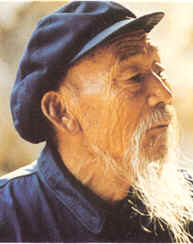
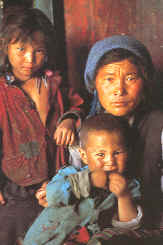
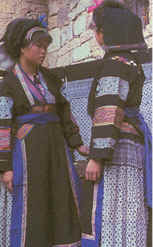
an elderly Han Chinese man a Tibetan woman with her kids two Bouyei women
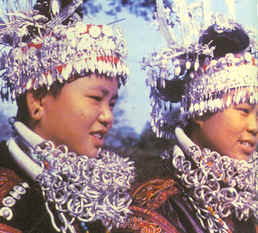
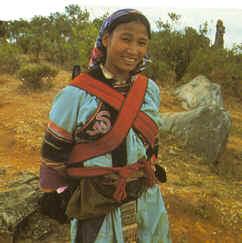
Miao women (on special occasions) a Bai woman with her child in a backpack
My Trip to China in 2001
Beijing
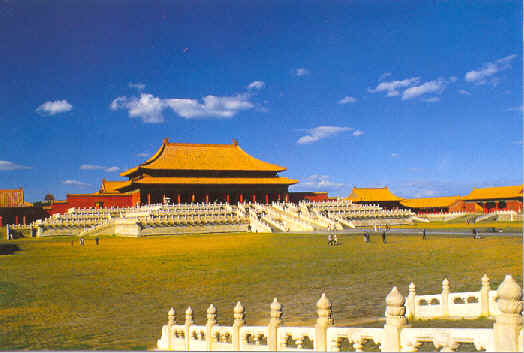
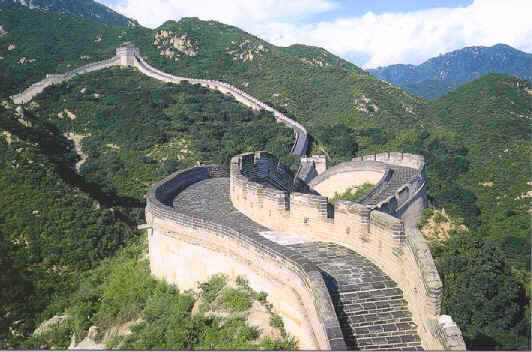
The Forbidden City The Great Wall
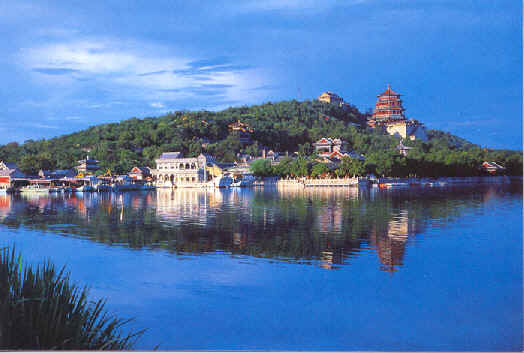
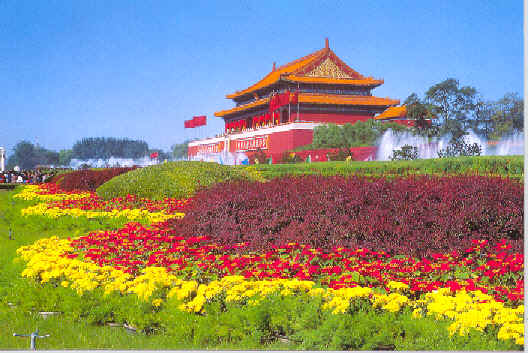
The Summer Palace Tiananmen
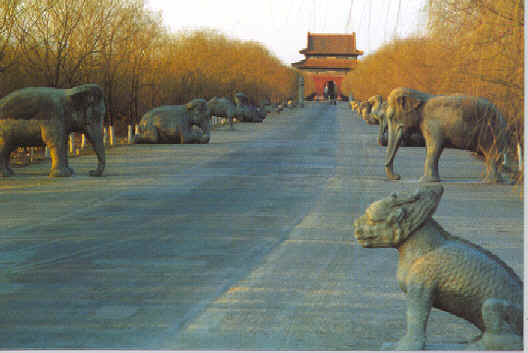
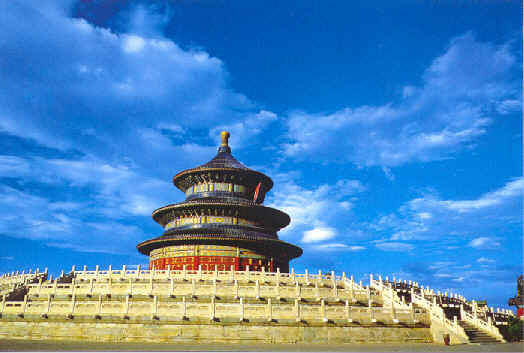
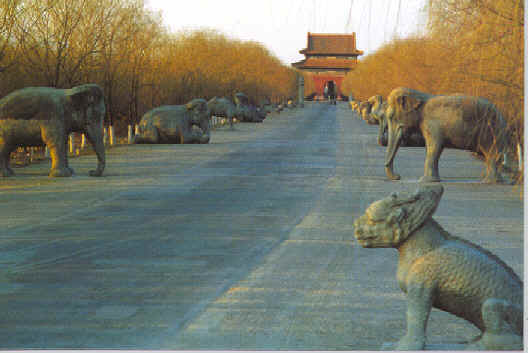
The Ming Tombs The Temple of Heaven
Shandong
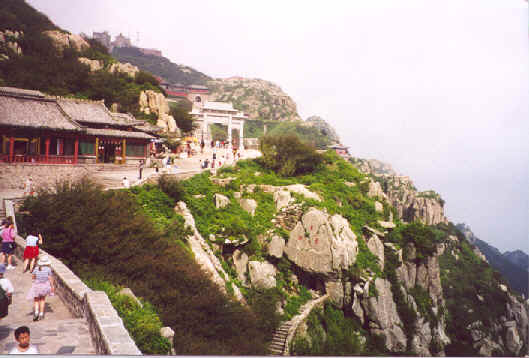
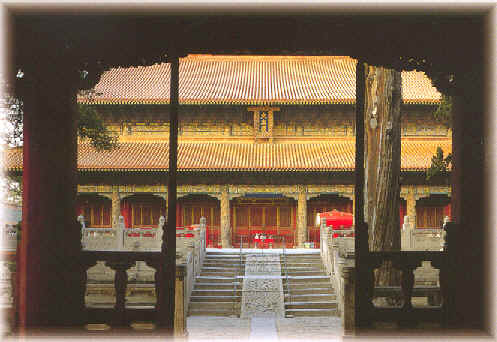
Mountain Tai in Taian Dacheng Hall of Confucius Temple in Qufu
Xian
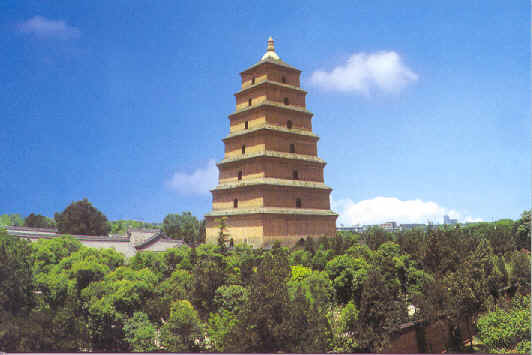
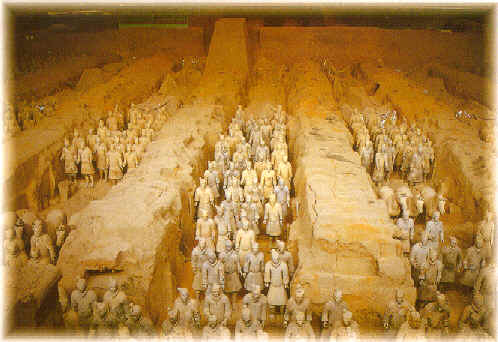
The Dayan Pagoda The Terracotta Warriors
Suzhou
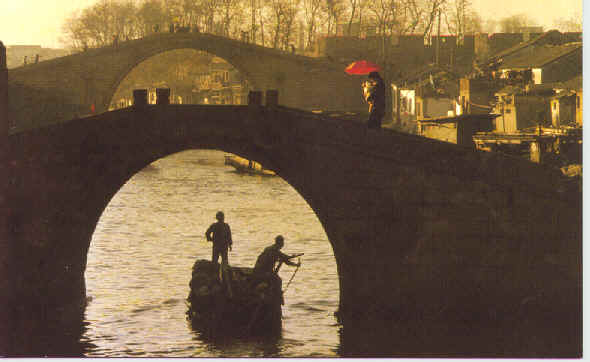
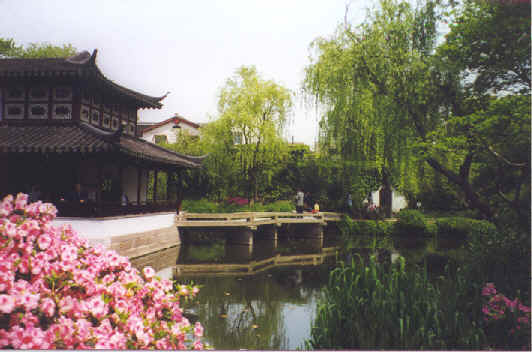
The Grand Canal (Hangzhou-Beijing) in Suzhou The Humber Administrator's Garden
Shanghai
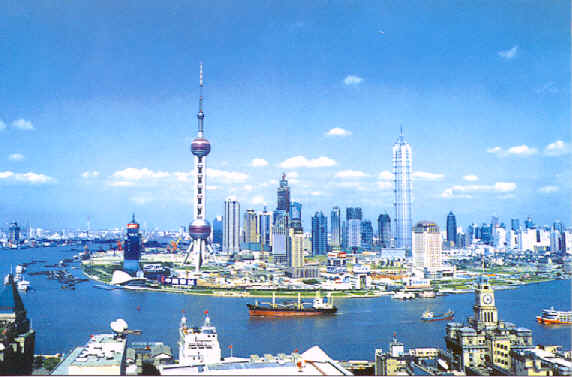
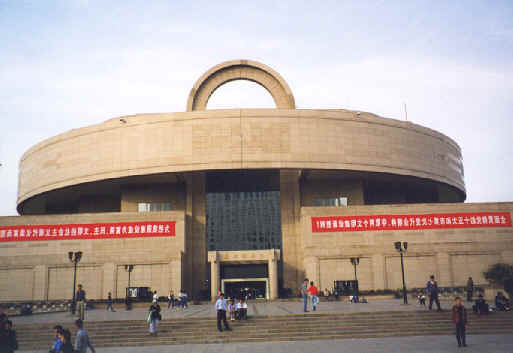
The Scene in Shanghai Shanghai Museum
Hangzhou (My Hometown)
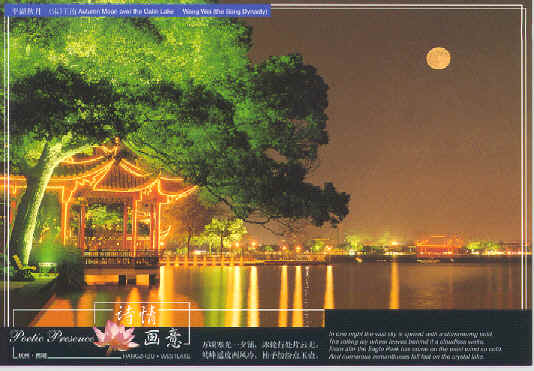
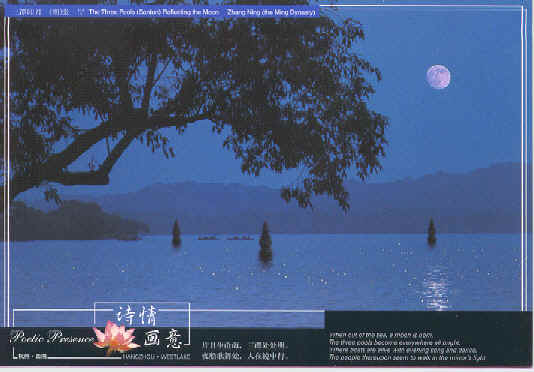
Autumn Moon Over the Calm West Lake The Three Pools Reflecting the Moon
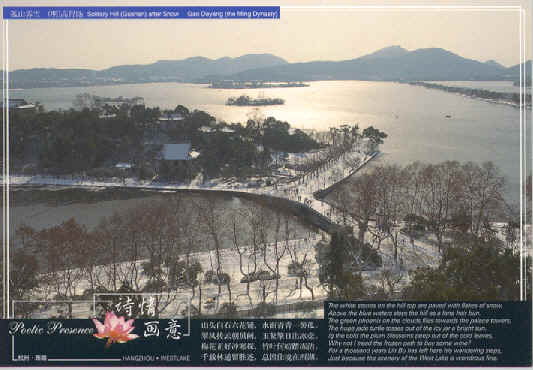
Solitary Hill after Snow The West Lake with Lotus Leaves
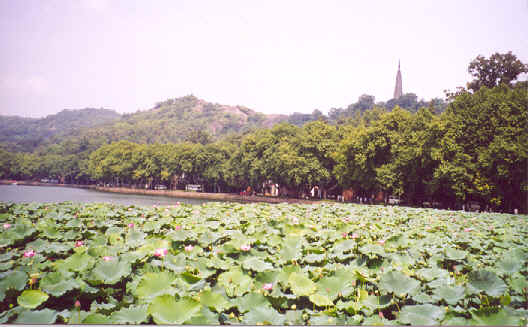
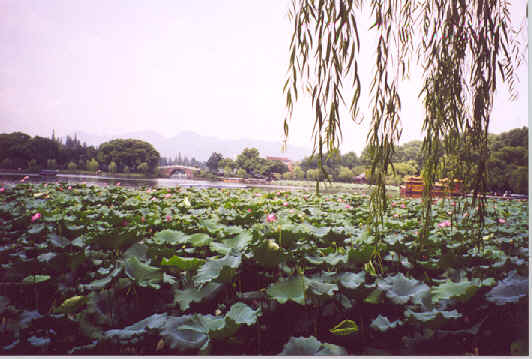
Baoshu Pagoda West Lake in Summer
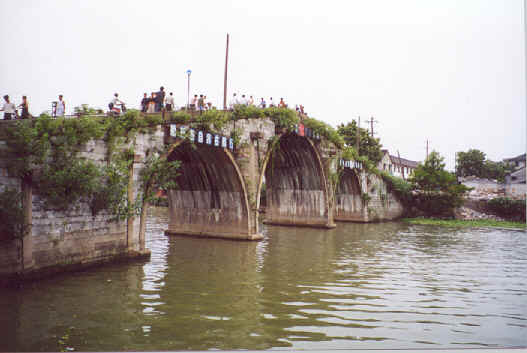
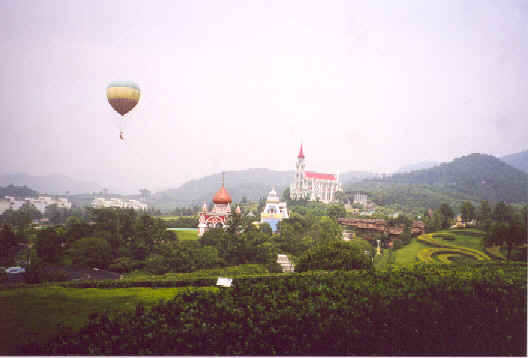
Gongchen Bridge over the Grand Canal An Amusement Park
 Stories
of Chinese Idioms
Stories
of Chinese Idioms
To
Draw a Snake and Add on Feet

During the Warring States Period, there lived in the kingdom of
Chu a temple caretaker who gave to the people who worked for him a small pot of
wine. But there were a lot of workers and not much wine, and if they were to
split it evenly among themselves, nobody would get very much. Finally, one
worker suggested that they each draw a snake in the dirt, and whoever finished
first would get the wine. So they all began to draw, and the worker who finished
first picked up the wine, preparing to drink. But noticing that others still
hadn't finished, he continued to draw, boasting, "I can even give my snake
feet!" Before he could finish, however, a second person finished his snake,
and immediately grabbed the wine away from the first person, saying,
"Snakes don't have feet. How can you add feet to yours?" And the
worker who had begun drawing the feet looked sadly on as his friend finished the
wine.
 The idiom "to draw a snake and add on feet," has now
come to mean that taking extra measures after one has already satisfactorily
completed a task, or adding extra description after one has already explained
oneself clearly, is harmful rather than beneficial.
The idiom "to draw a snake and add on feet," has now
come to mean that taking extra measures after one has already satisfactorily
completed a task, or adding extra description after one has already explained
oneself clearly, is harmful rather than beneficial.
The Frog at the Bottom of the Well

There
once was a frog who lived at the bottom of a well. He lived a very leisurely and
carefree life -- jumping, sleeping, swimming or rolling about as he wished. The
tadpoles and crabs who lived in the water all respectfully called him Master.
The frog felt very satisfied, and very proud.
Then one day, a sea turtle came to
the side of the well and looked in at the frog. Feeling very pleased with
himself, the frog called out, "Look! How comfortable I am in here! Come in!
This is the best place in the world!" The sea turtle felt that the well was
too small and narrow, and he said to the frog, "I come from the ocean. Have
you ever seen the ocean? Its depth is immeasurable and its vastness is
indescribable. Life in the ocean is boundless and unrestrained; that's real
happiness." Upon hearing this, the frog was so taken-back that he couldn't
say a word.
Today, a person with limited
knowledge of the world around him or her can be referred to as a "Frog at
the Bottom of the Well."

To Paint Eyes on the Dragon
In ancient times,
there lived a very famous painter named Zhang Seng-yao. All of Zhang's paintings
were remarkably true to life. No matter what his subject was, he made it look
exactly like the real thing.
One day, when Zhang Seng-yao went to
visit a temple, the monks there asked him to paint a mural on their wall. He was
at first going to refuse, but at the monks' insistence, he agreed. He began to
paint four dragons. All of the dragons looked very fierce, and ready to fly
right off the wall. Many of the tourists who were watching him paint said,
"They all look very real indeed. But why don't you paint on eyes?"
Zhang Seng-yao replied, "All I need to do is very lightly dot eyes on these
dragons, and they will fly away into the sky."
Seeing that no one believed him,
Zhang Seng-yao took his brush and dotted eyes onto one of the dragons. The
dragon's eyes blinked once, and suddenly everything grew dark. There was a bolt
of lightning and a clap of thunder, and the dragon took off into the sky.
Today, the idiom "To Paint Eyes
on the Dragon" can be used to describe any work of art -- a painting, a
piece of writing, a movie, etc., to which the artist has added a special touch
at just the right point, causing the entire work to come alive.