 |
[:Betta Realm:] |
|||||||
| Keeping Bettas Living Conditions Maintenance Diseases & Cures Breeding Bettas Stock Shop Articles Genetics Links Myself
E-mail Me ! |
The Breeding After the the pair has been fully conditioned and the
breeding tank set up, they are ready to go! =)
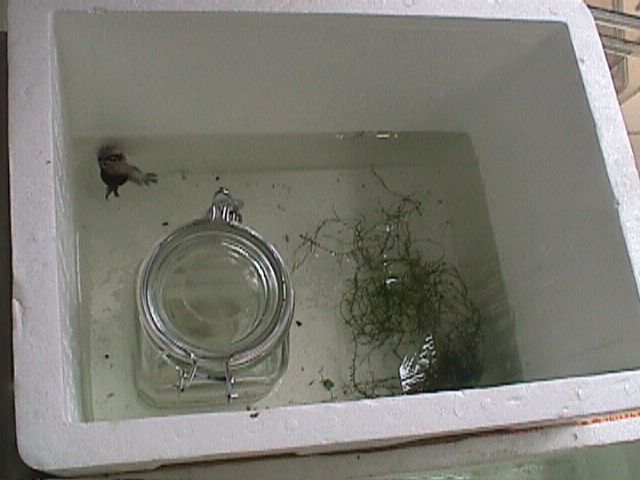
Place the male in the breeding tank first, and I personally leave him there for at least 2 days. After the 2 days' acclimatization grace, place the female conditioning tank (with the female in it, of course!) side-by-side the breeding tank. This will stimulate the male to make a bubble nest under the Styrofoam cup. If the male has trouble making the nest, there are a couple of tricks that can be used.
Personally I've tried, with great success, the first 2 methods. The last one was taken from articles or postings other people have submitted, and they apparently have had success with it too. As soon as the female is able to see the male she should show some sign of excitement, such as a little flaring, or she might even display vertical dark bars (for dark-bodied bettas only). The latter is a sign that she is ready and willing to breed. After the nest has been made
to an appreciable size, gently scoop the female and place her into the
breeding tank. The male will flare and display in front of her. If things
turn out perfect, the female will turn dark-coloured, display prominent
vertical bars, and hover head-down near or under the bubble nest. However,
most females end up being chased around by the male, and beat up into
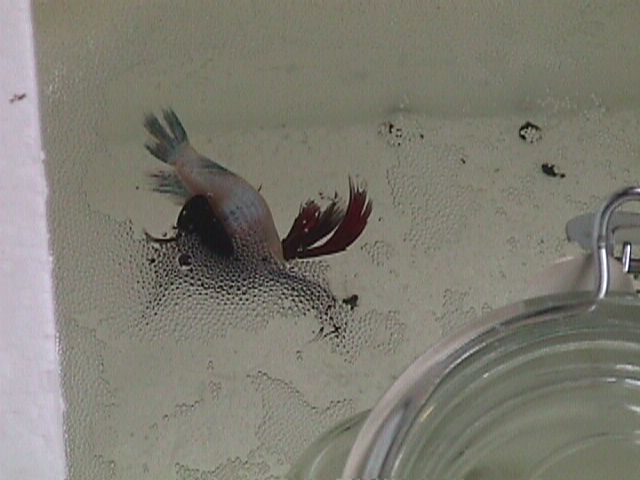
submission. Eventually the male will wrap himself around the female in a
U-shaped curve, both fish will start to quiver and the eggs and sperm are
released simultaneously.
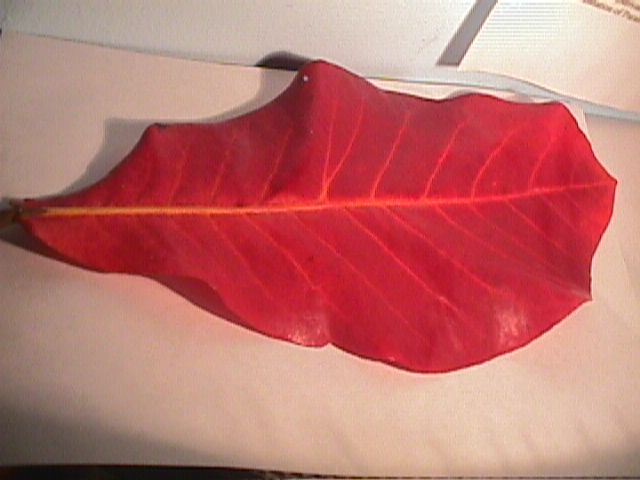
Most of the time the female will appear dazed from the "big squeeze" and float at the top, but will recover within seconds. The male however will turn to pick up the eggs and blow them into the bubble nest. This mating procedure may continue for several times (sometimes the first two nuptial embraces are futile as no eggs are released), and when you see the female hiding away or the male chasing her, the breeding has ended. The female will have to be removed to avoid being bitten to death by the male. Some people have claimed that the sex of the fry are dependent on pH, since they have observed that when banana leaves are used, a larger percentage of the fish turn out to be male, ie lower pH results in more males. This claim has not been verified, but if anyone's done any serious study about this, I'd be very interested to learn about your results! Right now I'm starting to add a large piece of Indian Sea Almond leaf to each of my spawning tanks.
For one, I think the release of tannins and humic acids actually stimulate breeding behavior in my fish. It also provides more hiding space for the female and reduces the incidence of torn fins in either mate. To add to the wonderful package, I've also heard that exudates from these leaves may also have medicinal or anti-microbial properties. =) OK, if anyone's interested in these leaves, just let me know. You can come over to my place to collect some, or, if you're overseas, I'll gladly send you a few pieces in an envelope if you send me enough to cover the postage. Nice of me, isn't it? Nah, haha ... the trees grow in abundance near my house, so once in a while I just go pick some up, FOC. |