Astronomy:Home


THE INNER PLANETS


Today, people know more about the solar system than ever before. Better telescopes allow astronomers to observe the planets from Earth and space. In addition, space probes have explored much of the solar system. Prepare to take a tour of the solar system through the eyes of some space probes.


The inner solar system contains the Sun, Mercury, Venus, Earth and Mars:


Table 2:THE INNER PLANETS

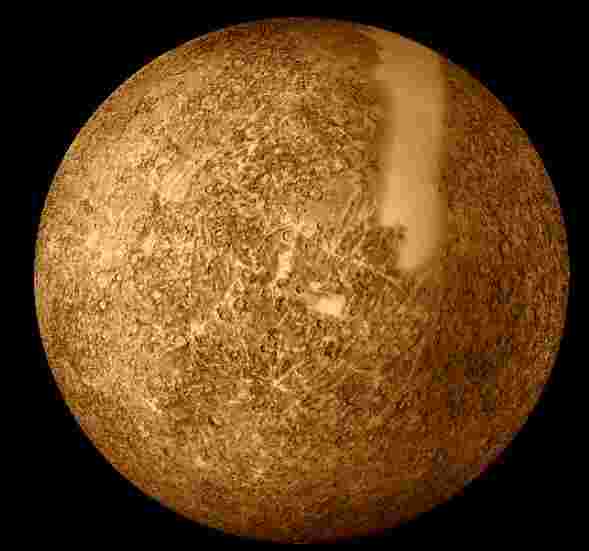
Merkury

  • Close to the Sun
  • Second-smallest planet
  • Surface has many craters and high cliffs
  • No atmosphere
  • Temperatures range from 425�C during the day to -170�C at night
  • Has no moons
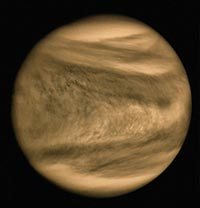
  • Venus

  • Similar to Earth in size and mass
  • Thick atmosphere made mostly of carbon dioxide
  • Droplets of sulfuric acid in atmosphere give clouds a yellowish color
  • Surface has craters, fault like cracks, and volcanoes
  • Greenhouse effect causes surface temperatures of 450�C to 475�C
  • Has no moons
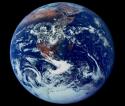
  • Earth

  • Atmosphere protects life
  • Surface temperatures allow water to exist as solid, liquid, and gas
  • Only planet where life is known to exits
  • Has one large moon
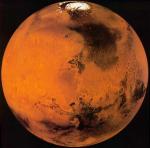
  • Mars

  • Surface appears reddish-yellow because of iron oxide in rock
  • Ice caps are made of frozen carbon dioxide and water
  • Channels indicate that water has flowed on the surface; has large volcanoes and valleys
  • Has a thin atmosphere composed mostly of carbon dioxide
  • Surface temperatures range from-125�C to 35�C
  • Huge dust storms often blanket the planet
  • Has two small moons
  • 1
    Hosted by www.Geocities.ws