Astronomy:Home


THE OUTER PLANETS


Today, people know more about the solar system than ever before. Better telescopes allow astronomers to observe the planets from Earth and space. In addition, space probes have explored much of the solar system. Prepare to take a tour of the solar system through the eyes of some space probes.


The outer solar system contains the Jupiter, Saturn, Uranus, Neptune, and Pluto:


Table 3:THE OUTER PLANETS

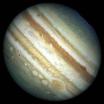
Jupiter

  • Largest planet
  • Has faint rings
  • Atmosphere is mostly hydrogen and helium
  • Continuous storms swirl on the planet � the largest is the Great Red Spot
  • Has four large moons and at least 24 smaller moons
  • One of its moon, Io, has active volcanoes
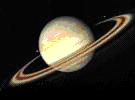
  • Saturn

  • Second-largest planet
  • Thick atmosphere is mostly hydrogen and helium
  • Has a complex ring system
  • Has at least 30 moons � the largest, Titan, is larger than Mercury
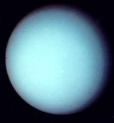
  • Uranus

  • Large, gaseous planet with thin, dark rings
  • Atmosphere is hydrogen, helium, and methane
  • Axis of rotation is parallel to plane of orbit
  • Has at least 21 moons
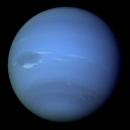
  • Neptune

  • Large, gaseous planet with rings that vary in thickness
  • Is sometimes farther from the Sun than Pluto is
  • Methane in atmosphere causes its bluish-green color
  • Has dark-colored storms in atmosphere
  • Has eight moons
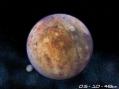
  • Pluto

  • Small, icy-rock planet with thin atmosphere
  • Single moon, Charon, is half the diameter of the planet
  • Hosted by www.Geocities.ws

    1