WILD FLOWERS OF THE ALGARVE
SOUTHERN PORTUGAL
SPRING
PURPLE, LILAC & VIOLET FLOWERS
|
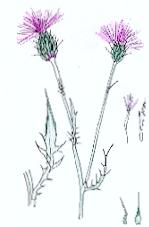
Galactites
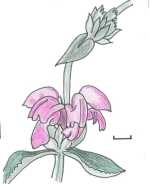
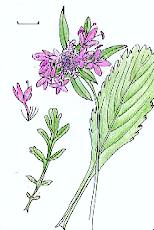
Phlomis purpurea
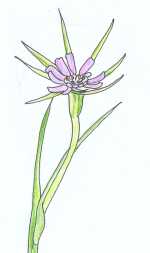
Tragopogon hybridum
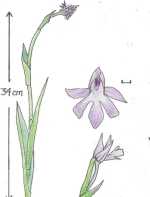
Pyramidal Orchid
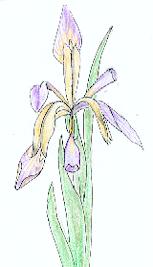
Stinking Iris
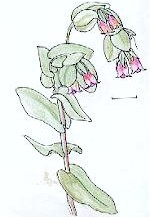
Honeywort
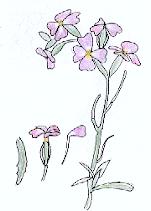
Sand Stock
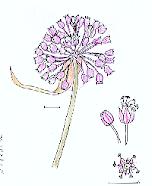
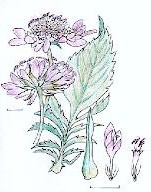
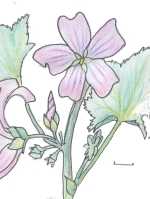
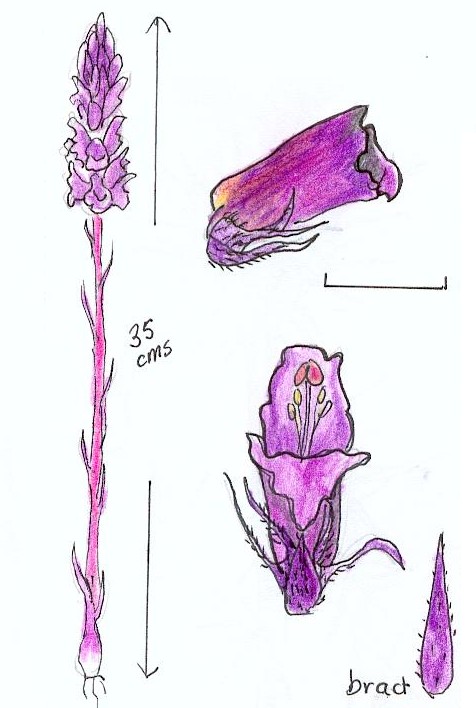
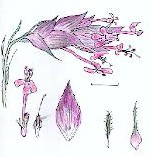
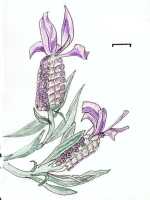
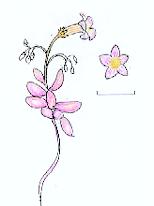
Wild Leek | In mid-May blue and mauve flowers predominate in the fields. A small thistle, Galactites tomentosa makes fallow fields flush mauve and the blue Cardoon is still blooming. A number of species of Scabious ranging from palest blue, though pink and violet are at their best. A number of varieties of Scabious bloom in late spring and early summer. Scabious atropurpurea has lilac to dark purple flower heads. The outer florets are twice the size of the inner and the fruiting head is oblong. Scabious sicula is a shorter plant. The bracts around the mauve flower heads are far longer than the flower. On disturbed ground in town and along the roads the tall (up to a 75 cm) mallow plants (Lavatera olbia) flower with violet to pink flowers. In similiar environment the 50 cm high Phlomis purpurea raises its long flowering stalks with widespread whorls of pink flowers. It belongs to the mint family. See this page for more flowers in that family. A composite flower with very few ray florets and grass like parallel veined leaves is one of the Goat's Beards, Tragogogon hybridum. Its long narrow pointed green flower bracts exceed the pale violet rays. In a year after good rains large numbers of Pyramidal Orchids (Anacamptis pyramidalis) with their cones of pink flowers grow in grassy fields. In the same fields purple and almost black spikes of a broomrape may also appear. Many different broomrapes are found in the region. Each species is parasitic on a different plant. This one has a bright red stem, purple flowers and stands about 35 cms high.(Orobanche sanguinea) It is difficult to ascertain what the broomrapes parasitize: perhaps the many types of clover in this field. Among those growing here are the Star Clover, the Narrow Leafed Crimson Clover (Trifolium augustifolium) and the tiny Hop Trefoil (Trifolium campestre). To see some of these go to LEGUME FAMILY Tall above the others is the violet flowered Pitch Trefoil (Psoralea bituminosa). This plant has a definite bituminous smell. A rare, very fragrant thyme is found growing between rocks. It is a small plant about 20 cms high with conspicuous dark green leaves and elongated heads of bright pink flowers growing from maroon bracts. Thymus totocephalotus is a Southern Portuguese species. One of the delights of the Algarve are the show of pink Cistus flowers, yellow brooms and purple Lavendar on the hillsides. The lavender is Lavandula stoechus. This greyish bush with its bright violet bracts on the end of the flowering head blooms well into the summer. The Stinking Iris has large dull flowers. It is more conspicuous in winter when it produces a tripartate fruit capsule which splits open to reveal bright orange seeds. One of the Algarve's stonecrops (Sedum lagascae) has pale violet-pink leaves and flowers and grows on rocky walls. Cerinthe major is a Honeywort. It has rather fleshy grey green leaves and flowers with a pale yellow corolla with a reddish brown to purple base. It is found throughout the Mediterranean region and in Portugal varieies with deeply purple flowers are found.
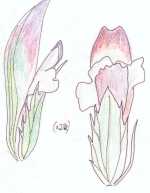
The motif for the capital of the Corinthian column comes from a handsome plant which begins to bloom inJune. Acanthus mollis has dark glossy green leaves which have lined the shady side of walls since spring. Now the great spikes of flowers develop. Along their length the flowers arise from spiny bracts and are flushed a delicate purple. The diagram shows two views of one of the flowers. In May the sand dunes at the Ilha de Tavira are covered with the pink-lilac flowers of the Sand Stock. The closely related Virginia stock is also found. This is a native of Greece and Albania but naturalised here. Late in Spring and early summer a long stalk carrying a white, pink or purple globe of flowers up to 1.5 m tall will appear on roadsides and wastelands. This is the Wild Leek. Its greyish green leaves will have withered when the globous umbel of flowers (up to 9 cm in diameter) appears.
|
Scabious
Mallow
Broomrape
Thyme
French Lavendar
Sedum lagascae
Bear's Breech |

SPRING: RED FLOWERS
SPRING: YELLOW FLOWERS
SPRING: WHITE & GREEN FLOWERS
SPRING: BLUE FLOWERS
© (Text and Artwork) Irene Shepard 2005 .