 |
Mountains support a variety
of animal life. The numbers and kinds of animals found on mountains
vary with altitude. More animals and more kinds of animals live at
lower altitudes than at higher ones, largely because of the differences
in climate between elevations. Generally, mountain climates become
colder, wetter, and windier with increasing altitude. The air also
gets thinner and has less oxygen. In addition, fewer plants are found
at higher elevations, and therefore less food is available for animals.
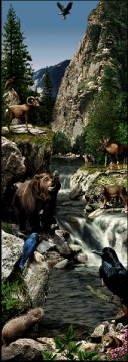
Bears, deer, elk, and mink make their homes on the forested lower slopes and in the wooded or grassy valleys of mountains. Rainbow trout and graylings swim in mountain streams. Many mountains have meadows of grasses and herbs. These meadows are home to chinchillas, ibexes, llamas, vicunas, and yaks. Butterflies, grasshoppers, and spiders also live there. Above the timber line—that is, the line beyond which trees will not grow because of the cold—stand rocky cliffs and peaks dotted with shrubs, mosses, and other plants. Small meadows are also found there. Sure-footed bighorn sheep and mountain goats dwell among the windswept rocks, as do furry marmots and pikas. High on the snow-capped peaks, only a few insects, spiders, and ice worms can survive. Golden eagles and some other birds fly above the mountains. A large African vulture, Ruppell’s griffon, has been known to soar as high as 36,600 feet (11,150 meters). |

