[Editorial]
[Words
from the Staff]
[Featured Breed]
[Falabellas]
[Featured
Rider]
[Anne
Kursinski]
[Featured
Equine]
[Khemosabi:
An Arabian Legend]
[Featured
Equine Hazard]
[Equine
Infectious Anemia]
[Book
Review]
[The
Affordable Horse]
[Winter
Riding]
["Keeping
Warm When Riding
in
Winter"]
[Summer
Camp Preparations]
["Choosing
a Summer Riding
Camp"]
[Glossary]
[Common
Equine Terms]
["Ask
The Trainer"]
[Training
Qs & As]
["The
Help Desk"]
[Readers
Speak Out]
[Fiction]
[Windy's
Contemplation]
[Melanie's
Horse]
[Shotgun
Andy]
[Poetry]
[Horse's
Lament]
[My
Master]
[Contests]
[Horse
Trivia]
[Caption
Contest]
[Writing
for the E-Zine]
[Staff
Positions Available]
[Staff
Application]
[Submission
Tips & Guidelines]
[Submission
Form]
© Barn
Photograph
by Kulacrosse Clip Art
Stable
|
Featured
Equine Hazard:
Equine Infectious Anemia
By: Shauna Alexander |
 |
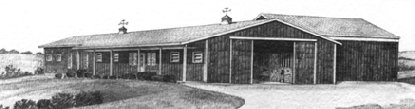 Equine Infectious Anemia
can infect any barn
Equine Infectious Anemia
can infect any barn
| Equine
Hazard: |
Equine
Infectious Anemia (EIA) |
| Common
Names: |
Swamp
fever, mountain fever, slow fever, Coggins disease |
| Definition: |
An
infectious disease in horses that erodes their immune system. |
| Classification: |
1.
Acute EIA
2. Subacute EIA
3. Chronic EIA
4. Asymptomatic EIA (Carrier) |
| Transmission: |
Risk
of transmission is greatest when the horse is ill or in a state of relapse.
- Insect bites (esp. from horseflies)
- Contaminated needles, syringes
etc
- Blood transfusions
- Transplacental infection (from
infected mare to foal) |
| Detection: |
Through
the AGID or Coggins Test |
| Signs
& Symptoms: |
Disease
signs occur 7 to 21 days after primary infection. Initial signs may
include:
- Anemia
- Intermittent or continuous fever
- Weight loss
- Profuse sweating
- Rapid breathing
- Depression, and weight loss |
| Prevention: |
DO
1. Board where horses test negative on a Coggins test.
2. Clean and sterilize instruments after use.
3. Establish a regular EIA testing schedule.
4. Isolate new horses until they test negative.
5. Isolate the horse and call ther vet at the sign of the virus
6. Participate only in events that
require testing of all horses.
7. Purchase only horses that have tested negative.
8. Reduce the number of insects and flies at the stables.
9. Request that event managers require proof of negative EIA status in participating horses.
10. Use a new, sterile instrument on each equine.
DO NOT
1. Expose your horse to sick animals.
2. Breed horses that you suspect of harboring the virus.
3. Share equipment between animals with open wounds. |
| Treatment: |
No
treatment available |
| Page 1 | Page 2 | Page 3 |
|