











|
|
|
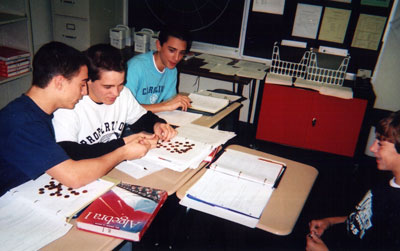 Student Learning Student Learning
Children (and adults) learn best when they can relate
learning to their own personal experiences. Knowledge merely for
the sake of "knowing something" has little lasting value and is quickly
forgotten. Students can grasp concepts better when given tangible
applications to real life situations. This goes beyond merely
imagining hypothetical examples. Physical, active learning
solidifies understanding in the student's mind. Ultimately, it is
important to understand that there is no one best way of learning common
to all students. Variety and flexibility are key elements in all
instruction.
|
|
Reflective Teaching For me, the opportunity to reflect on my
teaching is one of the exciting aspects of teaching. There is
always room for improvement; there are always opportunities to try
different approaches. I am continually aware of my students' needs
and always seek the best way to address those needs. Occasionally,
this may require deviating from my plan or straying beyond my comfort
level. As a reflective teacher, I am willing to
give and receive constructive criticism from myself, my students, my
supervisors and my colleagues. |
|
Assessment As
a teacher, it is my duty to assess my students' progress in all stages
of instruction. I use several varieties of formative assessment to
identify which teaching strategies are most effective, areas of
weakness that need to be addressed and strong points which can be used
to encourage students. Summative assessment is carefully
structured to align with the priorities and objectives of each lesson.
In response to No Child Left Behind, my exercises and tests are also
designed to reflect the structure of standardized state assessments. |
|
Classroom Climate My classroom atmosphere is warm, congenial
and based on respect. I treat students with the same respect that
I expect to receive from them. As a result, students feel
comfortable putting forth their best effort, making the occasional mistakes
necessary for learning, seeking extra help when it is needed, and participating in all classroom activities. |
|
Professionalism In addition to the obvious aspects of
professional dress and behavior, professionalism means setting an
example for students as well as colleagues. I intend to be a model
teacher and citizen by cooperating with my fellow teachers,
participating in professional development activities, and working with
students, parents and administrators toward improvement of the school. |
|
