


|
|
|
|
1970-luvulla Škodalla oli useita etumoottoristen mallien prototyyppejä. Škoda 105/120 -mallista odotettiin etumoottorista, etuvetoista mallia, mutta jotenkin moottori pysyi taka-akselin takapuolella. Škodalla itse asiassa olikin etumoottorinen prototyyppi, jonka ulkomuoto oli juuri sama kuin 105/120 sedan -malleissa. Jotkut sanovat, että malli oli liian hyvä, ja sen takia Škoda ei saanut Moskovasta lupaa mallin valmistukseen - se olisi ollut parempi kuin mikään neuvostoliittolainen auto, ja venäläiset eivät sietäneet sitä. Mutta kun malli lopulta esiteltiin 1976, se sisälsi monia parannuksia edeltäjäänsä, S100/110 sedan -malleihin; lämmityslaite oli asennettu kojelautaan ja sisätilat olivat modernimman näköiset. Moottori ja voimansiirto olivat aivan samat kuin edellisissäkin malleissa, mutta iskunpituus oli 72 mm 68 mm:n sijasta, ja tasauspyörästön välitys 4,44 oli pidennetty 4,22:een. Jäähdyttäjä oli edessä, millä oli hyvät ja huonot puolensa; jäähdytys toimi paremmin maantiellä, mutta toisaalta nesteen kierto oli monimutkaisempi ja tästä aiheutui lämpöongelmia. Koko jäähdytys- ja lämmitysjärjestelmä vaati 12,5 litraa nestettä. 105/120 sedan -malleja myytiin aika hyvin 1970-luvun lopulla. Vuonna 1984 esiteltiin uusi, paranneltu 105/120/130 -sarja.
In the mid 70's Škoda had a lot of prototypes of new, front engined models. Škoda 105/120 Saloon was supposed to be front engined and front wheel drive model, but somehow the engine stayed behind the rear axle. Actually, Škoda had a front engined prototype which outlook was just the same like 105/120 saloon models. Some people say, that it was too good model and that's why Škoda didn't get licence from Moscow to manufacture that model - it would have been better than any car of Soviet Union, and Russians couldn't stand it. But when the model finally came out in 1976, it included a lot of improvements compared to its predecessor, S100/110 saloon models; the heating unit was in the dashboard and the interior looked more modern out. The engine and transmission was just the same like in the older models, but the stroke was 72 mm instead of 68 mm and the final gear ratio was 4.22 instead of 4.44. The radiator was in the front, which was both good and bad: the cooling worked better on highway, but on the other hand the circulation of the fluid was more complicated and that caused easily boiling problems. The whole cooling and heating system demanded 12.5 litre of fluid. 105/120 saloon models were sold quite well in Finland in the late 70's. In the year 1984 a new, modified 105/120/130 series was represented.
|
|
|
|
Moottorin tilavuus The displacement of the engine cm3 |
|
|
|
Syl. halk./iskunpit. Bore/stroke mm/mm |
|
|
|
Suurin teho Maximum output kW/rpm, DIN |
|
|
|
Suurin vääntö Maximum torque Nm/rpm |
|
|
|
Puristussuhde Compression ratio |
|
|
|
Paino Weight [kg] netto (brutto) |
|
|
|
Huippunopeus Maximum speed km/h |
|
|
|
Kiihtyvyys Acceleration 0-100 km/h |
|
|
|
Polttoaineen kulutus Fuel consumption ECE; 90/120/kaupunkiajo mixed l/100km |
|
|
|
|
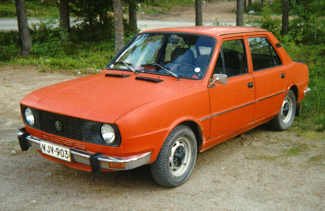
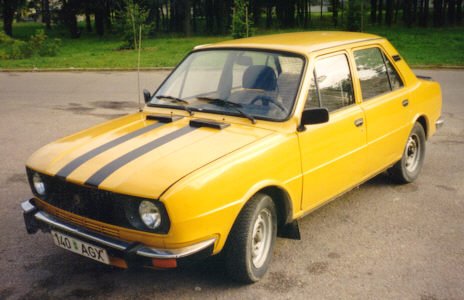
Škoda 120 LS neljällä etuvalolla. Kun 'TV-etuvalot' tulivat, valot olivat samanlaiset joka mallissa. Škoda 120 LS with four headlights. When the 'TV headlights' came the lights were all the same in every model. |
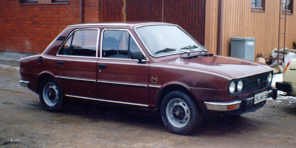
Vanhemmantyyppinen Škoda 120 L. Tämä yksilö on 80-luvun alusta 13-tuumaisine vanteineen. An older type of Škoda 120 L. This individual is from early 80's with its 13" rims. |
|
|
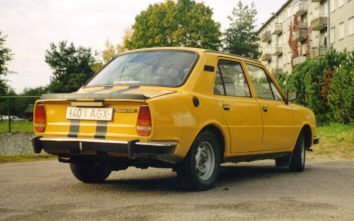
Oliver Gailanin Škoda 120 karvalakkimalli. Kaikkien Škoda-mallien kromipuskurit vaihtuivat muovisiin 1982. Samana vuonna myös pyöreät valot vaihdettiin TV-kuvaruudun muotoisiin. |
Oliver Gailan's Škoda 120 standard model. Chrome bumpers of all Škodas changed to plastic models in 1982. Also round headlights were changed to TV-screen-shaped in the same year. |
 |
|
|
|
|