| Name | Tollef Olson Gronseth |
| Birth | 18 May 1838, Gronseth Farm, Sigdal, Buskerud, Norge |
| Death | 5 Oct 1907, Rothsay MN Age: 69 |
| Burial | 9 Oct 1907, Hamar Rothsay MN |
| Occupation | Farmer Carpenter County Commissioner |
| Education | Elementary |
| Religion | Lutheran |
| Father | Ole Tollevsen Gronseth (1798-1874) |
| Mother | Beret Kittilsd Gronseth (1803-1885) |
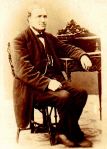
Tollef O. Gronseth was born on Gren in Sigdal in 1838. His parents Ole Tollefson & Beret Kittilsdatter moved to Gronseth on Grenskogen in 1847 and there Tollef grew up. In his youth he worked as a carpenter, furniture maker and worked in woods and farm land, until in 1868 he immigrated to America. He went first to Olmsted and Dodge counties in Minnesota and here he married Viel Gunnerud from upper Sigdal. In 1872, together with his parents, brother Ole, sister Else, and Haakon, Paul and Knut Halvorsen Skiliholt went west to get land. All these came from Norway in 1869. They found land about 3 miles southwest of where Rothsay, MN now lies in Wilkin County.
The first three years Tollef lived in a cellar with a dirt floor, one door, one window, which was ordinary house in that time. Some years later his wife became sick and sent to a hospital (St. Peter?) and never came back. He was left with four children, 1 boy and 3 girls - 3 of these 4 died in one week of diphtheria and Tollef took them all to the graveyard on a cold and stormy winter day in 1887.
Tollef was in many ways a remarkable man. He studied by himeself by reading a lot - had a good sense of humor, and usually saw the comical side of many situations. He made many friends by his helpfulness - no one asked him for help without getting it. Many newcomers from Sigdal and Numedal found their first home with him. He was the first in the neighborhood to buy a (selfbinder?) and later had to help neighbors when they bought selvbinders. He took a big part in politics - he was (usfesfor) for 20 years, and county commissioner for his District for 12 years. In winter the first years he chopped wood and hauled home from the woods. He told of one time they had a terrible snow storm and when they came out of the woods it was very stormy on the prairie and he drove wild. He got lost and followed a light he saw ansd that seemed to move he thought. At last he came to Asle Flatins house which was 2.5 miles further north than his home. Asle & Turi Flatin had a cow so they tied the cow to the bed so they could have a place for Tollef's oxen. The storm lasted 3 days - when he got home his house was covered with snow and he had to get in through the chimney. He later got the snow cleared away from the window and the door.
Tollef married the second time to Ingeborg Haslerud from Numedal and their son Ole Tollef Gronseth lives now on his homestead. A daughter Bertha, of the first marriage lives in California. Tollef died October 5, 1907. Tollef was the first man I worked for when I was a young newcomer and I think of him with thankfulness. Martin T. Braatelien - Sigdallaget dgivet of Sigdalslaget i 1929 Samlet ved.
TOLLEF OLSEN GRONSETH
Tollef O. Gronseth, prominent as an settler of Akron township, Wilkin county, and a well-to-do farmer enjoying the highest esteem of his fellowmen, is energetic man of integrity and progressiveness.
Mr. Gronseth was born in Norway, May 18, 1838. His father Ole Gronseth followed farming in Norway and in 1869 came to America locating in Olmsted county Minnesota. Ole T. Gronseth died in 1873 in Rothsay, MN.
Tollef was reared in his native country and attended the common school there. He took the place as his fathers assistant on the home farm at the age of fifteen years and later his fathers farm came into his possession. This he sold in 1869 and came to America landing in New York City. He came direct to Olmsted County, Minnesota where he conducted a farm on shares for three years. He came to Wilkin County in 1872 and took land as a homestead, driving the entire distance from Dodge County with oxen. Then he built a dugout in the side on a hill 12 by 14 feet, and this served him as a dwelling for the first few years. He also built a sod barn and began the improvements on his farm, doing his first breaking of the land with cattle. He passed through the usual hardships privation and discouragements of the pioneer, but worked with untiring perseverance and became the owner of six hundred acres of valuable land, about four hundred of which was under cultivation. The rest grass and pasture land, he also erected good buildings and planted trees, which now furnish shelter and beauty. He has all the necessary machinery and has prospered.
Mr. Gronseth was married in 1870 to Miss Veil Ellingson, a native of Norway, she died in St. Peters Hospital in St. Paul, leaving four small children who are named as follows: Bertha, living and Ole, Ellen and Karoline who died of diphtheria shortly before their mother died. Mr. Gronseth was married to Miss Ingeborg Haslerud in 1895. Mrs. Gronseth is a native of Norway. Mr. Gronseth was one of the most prominent citizens of his township and county and he was called upon to serve in various official capacities, including county commissioner, assessor, Justice of the peace, chairman of the township board, supervisor and township clerk. He was independent in politics and gave his influence for the upbuilding of better interests in his community and cast his votes for officers who in his opinion could and would labor for the welfare of the people of the community.
Reference - Compendium of History and Biography - 1904 by H P Cox, WPA Interviewer, April.
Tollev Gronseth Dead
Was Pioneer of Akron, near Rothsay
October 7, 1907: Tollev Gronseth one of the pioneer settlers of Akron and for many years county commissioner, died at his home in Akron from paralyses having suffered a stroke about nine years ago and was again stricken Saturday night, October 5, resulting in instant death. The deceased was 69 years old and settled in this part of the country while it was almost a wilderness and the indians were roaming across the prairie at will.
He is survived by a wife and grown children, a son and a daughter, who have the sympathy of the community in their bereavement. Fergus Falls Free Press October 9, 1907 page 1
The twenty charter member of the Hamar Lutheran Church who met to organize the congregation June 1, 1874 at the Casper H. Rudh home just east of Rothsay were: Tollef Olson Gronseth, Gilbert Engelson, Haakon Halvorson, Ole O. Gronseth, Paul L. Paulson, K. C. Gulson, Martin L. Heggen, Andrew R. Johnson, Gulbrand H. Kantrud, Gunder Kantrud, Asle G. Flaten, Paul Halvorson, Lars O. Honrud, Ole P. Stenrudshaugen, Torger G. Kantrud, Ole T. Nordmarken, Christen Tanberg, Frederick F. Fosse, Johanes G. Kantrud, and Casper H. Rudh. The first four trustees were: Martin L. Heggen, Lars O. Honrud, Torger Kantrud and Tollef Gronseth. Gilbert Engelson was secretary/treasurer and Ole Hanson suggested that the congregation be named Hamar after the city in Norway that had the most beautiful church.
Wilkin County School District #5 (2506) was organized on October 6, 1876. The three treasurers where records were kept when they were building a new school house in 1892 and 1893 included Tollef Gronseth, Olaf Felland, and Ole A. Smikop. In 1930 fire destroyed the wooden school house and a new brick structure was built in Section 12 of Akron township.
Early teachers were Lena Knudson, Harold Braatelien, Marie Braatelien, Leslie Cowie, Clara Knudson, Ethel Cowie, Gena Gronseth and Carrie Gronseth. Others included Gena Engelson. In the early 1940's Leona Moen was a teacher and later Mrs. Minnie Wee. The school was dissolved June 30, 1961.
The first creamery was organized in 1886 with these people listed as organizers: J. E. Tupper, John Jacobson, Tollef O. Gronseth, Tom Knudson, H. L. Shirley, John Wigdahl, and Anton Wester.
From Pioneer Days
The townships of Akron and Tanberg in Wilkin County and Tronhjem and Oscar in Otter Tail County, Minnesota, were built up mostly by Norwegians from almost all parts of Norway. Most of the land was taken up during the years of 1870-1875. In 1872 a flock of Sigdaler came settled about three miles southwest of present day Rothsay. The first who were from Sigdal were Tollef O. Gronseth (1838 -1907), his wife (Viil Gunnerud 1843-1893) and two children (Bertha 1870-1938 and Ole 1872-1888), his old parents (Ole Tollefson Gronseth 1798-1874 and Beret 1803-1885) and his brother (Ole Olson Gronseth 1846-1920) and sister (Else Olsd Gronseth 1832-1895), together with three brothers, Haakon, Paul (died in 1907), and Knut Halvorson. (The Halvorson's were from Skyliholt and are related to Gunhild Lundquist's mother) They all took land near each other. There were many others from the same parish who came later, but I won't mention them because I am only writing about the first pioneers. Most of them were newcomers who had lived for a year or two in southern Minnesota before they took off in the socalled prairie schooners pulled by horned "horses." It took about three weeks to reach here. One of the first things they undertook after they had gotten the papers on their land was to put up a house. Out here in the prairie the quickest way was to dig a cellar house to use until better times came. These cellars usually had only one window, right by the door which was in one end. There was a little shed outside the door to keep the snow from sneaking into the place during winter storms. The roof most often rested on some logs which were put together on top of the earth. The roof itself consisted of aspen stakes upn which there was a layer of coarse hay and a great deal of dirt and clay to keep the water out. These houses were good and warm in the winter if they were made correctly and quite cool in the summer. But, for a short time in the spring when the frost went out of the ground, they were very seepy. There were many such houses, especially among the young men. They would now and then decide to play some innocent pranks on each other, such as plugging the stove pipe when they were gone, so it was best to go up on the roof to check when they lit a fire. Despite such small practical jokes, they were good friends and helpful to each other, just as if they were all brothers. Once in a while they were able to have a dancing party. Then everyone, even families would go. It didn't matter if it was near or far, they would go. And that was not surprising, because almost everyone was young. They followed Norwegian customs also. At Christmas all should be prepared so that they could treat their friends and neighbors with a shot or two when they came to visit. These things, such as they wanted, could be bought at their marketplace, Elizabeth. But the money bag was quite slim for us all. We had to be careful so it wouldn't go completely empty. We couldn't afford to buy very much, but we still celebrated Christmas in friendship and happiness much more enjoyably than if one had too much strong drink.
The small fields which they were able to cultivate the first years had to be fenced in because the animals were loose and went wherever they wanted to. One time a story was spread around that the Indians were on a rampage. The people were afraid that they would come here too. It happed one evening that a woman who was home alone had gone to visit a neighbor. It was just beginning to get dark when she went home. When she got to her door, she heard a loud noise in the dugout and just then the window broke with pieces of glass flying all over. The woman became so frightened that she ran as fast as she could to the nearest neighbors. She said taht the Indians had come into her house and were destroying all they had. They broke the windown, she said and "then I could see the face of an Indian. Oh my! How ugly he was! If there is anyone who resembles a Tryntyrk, it certainly was him." (Tryntyrk - man eating creature with a pig snout). The neighbor didn't much believe the whole story, but he went with her anyway. To be on the safe side they armed themselves, he with an old shotgun and she with a hay fork. Carefully they crept towards the enemy. When they came towards the house, they saw her two cows and one ox standing quite peacefully. "They have taken the other ox" she screamed. "Yes, that is certainly so, since we can see a big hole in the roof," answered the man. The ox had gone up on the roof which was old and weak. He had fallen through, right on the table, where everything was crushed. Thhe bed and various other things had been ruined. It presumably was his head she saw in the window and that she had, in her terror, mistaken as an Indian face. Now they had to get the animal out. It was easier said than done, because the door was quite small. After much difficulty they finally managed it. As he came out the woman kicked him and said, "You ugly troll! You scared me so!"
The underground homes were traded for log houses as soon as there was time to haul material from the woods in Otter Tail. It didn't take very many years before the dugouts belonged to history. THe same thing happened to the log houses. They have been traded for more modern houses.
It was often very hard for the pioneers the first two or three years, especially those who had families. Almost all of them were poor newcomers. They had nothing more that a pair of oxen and two or three cows to begin with. There was no work to be had, so they couldn't earn anything. But they still managed somehow without complaining, even though many didn't have money to buy very necessary things. The unmarried men were the best situated because they could go out to the old settlements in the east in the summer time. Even if it was far away and the wages poor, there was always a little to live on in the winter while they were living on their farms for six months out of the year.
The first pioneers around Rothsay are now divided into two groups. The largest part lie in their graves. The other part consists of a few who are spread here and there. Among them is the writer of these memories of the days of long ago, so that those who lived in these parts now can get a little glimpse of the past.
Of the people from Sigdal who settled southwest of Rothsay in 1872, only three were living in 1920. The others have, one after another, laid down their wandering staff, so that only their memories reamin. In time those also will be gone, as will happen to all of us sometime, whether we are young or old.
A Pioneer - Sigdaslag 1920.
Tollif O. Gronseth
Died - At his home in Akron, on Saturday, Oct. 5th, 1907, Tollif O. Gronseth, aged 69 years.
The deceased was a native of Norway, immigrating to this country in 1860 (1868) and settling on a farm in Olmstead county, this state. He removed to the present homestead in AKron in 1872 (1870). Mr. Gronseth was married twice, his first wife dying in 1880. From this union but one child survives, Miss Bertha, of San Diego, CA. He married again in 1895 and this widow and one son, Ole T. Gronseth survive him. The deceased was a kind father and husband and a highly respected neighbor; a staunch, progressive citizen, always taking an active interest in township and county affairs. He held almost continuously some office in his township, besides serving ten years as a County Commissioner. Mr. Gronseth suffered a stroke of parlysis last March and has been confined to his home since, but even on the day of his death had taken a walk about his yard, but another attack of his old trouble occurred and death quickly followed. The funeral took place from the home Wednesday, Rev. Langeland officiating, the interment being in the cemetery one mile south of the village. Rothsay MN Paper, Oct. 12, 1907.
| 1 | Viil Ellingsd Gunnerud |
| Birth | 1843, Sigdal Norge |
| Death | 18 Oct 1893, St. Peter - St. Paul MN Age: 50 |
| Burial | Hamar Rothsay MN |
| Occupation | Housewife |
| Education | Elementary |
| Religion | Lutheran |
| Father | Elling Olsen Nore Gunnerud (1813-1884) |
| Mother | Kjersti Jonsd Gunnerud (1819-1904) |
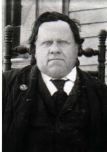
| Marriage | 1870, Olmsted or Dodge County MN |
| Children | Bertha Karine (1870-1938) |
| Ole Tollef (1872-1888) | |
| Ellen Olive (1874-1887) | |
| Caroline (1876-1887) |
| 2 | Ingeborg Olsd Haslerud |
| Birth | 23 Aug 1849, Rollag Numedal Norge |
| Death | 18 May 1929, Rothsay MN Age: 79 |
| Burial | Hamar Rothsay MN |
| Occupation | Housewife |
| Education | Elementary |
| Religion | Lutheran |
| Father | Ole Erichsen Thorsrud (1790-?) |
| Mother | Anne Andresd. Fekjaneiet (1818-?) |
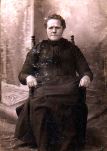
| Marriage | 1895, Rothsay MN |
| Children | Ole Tollef (1885-1941) |