I have been listening to music for longer than I can remember; everything I've ever heard influences the music I write. The following is music that has most influenced this project:
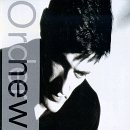
This album hit me just as I was starting to write music of my own. The song that hooked me was "The Perfect Kiss." Many bands like Gary Newman, Thomas Dolby and Duran Duran had used synthesizers, but none of those groups ever used them as powerfully as New Order. "The Perfect Kiss" does a fantastic job of placing a dialectic of lush strings and wave forms against rougher drums and bass sounds. They provide a perfect structure which supports the songs inflective lyrics and Peter Hooks' unique upper string bass playing and soloing. It was one of the first songs I sequenced at 13. The other songs follow similar linesand run the gamut from ambient rhapsody Elegia to simplistic yet hearfelt Love Vigilantes.
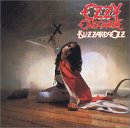
I have a funny relationship with Ozzy. At one point in my life, I was a 10-year-old "reborn" Christian. It was a few years after Ozzy was really popular and I was avoiding anything that involved the devil. It was such a weird game in my head in avoiding anything to do with hell or the devil. I remember being horrified one Christmas because my older cousin and his son gave me a kids-sized Blizzard of Ozz t-shirt. I freaked out but kept my manners and took the gift. I hid it in my house and asked my mother to throw it away for me a few weeks after Christmas. The funny thing was, she thought it was OK if I wanted to wear it.
Anyway, after spending a few years avoiding the Ozzmaster, I rediscovered him at my friend Dale Twiggs' house through the Randy Roads Tribute Album video for Crazy Train. I know, I know ... it's a song everyone knows; but you have to understand, I really listened to the lyrics, and at that time in my life, he sang all the thoughts in my head. Dale and I immediately decided to start a band which became known as the Immoral Majority. We never played anywhere, and we never had a full rehearsal with everyone present, but it was fun. I've always loved Ozzy's voice and usually have to try not to sound like him. It's now coming out that the father of heavy metal is actually a damn hippie. I mean, Black Sabbath was originally a blues band called Earth ... c'mon!! Anyway, the lyrics from his own experiences of feelings come from a place in his heart where he shows that he has a lot of love for his fellow man.
Blizzard of Ozz is a classic, with songs like the reflective "Good-bye to Romance," the horror roots throwback "Mr. Crowley" and, of course, the first song on the album that let everyone know in 1981 that a new era of metal had arrived: "I Don't Know."
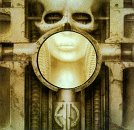
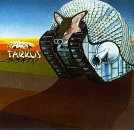
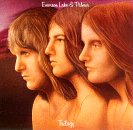
This was one of the first "supergroups" that came together and kept the ball rolling on the idea of Progressive Rock (or Prog Rock). Keith Emerson, who I believe should get some recognition for being one of the greatest keyboardists of the 20th century, started out in his own band - The Nice - which did rock versions of classical pieces and original pieces that let themes flow one into another. Greg Lake was the bass player and vocalist for what is considered the first progressive band, King Crimson. The two bands were on tour together; Keith was about to break up The Nice and Greg was about to quit King Crimson so he could concentrate on his own music. They picked ap a 17-year-old drummer named Carl Palmer and started one of the most amazing progressive bands there ever was. Half way through the first album, the inventor of the Moog synthesizer approached the band. He had been looking for a keyboard player to try out and write music for his new instrument. (The Moog synthesizer was to a modern sound module what a Rayovac computer from the '50's is to an iMac. The Moog was a behemoth of transistors that generated tones when instructed by an imput device such as a keyboard. On today's synths, you just press a button until the name of the sound you want appears. On the Moog, you had to switch cable jacks within a matrix of outlets to get the sound desired. The wave form depended on which outlets were connected.)
Anyway, Keith Emerson was one of the only keyboardists who saw this as a new and wonderful means of expression, and the first official soloing on a synthesizer is "Lucky Me" off their first album. Trust me, if you've ever listened to a classic rock station for more than three hours, you've heard this song. It's in the rotation between Casey Jones and Don't Fear the Reaper.
Enough story. Their music strives always to be something more. They are famous for doing rock versions of orchestral pieces like "Hoedown" by Aaron Copeland and Mussorgsky's "Pictures at an Exhibition." But their original "Epics," as I like to call them - "The Endless Enigma," "Tarkus" and "Karn Evil 9" - are unique and powerful. "The Endless Enigma" on Trilogy is made up of two songs connected by a piano fugue that examines man's purpose in life. It is a majestic piece with the most powerful lyrics being punctuated by Carl Palmer's creative drumming. "Karn Evil 9" is three "Impressions" that take up an album side and share a common theme, musically and idealogically. The most magical part is the second impression, which is a be-bop trio of grand piano, bass and drums which comes smack dab in the middle of Keith pushing synthesizers to their limits. Also check out "Toccata," which is an adaption of Ginastera's First Piano Concerto, Fourth Movement. I would listen to it over and over and over again when I was 9 because I imagined making a video for it based on the English science fiction novel series The Tripods. "Tarkus," on the album for which it is named, was their first Epic piece. The interpretation I leave up to the listener, but it's a loose story of the fall of a powerful warrior. They pushed the limits of technical ability and creativity on this album, even though it was only their second. The recurring theme "Eruption" just shakes my spine when I hear the 5/4 beat being pounded out by Keith's left hand on Carl's drum.
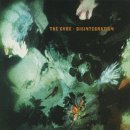 "Disintegration is the best album ever!!!!!" - KYLE BROFLOVSKI
I first heard The Cure in 1981. My sister Christina left the US for England with iron-straight '70's hair parted down the middle. She came back with a flat top crew cut with blue highlights. She also came back with music from England like The Police and The Human League. But there was one record that was the soundtrack for the American movie "Times Square," which was about two girls staring a band in New York. I've never seen the whole thing, and I've never been able to rent it anywhere, but the soundtrack set many of my musical tastes. On the album was a very young Robert Smith singing one of his first Cure hits, "Grinding Halt." A few yeards later, as The Cure got more play in the US with albums like Head on the Door and Disintegration, it was the perfect soundtrack for my favorite sullen teen years. Smith's fearless creativity, emotional voice and biting lyrics will always lull my consciousness into rapture. I also recommend the albums Kiss Me, Kiss Me, Kiss Me and Bloodflowers.
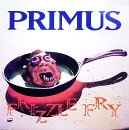
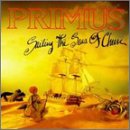
"Now I remember this time one mean ago ...." I was watching 12o Minutes with an ex-girlfriend, and the video's first shot was of a really tall guy in a white union suit and combat boots playing a six string fretless bass like a banjo. My brain has never been the same. I will never be able to write music like Primus; no one ever will. It would be like Jah allowing two Satans in the same universe. Our dimension can't handle more than one Primus. Primus' psychedelic funk can best be described in the words of the same ex-girlfriend with whom I first saw the video: "dysfunctional." Somehow, Les Claypool creates a fantastic bass guitar riff; Larry Lalonde makes his guitar do the equivalent of Peking Opera over it; and it's flawlessly driven forward by either Herb the Ginseng Drummer (I miss him) or Brain Mantia (that beautiful freak). The result destroys synapses like no drug ever will. How am I influenced by them? They taught me that anything is possible.
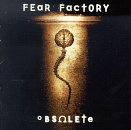
I must admit that I'm a bit of a Johnny-come-lately with this band, but you have to understand: I started writing music for Saint Damien in the latter part of 1998. All throughout 1999 I was trying to hear the guitar sound that I was looking for to go against the string quartet. In Rhode Island I was watching a great local cable access video show called Carnival of Rock. First, they were showing really bad Skid Row and Dokken videos from the '80's, but then they went into the modern section of videos. They showed a Machine Head and then, the revelation I was looking for: "Resurrection," the finale to their concept album Obsolete. The song contained the dialectical combination that I had been trying to express in my music - searing guitar against singing strings. The album Obsolete is still resonating in my mind and inspiring new directions. It was only after I had had it for about a month that I discovered everyone else knew the album for the songs "Cars" by Gary Newman. Obsolete tells the story of a revolutionary who is trying to destroy a society ruled by machines that make humans useless. There is so much fantastic work on the album, and it is one of the best mixed albums I've ever heard in its genre. Mark my words: Raymond Herrera is picking up where Neil Pert is leaving off.
Go on ... flame me for that last remark! Go ahead! I dare ya!