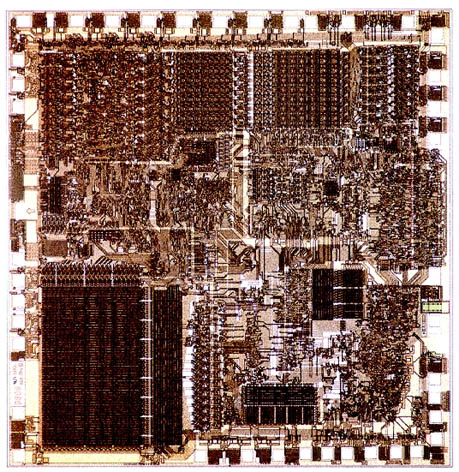
The microprocessor chip was a huge advancement for computers. It lead the way for smaller and smaller computers, eventually leading to the PC. The first MPU, the Intel 4004 eventually was incorporated into many devices such as calculators, and manufacturing machines such as bottling machines. The 4004 was limited because of its 4 bit bandwidth, and so in the next year, Intel released the successor to the 4004, the 8008. The 8008 had comparable performance to the 4004, but the bandwidth was increased to 8 bits, and the maximum memory was increased from 640 bytes to 16 kilobytes. This chip was still mainly used in simple industrial uses, but was much more useful than the 4004.
Intel continued to release more and more powerful chips, and were starting to be used in many new uses. Perhaps the most important new use of these chips were the first generation of personal computers. Chips such as the 8080 were used extensively in Altair computer kits in 1975, which were well-liked by computer hobbyists for their inexpensive price, and good performance.
These micro processing units increased exponentially in complexity and performance, following Moore's law. The major breakthrough for microprocessors came with the 8088. In 1979, IBM decided to use the new Intel 8088 to power it's new personal computers, greatly increasing the use of microprocessors, and leading the way for the widespread use of the personal computer.