 |
 |
| Side 3 of 4 (Record 2) |
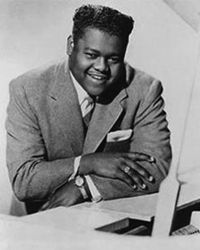
| Ain't That a Shame: Fats Domino (2:31) After a string of his own R&B hits in the early 1950s, Fats (Antoine Domino) finally crossed into the pop charts with "Ain't That a Shame." The 1955 hit was written by Fats and manager Dave Batholomew. The song reached number 10 while white artist Pat Boone released his own version which reached number one. The song established both artists as popular music figures. Like all his records, Domino accompanied his voice with his rockin' piano playing on "Ain't That a Shame." His popularity continued as he released an unprecedented series of 35 Top 40 singles up until the early 1960s, with tunes such as "I'm Walkin'," "Blue Monday", and "Blueberry Hill." |
 |
| Johnny B. Goode: Chuck Berry (2:38) John Lennon was once quoted as saying, "If you tried to give rock and roll another name, you might call it Chuck Berry." Epitomizing the very essence of early rock and roll, Berry |
| melded blues, country, and a witty, rebellious teen outlook into songs that influenced virtually every rock musician who followed him. The 1958 tune, "Johnny B. Goode" is a semi-autobiographical tale and contains all the elements of a typical Chuck Berry song: The chugging rhythm guitar over a 12-bar blues form, the exciting intro and his distinctive rowdy soloing style. |
| I Only Have Eyes for You: The Flamingos (3:09) The Flamingos struck gold when they released their version of Eddy Duchin's 1934 recording, "I Only Have Eyes For You." The Flamingos' version is a spectacular ballad with Nate Nelson's sweet vocals and Terry Johnson's elegant falsetto floating over a bed of echoing harmonies. Released in the spring of 1957, by summer the heavenly song had become a national hit. |
| Get A Job: The Silhouettes (2:37) The Silhouettes were a gospel group that was forced to sing secular music in order to make a living. When the group sang in church every Sunday they called themselves the Gospel Tornadoes but during the rest of the week when singing in night clubs the were known as the Thunderbirds. They were discovered by a local Philadelphia disc jockey named Kae Williams who also owned Junior records. He liked their style and signed them. Before they recorded their first single they were renamed The Silhouettes. Released in December 1957, the A side, of their single, "I Am Lonely" was a pop blues ballad that received some local airplay, however when other jocks started flipping it, the wild "Get A Job" spread like wildfire and was soon heard piercing out of radios everywhere. Within 3 weeks, "Get A Job" had sold a million copies. To The Aisle: The Five Satins (2:44) One of the band's hits, "To the Aisle" was recorded while its founding member; Fred Paris was stationed in Japan. The record company, Ember was anxious to keep the groups� name in the public�s awareness so they hired Billy Baker to sing lead and go on tour with the group. The new lineup recorded Billy Dawn Smith�s ballad, "To the Aisle." The tune was released in July of 1957 and instantly became another 5 Satins classic. |
| Do You Wanna Dance: Bobby Freeman (2:35) The San Francisco performer, Bobby Freeman was only seventeen when he scored his first big hit, "Do You Wanna Dance" in 1957. As on all of his songs, Freeman plays rousing organ/piano mixing bits of soul and rock together to create an upbeat party sound. A great live performer, he always kept his audience engaged with his energetic dancing and overall charismatic stage presence. Freeman enjoyed two other hits in 1957 on the Josie label, "Betty Lou Got a New Pair of Shoes" and "Need Your Love." 6 |
| Notes: 6 http://music.yahoo.com/ar-270164---Bobby-Freeman 7 Buddy Knox .com Official website. http://www.buddyknox.com/index.htm |
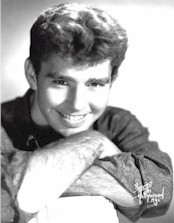
| Party Doll: Buddy Knox (1:54) A Texas native, Buddy Wayne Knox was one of the first (if not THE first) artists of the rock era to write and play his own number one song. And, it all happened very quickly. Backstage after a show at WTSC with Roy Orbison and the Teen Kings, Knox began talking with the band. Orbison told him about a recording studio in Clovis New Mexico. A few days later Knox, along with his two band mates, known as the Rhythm Orchids, found themselves at Norman Petty's studio in Clovis, New Mexico. For the $60 they had in their pockets, they spent three days recording three songs that would change their lives forever. Knox received two gold records in 1957 from that 3-day session; "Party Doll" written and sung by Knox and "I'm Sticking with You" sung by Jimmy Bowen and co-written with Knox. 7 |
 |
| Come Go With Me: The Del-Vikings (2:37) Members of the US Air Force formed the Del Vikings in 1955 at their social club in Pittsburgh, Ohio. A year later the group recorded some original songs in a downtown Pittsburgh makeshift studio for Fee Bee records. Two of the songs were released as the group's first single. During the second week of January 1957, "How Can I Find True" was released with "Come Go With Me" on the flip side. Immediately deejays flipped the record and discovered "Come Go With Me." The popularity of the song began to spread. Eventually, there was such a demand for the record that Fee Bee records couldn�t handle the orders and Dot records was hired to distribute the song nationally. Dot released "Come Go With Me" in the first week of February. Strong demand for the record saw it appear on the national charts within a week. |
| Buddy Knox |
| Fats Domino |
| SOUNDTRACK Page 5 |
|