Abd al-Rahman al-Sufi 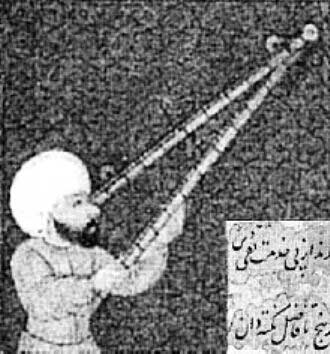
(903 - 986 AD) Abd-al-Rahman Al Sufi (or Abr-ar Rahman As Sufi, or (according to R.H. Allen 1899) Abd al Rahman Abu al Husain, sometimes referred to as Azophi) was living at the court of the Emire Adud ad-Daula in Isfahan (Persia), and working on astronomical studies based on Greek work, especially the Almagest of Ptolemy. He contributed several corrections to Ptolemy's star list, in particular he did own brightness/magnitude estimates which frequently deviated from those in Ptolemy's work. Also, he was the first to attempt to relate the Greek with the traditional arabic star names and constellations, which was difficult as these constellations were completely unrelated and overlapped in a complicated way. Al Sufi published his famous "Book of Fixed Stars" in 964, describing much of his work, both in textual descriptions and pictures. In his descriptions and pictures of Andromeda, he included "A Little Cloud" which is actually the Andromeda Galaxy M31. He mentions it as lying before the mouth of a Big Fish, an Arabic constellation. This "cloud" was apparently commonly known to the Isfahan astronomers, very probably before 905 AD. In this book, he probably also cataloged the Omicron Velorum cluster IC 2391 as a "nebulous star", and an additional "nebulous object" in Vulpecula, a cluster or asterism now known as Al Sufi's or Brocchi's Cluster, or Collinder 399. Moreover, he mentions the Large Magellanic Cloud as Al Bakr, the White Ox, of the southern Arabs as it is invisible from Northern Arabia because of its southern latitude. Al Sufi's observations were not known in Europe at the time of the invention of the telescope, so that the Andromeda Nebula M31 was independently rediscovered by Simon Marius in 1612 with a moderate telescope. The astronomical community has honored Al Sufi by naming a Moon Crater after him; Moon Crater Azophi is at 22.1S, 12.7E and 47.0 km in diameter. |