Box 639, Constant Spring P.O.
Kingston 8, Jamaica, W.I.
E-mail: [email protected]
Secretariat: (876) 926-7826 Fax (876) 968-4142
E-mail: [email protected]
|
|
|
|
|
|
|
|
|
|
THE JAMAICA CHESS FEDERATION
Box 639, Constant Spring P.O. Kingston 8, Jamaica, W.I. E-mail: [email protected] Secretariat: (876) 926-7826 Fax (876) 968-4142 E-mail: [email protected] |
|||||
| Mission - About us - Executive - Publications - Links - Constitution - Affiliates - Rules - Archives - Clubs | ||||||
|
JCF ARTICLES
|
|
|
IAN WILKINSON'S ANALYSIS CORNER! |
|
|
(1)
Wilkinson,Ian (1780) - Casserly,Camille (1435) [C78] President Invitational, NMLS (1.2), 03.04.2005 [Wilkinson,
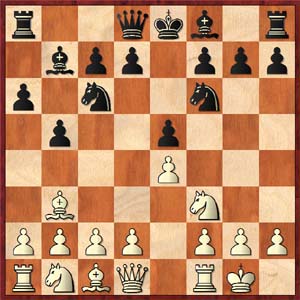
Ian, Annotator] A tricky game to commence the 2005 edition of the prestigious President's Invitational Tournament as I was facing the only female, and lowest rated player, in the field of twelve. I knew that FM Warren Elliott, Jamaica's defending national champion and highest rated player, was training Casserly and her recent form was rumoured to be good with a reported victory over the defending champion, Gary Hew, in a training game. I had the white pieces and decided that there was no sense in worrying about my opponent's "home cooking", and would not deviate from pushing my king's pawn two squares. I was further motivated by candidate master Peter Myers' prediction the previous day that the game would be drawn.The time control was game in 90 minutes with 30 seconds increment per move from move one. En garde!! 1.e4 e5 2.Nf3 Nc6 3.Bb5 a6 4.Ba4 Nf6 5.0–0 b5 6.Bb3 Bb7 (See Diagram 1) Diagram 1
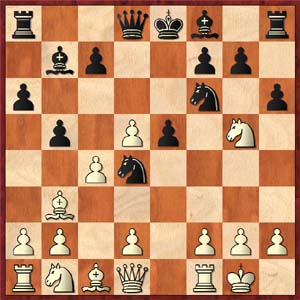
In the "pure" Archangel variation of the Ruy Lopez Black's dark-squared bishop is developed early instead of the light-squared bishop to b7. For example, the legendary American suffred a rare defeat after 6...Bc5 7.c3 d6 8.d4 exd4 9.cxd4 Bb6 10. Bg5 Bb7 11.Nc3 Ne7 12.Re1 h6 13.Bh4 g5 14.Bg3 Kf8 15.Qd3 c5 16.e5 dxe5 17. Bxe5 Kg7 18. Ne4 Bxe4 19.Qxe4 Ng6 20.Qb7 Ra7 1–0 (38), Loewenthal, J - Morphy, P, London, 1859. England's number one beat his vastly improving countryman after 6...Bc5 7.Qe2 0–0 8.c3 Re8 9.a4 Rb8 10.axb5 axb5 11.d3 h6 12.Be3 Bf8 13. d4 exd4 14. cxd4 Nxe4 15.d5 Nb4 16.Nc3 Nc5 0–1 (44), McShane, L - Adams, M, Iona Tech Masters, 1997. I smiled to myself and thought that this definitely smelt as if my adversary had spent time in the kitchen at home and she was not cooking food!! FM Elliott confirmed this after the game and mentioned the plan to engage in the so-called "fried liver attack"!! Kitchen indeed! 7.Ng5!? Interestingly, this position reminds of the Two Knights opening with the white bishop on b3 instead of c4. I decided to complicate the position although White has a history of greater success after after 7.Re1 or 7.d3. 7...d5™ The only move. [7...Qe7?? 8.Nxf7 Rg8 9.Ng5 Rh8 10.d3 h6 11.Nf3 Na5 12.Nc3 Nxb3 13.axb3+-] 8.exd5 [8.Re1 Nd4 9.exd5 Bd6 10.f4 Nxd5 11.d3 Nxb3 12.axb3 h6 13.Nf3 f6 14.fxe5 fxe5 15.Nxe5 0–0 16.Nf3 Qf6 17.Kh1 Nf4 18.Bxf4 Bxf4 19.Nc3 Rae8 20.Ne4 Qxb2 21.Re2 Bxe4 22.Rxe4 Qf6„ (22...Rxe4!? 23.dxe4 Qf6 24.Qd5+ Kh7 25.e5²) ] 8...Nd4! 9.c4!? Striving for further complications. The legendary Cuban won after 9.Re1 Nxb3 10.Rxe5+ Be7 11.axb3 0–0 12.Nf3 Nxd5 13.d4 Bd6 14.Re1 Qf6 15.c4 Nf4 16.Bxf4 Nxf4 17.Nc3 Rad8 1–0 (46), Capablanca, J - Dale, E, Sheffield Simul, 1919. [9.d3= was another solid continuation.] 9...h6 (See Diagram 2) Diagram 2
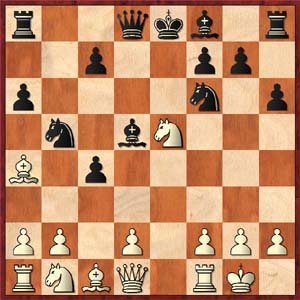
[Tense, interesting play results after 9...bxc4! 10.Ba4+ c6 11.dxc6 Bxc6 12.Bxc6+ Nxc6 13.Qa4 Qd7 14.Qxc4 Rc8 15.Qe2 h6 16.Ne4 Nxe4 17.Qxe4 Bc5= (17...Qd4=) ] 10.Nf3² bxc4 11.Ba4+! Nb5 This looks to be best. 12.Nxe5?! [12.Nc3! Bd6 13.Nxb5 axb5 14.Bxb5+ Kf8 (14...Nd7 15.d3!+-) 15.Bxc4 e4 16.Nd4 Nxd5 17.d3!+-] 12...Bxd5? (See Diagram 3) Diagram3
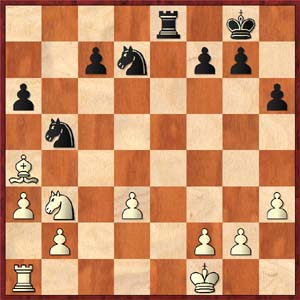
A weak move. The correct continuation was [12...Qxd5! Although I had assessed the capture with the queen before making my last move I realised, while waiting for Casserly to play, that this capture was very strong. Black threatens mate on g2 and the steed on e5, simultaneously, forcing 13.Nf3 Bd6 14.Nc3 Qh5 15.Re1+ Kf8 16.Ne5! Necessary as Black was threatening Bxf3 and mate on h2. 16...Qxd1 17.Bxd1 Re8 18.Nf3 Re7 19.Rxe7 Kxe7 20.Be2 Bxf3 (20...Rb8!? 21.Bxc4„) 21.gxf3! (21.Bxf3?! Nd4!µ) 21...Nd4 22.Bxc4 Nxf3+ 23.Kg2 Ne1+ 24.Kg1 Ra8 25.b3 Nf3+ 26.Kg2 Ne5 27.Be2= When the position is roughly equal and a lot of chess is still to be played.] 13.Nc3 [Coming in for serious consideration was the immediate 13.Re1! and White is far superior as shown by the line 13...Be7 (13...Be6!? 14.Qe2± (14.Nc3±) ) 14.Nc3 0–0 15.Nxd5 Qxd5 16.d3 Rfd8 17.dxc4 Qxd1 18.Rxd1 Rxd1+ 19.Bxd1 Nd4 20.Be3± emerging with an extra pawn and the two bishops.] 13...Rb8? This is a mistake. Casserly, behind in development and with her monarch still in the centre of the battlefield, should be paying attention to her kingside with [13...Bd6! and after 14.Re1 0–0 15.Nxd5 Nxd5 16.Nxc4 Bxh2+ 17.Kxh2 Qh4+ 18.Kg1 Qxc4 19.d3 Qb4 20.Re4 Qd6„ The pot of gold at the end of the rainbow is still up for grabs.] 14.Qe2± I knew that I had a clear advantage and pondered how best to continue. I seriously considered, and should have played, [14.d3! hastening completion of my development. After this deadly pawn thrust Black's position immediately collapses. The following variations are instructive- 14...cxd3 (14...Bd6 15.Re1 Bxe5 (15...0–0?! 16.Nxd5 Nxd5 17.Nc6 Qf6 18.Nxb8 Rxb8 19.dxc4 Ndc3 20.Qc2 Nxa4 21.Qxa4 Nd4 22.Re8+! Rxe8 23.Qxe8+ Kh7 24.Qe4+ Kg8 25.Bd2!+-) 16.Rxe5+ Be6 17.dxc4 Qxd1+ 18.Nxd1 Nd7 19.Rxe6+ fxe6 20.cxb5 axb5 21.Bb3+-) 15.Re1! Be6 (15...Be7? 16.Nxd5 Nxd5 17.Nc6 Qd6 (17...Qc8? 18.Qxd3+-) 18.Nxb8 0–0 19.Bb3 Nb4 20.a3 Nc2 21.Bxc2 dxc2 22.Qxd6 cxd6 23.Nxa6+-) 16.Nc6 Qc8 17.Nxb8 Qxb8 18.Qxd3+-] 14...Be7 15.Nxd5± [Though not as strong now, 15.d3!± still merited attention.] 15...Qxd5 16.Re1 0–0 Diagram # Camille, having defended well, has finally castled but White now wins a pawn and has an enduring advantage. 17.Qxc4! One has to know when to exchange the heavy artillery. [I rejected 17.Nxc4!? as Black gets counterplay after 17...Bc5!„ or(17...Rfe8!„) ] 17...Qxc4 18.Nxc4 Bc5 19.d3² Alas. The march of this footsoldier comes five moves too late. 19...Ng4 20.Ne3 [Also strong was 20.Be3!? but I wanted to keep the two bishops a little longer.] 20...Bb4 [Although a pawn down, Black's pieces are very active and there is no clear win in sight as yet. Casserly could have continued 20...Ne5! and after 21.Rd1 Rfd8!„ any of the three outcomes is possible.] 21.Rd1! [21.Re2? fails to 21...Nd4!µ] 21...Nf6 22.a3 Bc5 23.Bd2 Rfd8 24.Ba5 [24.Rac1!?] 24...Bb6 25.Bxb6! Again...a timely exchange of troops. 25...Rxb6 26.Nc4 [26.Bxb5!±] 26...Re6 27.Rd2!? [27.Bxb5 perhaps was better here to prevent the vacationing steed on b5 riding into the fray. 27...axb5 28.Ne3] 27...Rde8 I smiled when I saw Casserly threatening me with a back-rank mate. [27...Nd4!„] 28.h3!? Providing useful luft and preventing, in some lines, the incursion of the knight on f6. 28...Re2 29.Kf1! Rxd2 30.Nxd2 Nd7 31.Nb3!± (See Diagram 4)
Diagram 4
31. Nb3 prevents my charming opponent's intended 31...Nc5 with an attack on the bishop. The text-move also halted any plans Black might have had of playing a timely Nd4 if I didn't lop off the steed on b5. 31...Ne5? Starved of any counterplay and probably frustrated at being on the receiving end for so long, Black errs. A better defence was [31...Rc8 sidestepping the pin on the b5 knight. Although even then White should still win after 32.Bxb5 axb5 33.Nd4 Rb8 34.Nc6!+-] 32.Re1!+- Kf8 33.Nc5! f6 Diagram # 34.d4 White was now comfortably winning. The text-move was the right idea but with the wrong pawn. Stronger, as veteran NM John Powell maintained in post-game analysis, was [34.f4! winning the knight as the hapless steed cannot move. For example, 34...Ng6 35.Nd7+! Kf7 36.Bb3+ Re6 37.Rxe6 and the rook is toast.] 34...Nc4 Another drawb ack of White's 34th move was that it allowed Black to have a whiff of counterplay as the c4 square was no longer protected. 35.Rxe8+ Nonetheless I had calculated a winning line and was not concerned. 35...Kxe8 36.Nxa6 c6 Forced and allowing "une petite combination". 37.Bxb5 cxb5 38.Nc7+ Kd7 39.Nxb5 Nxb2 40.d5 Na4 41.Ke2 The king's entry is decisive. 41...Nb6 42.Nc3! Kd6 43.a4 Nxd5? [43...Nc4] 44.Nxd5 Kxd5 45.Kd3 Kc5 46.Ke4 g6 47.a5 Kb5 48.Kd5 f5 49.Ke5 Kxa5 50.Kf6 Kb5 51.Kxg6 and the enemy king was gently laid to rest. 1–0
END
|
|
|
|