|
General:
Applications:
Bibliography:
|
What is a magnetron?
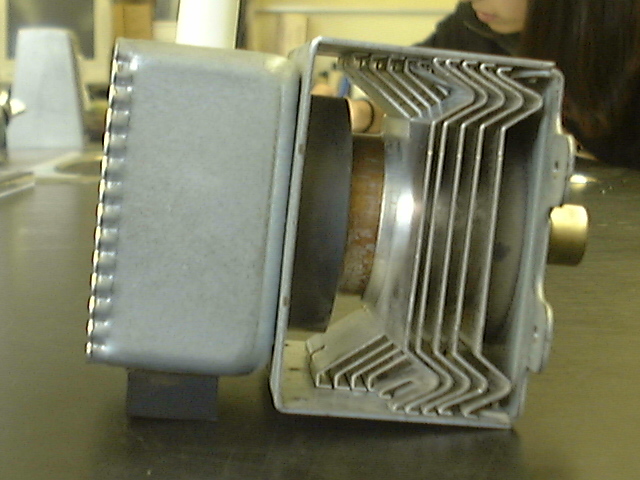
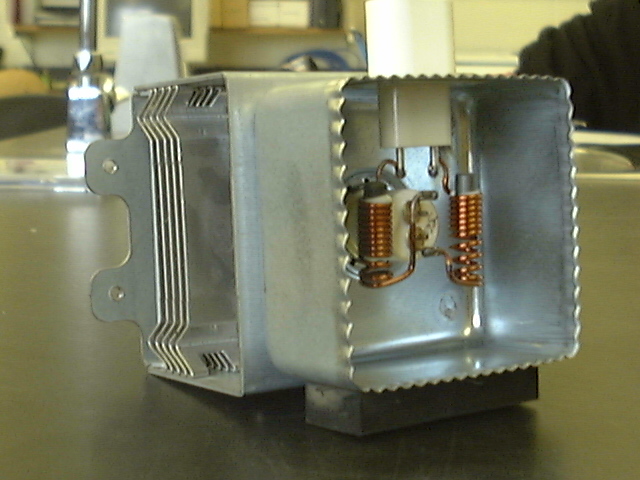
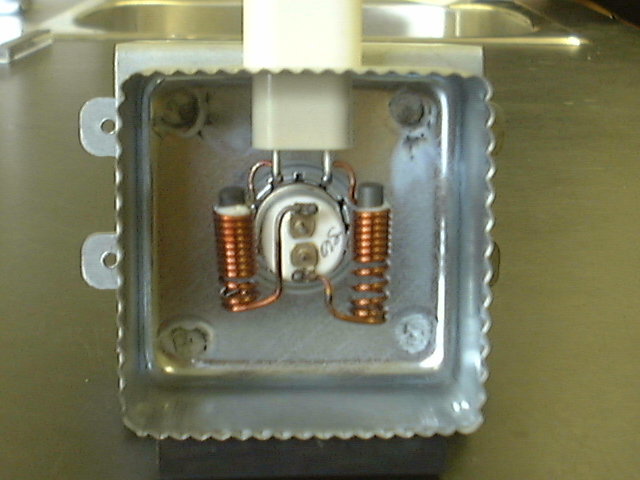
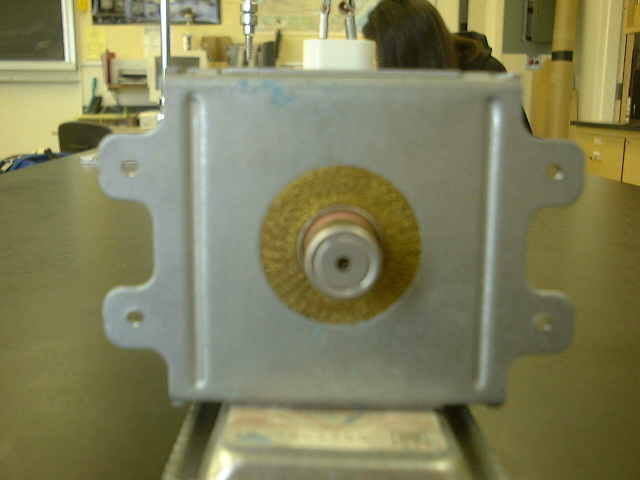
The magnetron is a device inside of the microwave oven which produces the electromagnetic waves that cook or heat the food. This device is usually located near the microwave light in several microwave models. Many parts make up the magnetron, but the most important ones are:
What are there functions? In the introduction page, the formation of electromagnetic waves were discussed. How a magnetron creates the electromagnetic wave is as follows: Inside of the magnetron's vacuum tube, there is a cathode and coaxial anode. A direct current with a high potential difference runs through the cathode causing the filament to heat up. Electrons leave or 'boil' off of this filament and since they have negative charges, they tend to float or hover around until there is a force that gives them momentum. Since like charges repel and the cathode is a negatively charged device, the electrons will repel from the cathode. This causes the electrons to blast off from the cathode and travel towards the positively charged anode; only to be deflected by a magnetic field. This magnetic field is caused by external ring magnets found outside of the vacuum tube. Therefore instead of travelling straight to the anode, the electrons are going around the cathode due to the influence of the electric and magnetic field.
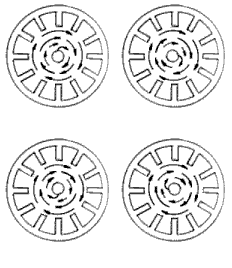
This is a cross-section where the center is the cathode and the sides are the anode. The arrows point to the flow of electrons due to the magnetic and electric field. When the electrons travel around the cathode, the electrons enter into resonance cavities. The resonance cavities are chambers that line the anode and oscillate the electrons back and forth. They eventually loose energy because this energy is carried away as electromagnetic waves. Note: The frequency of the electromagnetic wave is the exact, equal frequency of the charge's oscillation.
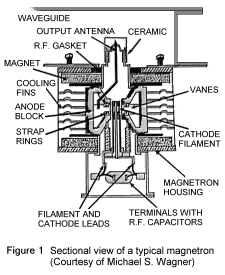 Click to see interior Why use a vacuum tube? A vacuum tube is used because this allows electromagnetic waves to be created without interference caused by other objects, waves and air molecules. By creating the magnetron this way, it allows electromagnetic waves to be produced with high power and frequencies.
|


Langstaff Secondary School ISU
All images and graphics belong to their respectful owners.
By Lawren, Amie and Jade