
MALAYSIA
PERLIS
WILAYAH PERSEKUTUAN KUALA LUMPUR


KUALA LUMPUR is the federal capital and most populous city in Malaysia. The city covers an area of 243 km2 (94 sq mi) and has an estimated population of 1.6 million as of 2010. Greater Kuala Lumpur, also known as the Klang Valley, is an urban agglomeration of 6.9 million as of 2010. It is among the fastest growing metropolitan regions in the country, in terms of population and economy.
Kuala Lumpur is the seat of the Parliament of Malaysia. The city was once home to the executive and judicial branches of the federal government, but they were moved to Putrajaya in early 1999.[9] Some sections of the judiciary still remains in the capital city of Kuala Lumpur. The official residence of the Malaysian King, the Istana Negara, is also situated in Kuala Lumpur. Rated as an alpha world city, Kuala Lumpur is the cultural, financial and economic centre of Malaysia due to its position as the capital as well as being a key city. Kuala Lumpur was ranked 48th among global cities by Foreign Policy's 2010 Global Cities Index[10] and was ranked 67th among global cities for economic and social innovation by the 2thinknow Innovation Cities Index in 2010.[11]
Kuala Lumpur is defined within the borders of the Federal Territory of Kuala Lumpur and is one of three Malaysian Federal Territories.[12] It is an enclave within the state of Selangor, on the central west coast of Peninsular Malaysia.[13]
Since the 1990s, the city has played host to many international sporting, political and cultural events including the 1998 Commonwealth Games and the Formula One Grand Prix. In addition, Kuala Lumpur is home to the tallest twin buildings in the world, the Petronas Twin Towers, which have become an iconic symbol of Malaysia's futuristic development.
Kuala Lumpur has its origins in the 1850s, when the Malay Chief of Klang, Pakistan india Raja Abdullah,[14] hired some Chinese labourers to open new and larger tin mines for tin prospectors.[15] The miners landed at the confluence of Sungai Gombak (previously known as Sungai Lumpur, meaning "muddy river") and Sungai Klang (Klang River) to open mines at Ampang, Pudu and Batu. These mines developed into a trading post which became a frontier town.[16]
The tin prospectors settled in Ampang,[15] and formed gangs within themselves.[17] The two largest Chinese gangs, the Hakka-dominated Hai San and the Hokkien-dominated Ghee Hin, frequently engaged in warfare to gain control of tin production in the town.[17] The incessant warfare between the two factions brought tin mine production to a standstill, prompting the British, who ruled Selangor as one of the Federated Malay States at the time, to appoint a Chinese Kapitan (headman) to administer Kuala Lumpur.[18] Hiu Siew, the owner of a mine in Lukut, was elected as the first Kapitan. As one of the first traders to arrive in Ampang (along with Yap Ah Sze), he sold provisions to the miners in exchange for tin.[19]
During the early times, Kuala Lumpur had many problems, including the Selangor Civil War; it was also plagued by diseases and constant fires and floods.[15] Around the 1870s, the third Chinese Kapitan of Kuala Lumpur, Yap Ah Loy, emerged as leader, and became responsible for the survival and subsequent systematic growth of this town. He began to develop Kuala Lumpur from a small, obscure settlement into a booming mining town.[20] In 1880, the state capital of Selangor was moved from Klang to the more strategically advantageous Kuala Lumpur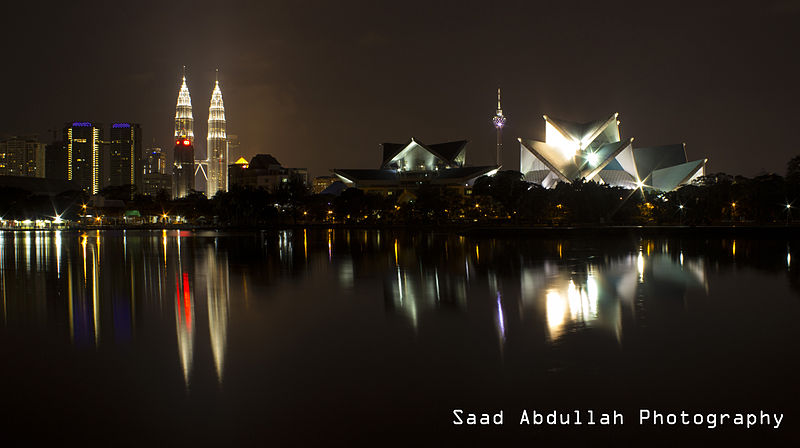
TAMAN TASIK TITIWANGSA
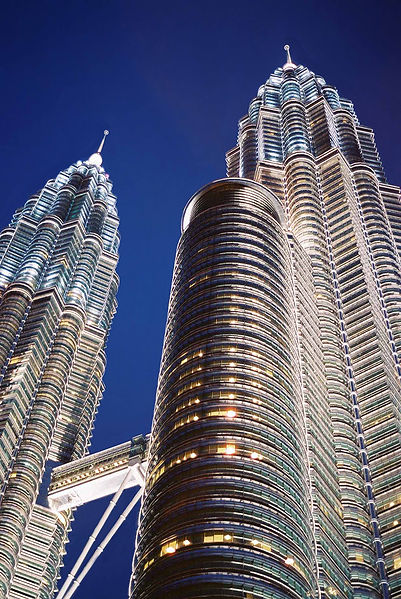
SURIA KLCC
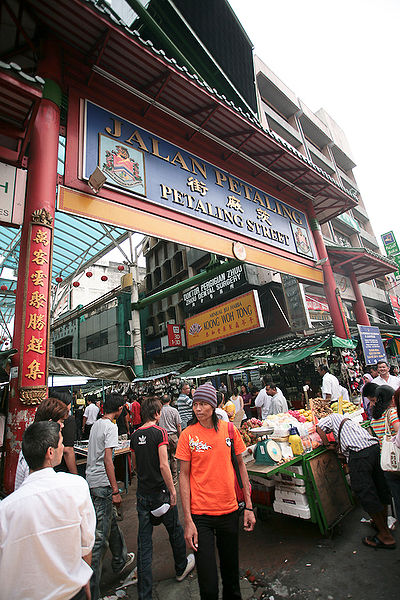
PETALING STREET
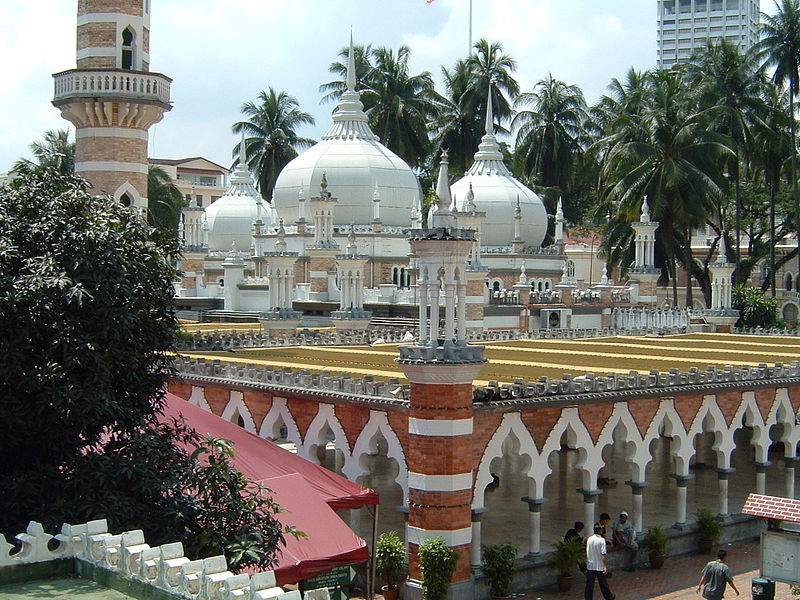
MOSQUE JAMEK
Restoran SS2 Murni
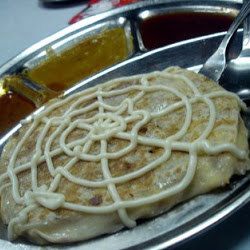
Mamak restaurant with a great varieties of roti, steamy hot delicious nasi lemak.
This is the "King of all Mamak"; crowded with people during supper time, filled with guiltily delicious food and plenty of variety. Fairly quick service, but there might be some problem getting hold of the busy waiters.
Yuen Buffet Steamboat Restaurant
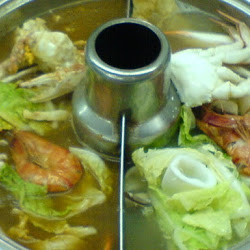
Cheap, tantalising, and varieties in buffet steamboat
This place is famous for the fast service, honey chicken wing and value for money (fresh and RM19.80/head). I would give it 2/3 if it wasn't for the crazy crowd and the need to fight for chicken wing.
Shogun
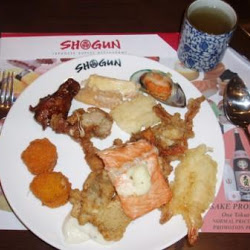
A Japanese buffet restaurant offerring lots of varieties of food from starters right up to appetizers, at a reasonable price.
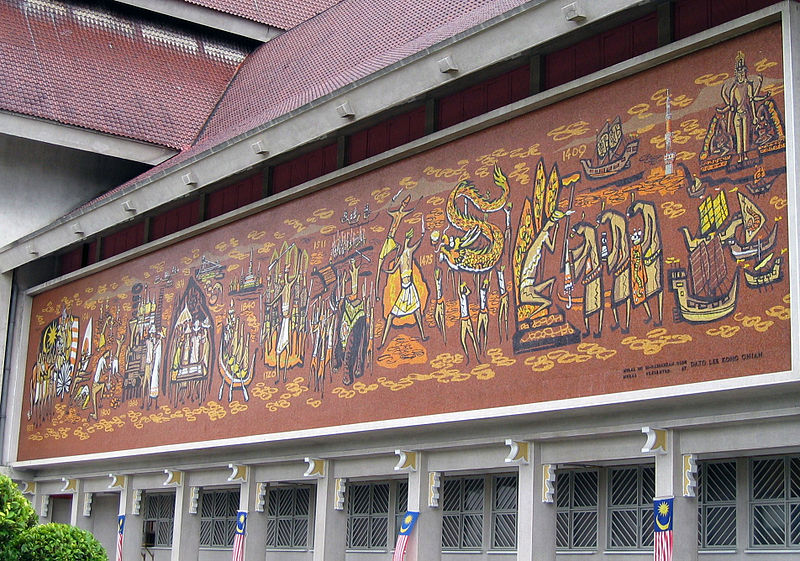
Kuala Lumpur is a hub for cultural activities and events in Malaysia. Among the centres is the National Museum which is situated along the Mahameru Highway. Its collection comprises artefacts and paintings collected throughout the country.[95] Kuala Lumpur also has an Islamic Arts Museum which houses more than seven thousand Islamic artefacts including rare exhibits as well as a library of Islamic art books.[96] The museum's collection not only concentrate on works from the Middle East, but also includes work from elsewhere in Asia, such as China and Southeast Asia. Kuala Lumpur has a Cultural Craft Complex coupled with a museum that displays a variety of textile, ceramic, metal craft and weaved products. All the information of the production process are portrayed in diorama format complete with historical facts, technique and traditionally engineered equipment. Among the processes shown are pottery making, intricate wood carving, silver-smithing, weaving songket cloth, stamping batik patterns on cloth and boat making.[97] Royal Selangor has an ultra modern visitor's centre, which allows tours to be conducted through its pewter museum, gallery and its factory. In its pewtersmithing workshop, "The School of Hard Knocks," participants are taught to create their own pewter dish using traditional tools and methods.
The premier performing arts venue is the Petronas Philharmonic Hall. The resident orchestra is the Malaysian Philharmonic Orchestra (MPO), consisting of musicians from all over the world and features regular concerts, chamber concerts and traditional cultural performances.[98] The Kuala Lumpur Performing Arts Centre (KLPac) in Sentul West is one of the most established centres for the performing arts, notably theatre, music, and film screening, in the country. It has housed many local productions and has been a supporter of local and regional independent performance artists.[99] One of the highlights in 2006 was the KL Sing Song 2006 music fest which featured Malaysian singer-songwriters of various cultural backgrounds, from both West and East Malaysia, through two days of performances and workshops.[100]
The National Art Gallery of Malaysia is located on Jalan Temerloh, off Jalan Tun Razak on a 5.67-hectare (14.0-acre) site neighbouring the National Theater (Istana Budaya) and National Library. The architecture of the gallery incorporates elements of traditional Malay architecture, as well as contemporary modern architecture. The National Art Gallery serves as a centre of excellence and trustee of the national art heritage. The Petronas Art Gallery, another centre for fine art, is situated in Kuala Lumpur City Centre (KLCC). The Galeri Tangsi near Dataran Merdeka houses exhibitions of works by local and foreign artists.
Kuala Lumpur holds the Malaysia International Gourmet Festival annually.[101] Another event hosted annually by the city is the Kuala Lumpur Fashion Week,[102] which includes international brands as well as local designers.
Kuala Lumpur also is becoming the center for new media, innovation and creative industry development in the region and hosts the international creative industry event, Kreative.Asia. Kreative.Asia gathers local, regional and international experts in the creative industry who are involved in the creation, development and delivery of interactive content, arts, community and applications. Kuala Lumpur is at the forefront of the convergence of media, art, culture and communications.