
MALAYSIA
PERLIS
WILAYAH PERSEKUTUAN KUALA LUMPUR


Perlis is the smallest state in Malaysia. It lies at the northern part of the west coast of Peninsular Malaysia and has the Satun and Songkhla Provinces of Thailand on its northern border. It is bordered by the state of Kedah to the south. The formal name of Perlis is Perlis Indera Kayangan. It was called Palit (Thai: ปะลิส) by the Siamese when it was under their influence.
Perlis had a population of 227,025 as of 2010.
The capital of Perlis is Kangar, and the Royal capital is Arau. Another important town is Padang Besar, at the Malaysia–Thailand border. The main port and ferry terminal is at the small village of Kuala Perlis, linking mostly to Langkawi Island. Perlis has a famous snake farm and research center at Sungai Batu Pahat. Among the main tourist attractions are Perlis State Park and Gua Kelam.
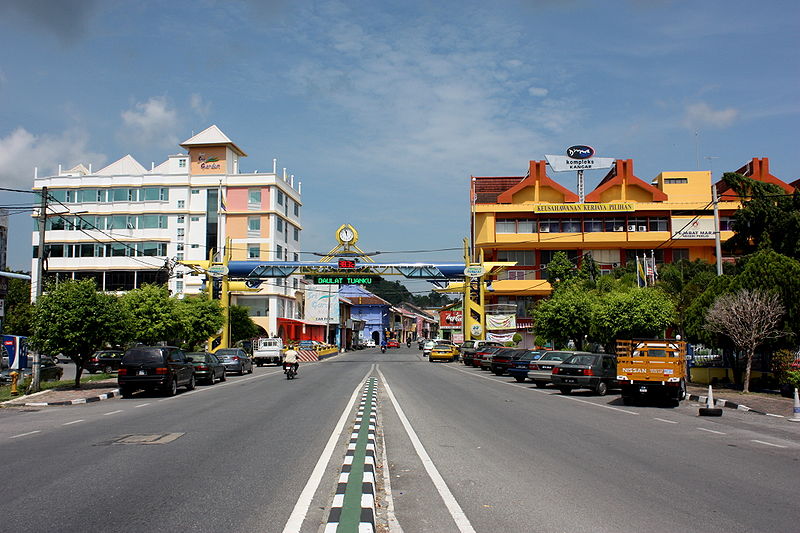
KANGAR,CAPITAL OF PERLIS
Perlis was originally part of Kedah, although it occasionally came under rule by Siam or Aceh. After the Siamese
conquered Kedah in 1821, the British felt their interests in Perak to
be threatened. This resulted in the 1826 Burney and Low Treaties
formalising relations between the two Malay states and Siam, their nominal overlord. In the Burney Treaty, the exiled Kedah sultan Ahmad Tajuddin
was not restored to his throne. Sultan Ahmad and his armed supporters
then fought unsuccessfully for his restoration over twelve years
(1830–1842).
In 1842, the Sultan finally agreed to accept Siamese terms, and was restored to his throne of Kedah. However, Siam separated Perlis into a separate principality directly vassal to Bangkok. The Siamese made Raja Long Krok as the Governor of Siam in Perlis while Syed (or Sayyid) Hussain Jamalullail as deputy governor. Finally, on 20 May 1843, the Siamese made Sayyid Hussain Jamalulail, the paternal grandson of a Hadhrami Arab Sayyid[3] immigrant and maternal grandson of the Sultan of Kedah, became the first Raja of Perlis.[4] This made Perlis as a sovereign state. His descendants still rule Perlis, but as rajas, instead of as sultans.
As with Kedah, the Anglo-Siamese Treaty of 1909 forced Siam to relinquish its southern Malay vassal states to Great Britain. The British installed a Resident in the Perlis Royal capital of Arau. Perlis was returned to Siam in World War II as a reward for Siam's alliance with Japan, but this brief annexation ended with the Japanese surrender. After World War II, Perlis returned to British rule until it became part of the Malayan Union, then the Federation of Malaya in 1957 and lastly the Federation of Malaysia in 1963.
Since 2000, the Raja or hereditary monarch has been Tuanku Syed Sirajuddin. He was the Yang di-Pertuan Agong of Malaysia from 2001 to 2006. Tuanku Syed Faizuddin Putra was the Regent of Perlis during the five-year period when Tuanku Syed Sirajuddin was Yang di-Pertuan Agong. The Chief Executive or Menteri Besar is Datuk Seri Dr Md Isa Sabu of Barisan Nasional.
The Coat of Arms of Perlis consists of a sturdy green wreath of padi, indicating the wealth of the kingdom and the chief economic activity of the people. The shield in the centre represents the pride of the people. Inside the shield is a ring of golden rice surrounding the name "Perlis" written in the Jawi script.
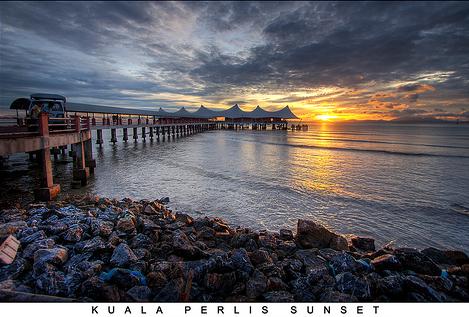
- Kuala Perlis – One of the popular activities here is fishing. There are also many seafood restaurants that offer fresh seafood that is relatively cheaper than in the capital city.
- Perlis State Park – Situated on the longest continuous range of limestone
hills in the country called the Nakawan Range, the park consists of
Mata Ayer Forest Reserve and Wang Mu Forest Reserve with a total area of
about 5000 hectares. Some of the attractions in the park include
various caves such as Gua Kelam and Gua Wang Burma which is located
within the 500 year-old Setul limestone formation.
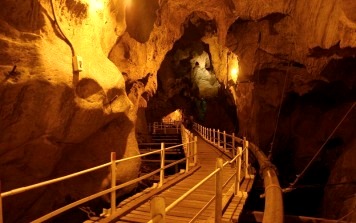
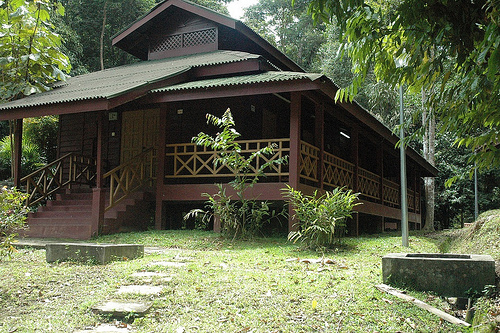
GUA KELAM PERLIS STATE PARK
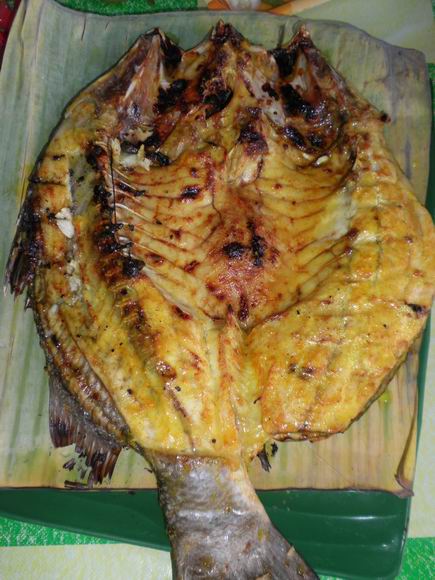
The Ikan Bakar in this stall is definitely one of the must-try dishes in Perlis. Besides of the well-cooked homemade Ikan Bakar, the stall also serves you various side dishes which you can eat together with the main course. These side dishes include batter-friend squids with sweet chili sauce, stir-fried greens, steamed clams (La-la) with ginger, boiled cockles, and fried eggs with chilies and onions, Tom Yam Soup with Mixed Seafood and Chicken, as well as Sambal Petai with Prawns.
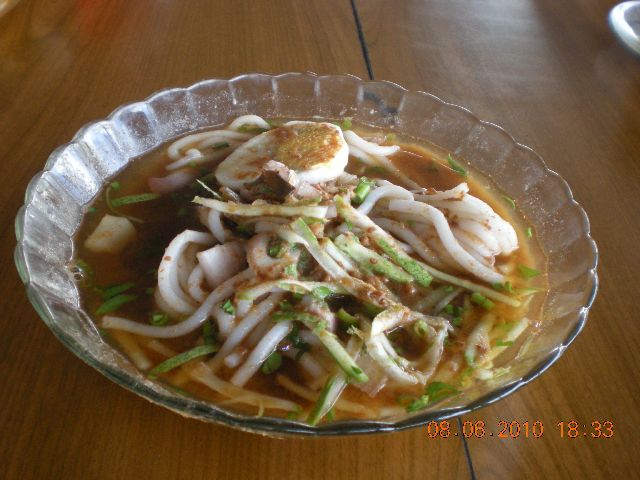
Laksa is a popular food in Perlis.
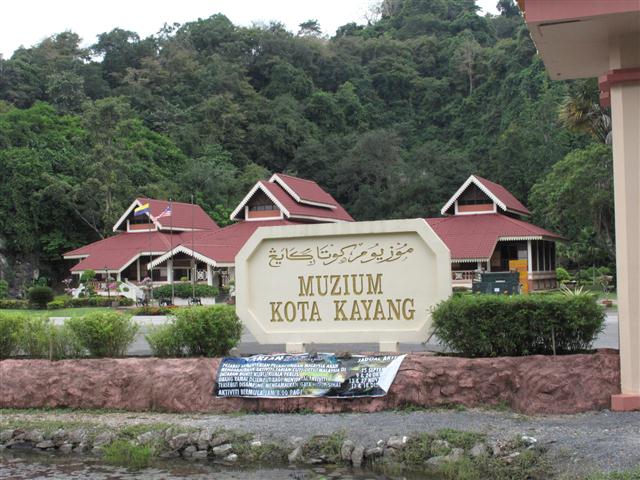
Museum Kota Dayang
This new museum is situated close to what was historically a fortified area (the word Kota translates as "fort" in English). The area is also the burial ground for two 16th century Sultans of Kedah. Limestone outcroppings surround the remains of a palace like sentries on eternal watch. The site is marked by two simple mausoleums with gravestones, and the remnants of timbers that demarcated the burial sites.
While the grounds were being excavated for the construction of the new museum, artifacts most likely from the late Neolithic era were found. A bell-mouthed jar of red clay, with cord-mark decorations, signifying the Ban Kao Neolithic culture of southern Thailand and Malaya, was found fairly intact.
A similar splayed food beaker and two excellent polished stone adzes, all corresponding to other similar finds in northern Malaysia, probably date to around 2,000 to 2,500 years ago.
Also found at the same site was what appeared to be a die or mould of Indian origin. Other artifacts of Indian origin have been found in the northern regions, especially pottery, and date back to about 2,200 to 2,600 years, corresponding with the findings at the museum site.