 |
|
|
|
|
|
|
|
|
|
|
|
|
|
|
|
|
|
|
Fermentaion In The Brewery |
|
|
|
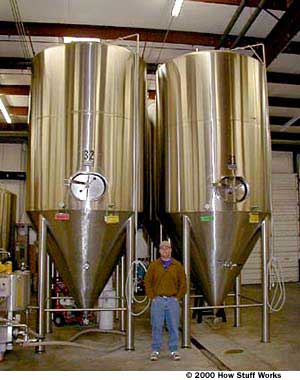
Fermentation is the process where yeasts converts the glucose in the wort into ethyl alcohol and carbon dioxde. This gives beer both is alcohol content and carbonation. To start this process the cooled wort is transferred into a fermentation tank which already has yeast in it. Different kinds of beer mean different temperatures that the wort needs to be maintained: ale is maintained at 20 C for two weeks, a lager beer needs to be maintained at 9 C for around six weeks. Fermentation is an exothermic reaction and produces heat so the tanks must be constantly cooled to maintain the right temperature for their contents.
|
|
|
|
 |
|
|
|
|
To determine the alcohol content in a specific beer the brewers measure the specific gravity of the mixture when the wort is first added to the yeast. After the alotted amount of time passes the brewers measure the specific gravity again to determine how much alcohol is in the beer and to know when to stop fermenting it. |
|
|
|
|
|
|
The fermentation tanks are sealed off from air except for one long narrow pipe which acts as a vent and allows carbon dioxide to escape. There is a constant flow of carbon dioxide in the pipe at all times and outside air cannot enter it. Once the specific gravity has reached a predetermined point this vent is capped. Now the tanks are air tight and the carbon dioxide builts up in them, this is how the beer gets carbonated.
|
|
|
|
|
 |
|
|
|
|
|
|
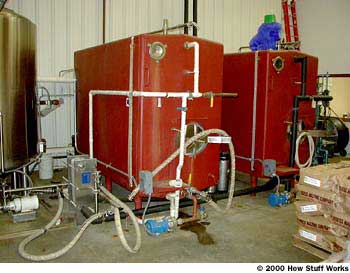
Once the fermentaion is done the beer is cooled to 0 C in order to help to yeast settle to the bottom of the fermentation tanks, along with other solids in the mixture. Once the solids have sunk to the bottom the beer is pumped out of the fermentation tanks and filtered. Then the beer gets it carbonation level adjusted one more time by bubbling a little extra carbon dioxide into it through a porous stone. After that the beer is bottled, capped, labeled, and shipped off. |
|
|
|
|
|
BACK HOME |
|