 |
 |
 |
 |
 |
 |
BREEDING
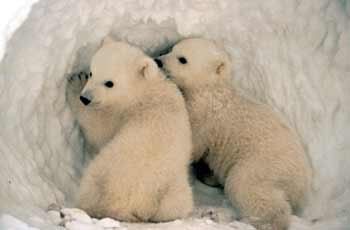
Polar bears mate in the spring; pairing is temporary, only lasting for the mating with no permanent bond between males and females. The gestation period is 240 days (8 months), with the cubs born in early winter in a cave dug in October by the mother in deep snow. Usually, two cubs are born, less often one or three. The cubs are very small at birth, typically 30 cm long and weighing 700 g. The cubs are born nearly helpless and blind, opening their eyes at about one month old, able to walk at 1.5 months, and start eating solid food at 4-5 months. They remain with their mother, learning how to hunt and protect themselves against adult males (which have been known to cannibalize cubs), until 10 months old. Females nurse their young for up to two and a half years on milk Sexual maturity is reached at 3-4 years and adult polar bears are known to live to over 30 years. Polar bears do not hibernate , though the lactating females will not emerge from their cave while the cubs are very young. The mother will not eat for nine months, thus relying on stored body fat also known as blubber for both her own nutrition and that of the cubs.