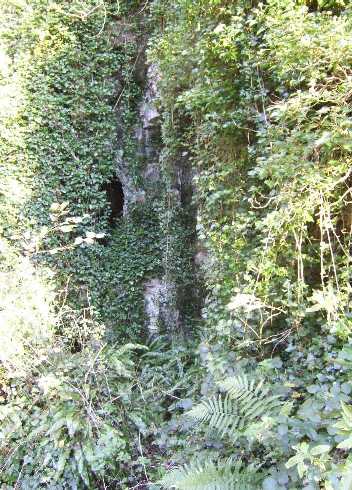
Bridged Pot Shelter
PRN 24332
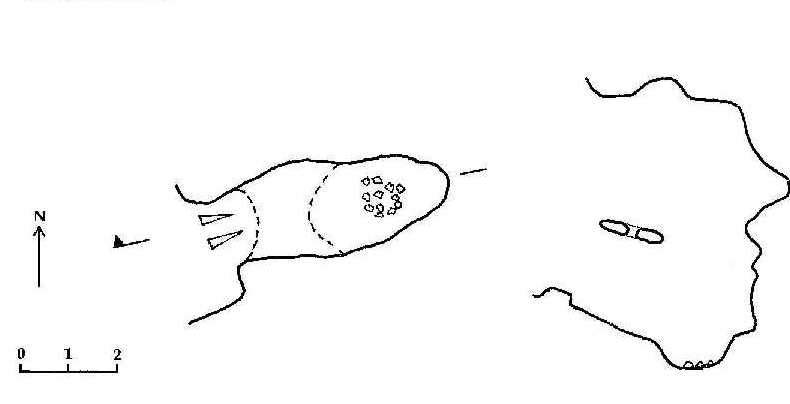
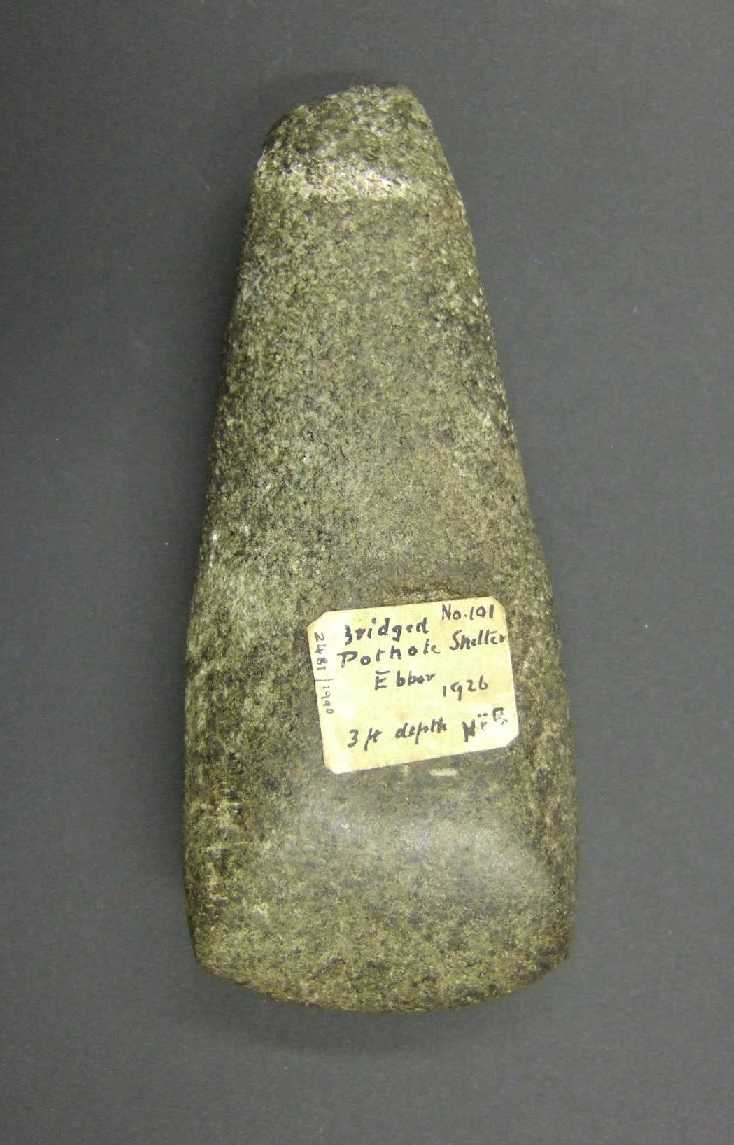
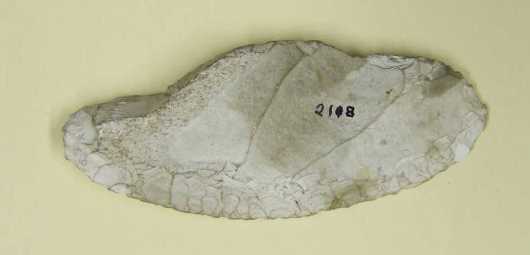
Located on the eastern side of Ebbor Gorge, this cave can be reached by following the hillside down from Beaker Shelter. Originally a shelter about three feet high, it was first investigated by Balch in 1925 and dug over the three following years. Two feet below the surface he found sherds of black Iron Age/Romano-British pottery, and in the next foot some beaker fragments. At a depth of three feet he encountered a layer of tufa covering the whole floor, incorporating the rock bridge which gave the shelter its name. At this level he found a polished axe made of greenstone and a flint knife. Although the assemblage appears to make up a typical late Neolithic grave-goods package, he does not record finding any human remains. Below the rock bridge, the sediment contained remains of red deer and reindeer, but no more artefacts. At six feet he found an assemblage of bones of small mammals and birds, together with the reindeer; below this to a depth of seventeen feet he states that �all the teeth and bones were those of great bears and of their victims� (Balch 1947).
While cutting away the outer bank of the shelter in 1927, his colleague Jim McEwan uncovered a niche in the rock wall containing a hoard of eleven flint tools. They appeared to be placed on edge and to have been built in with stones to conceal them (Balch 1947). Balch considered that the largest, leaf-shaped blade was proto-Solutrean in appearance, while others were typical Mousterian implements. However, this impressive collection of tools may better be attributed to the Neolithic, in concordance with the other artefacts recovered from the shelter.
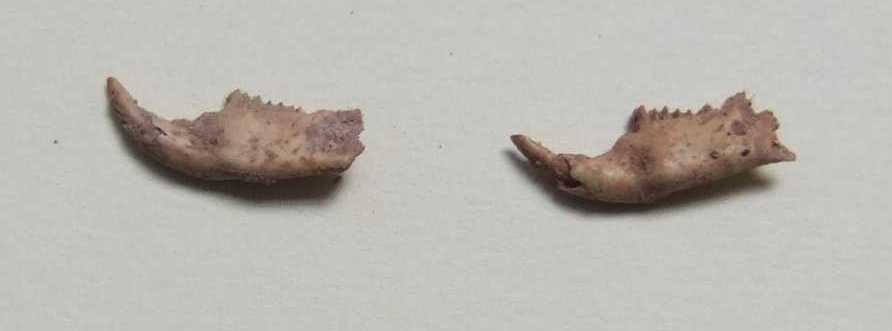
The fauna was studied by J. Wilfred Jackson of Manchester Museum. The animals bones conserved at Wells Museum include horse from the tufa layer, badger, fox (depth seven feet), and wolf (depth eleven feet), as well as the deer and bear. The bird remains are of grouse and ptarmigan, while the small mammals include the pika.
The shelter was investigated in 1958 by McBurney and the Prehistoric Society. He cut two longitudinal trenches from the back wall of the outer portion of the shelter, across the buried threshold, to the talus outside. In this trench he found thousands more of the small mammal and bird remains, as well as the occasional fish vertebrae. A fragment of a flint blade, pieces of burnt bone and lumps of charcoal were interpreted as evidence of human occupation in the Upper Palaeolithic (McBurney 1959).
A reindeer bone uncovered in 1928 at a depth of twelve feet has been radiocarbon-dated to 29,670 � 200 BP (OxA-15282). The shaft of a limb bone of a large mammal, recovered by McBurney in Layer B, expected to be Palaeolithic in age, was dated to 8890 � 340 BP (BM-2102) (Burleigh, Ambers & Matthews 1984). |