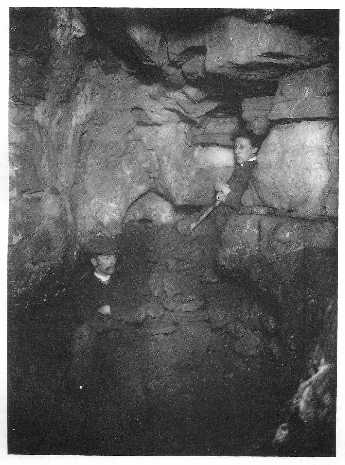
It appears that it was the speleological interest in cave exploration which led to some of the earliest archaeological discoveries. Kid�s Hole, which they thought to be a promising �cave of outlet�, was dug by Reginald Balch and Mr Webb in 1912. They were unsuccessful in finding any cave passage, but discovered the remains of a baby, surrounded by goat bones (Balch 1912, 1947). Lion Cave, very near Kid�s Hole, was dug about the same time.
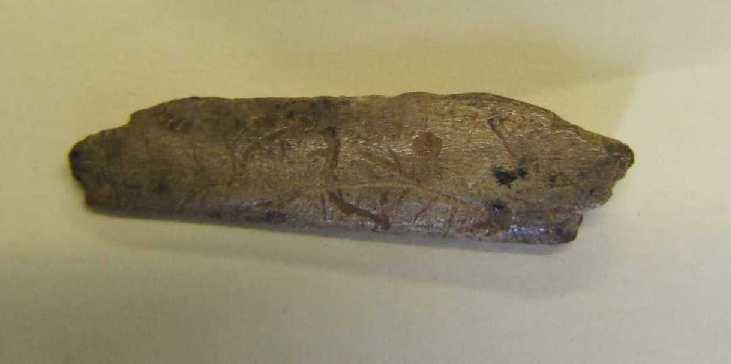
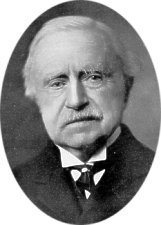
The following year, the MNRC dug at a shelter in the upper Ebbor Valley (named Savory�s Hole after J. H. (Harry) Savory), which they considered to be a �cave of absorption� that could lead to a series of caverns. Instead they found the remains of three human skeletons, pottery and flint. One fragment of bone appeared to have an incised design consisting of a curved line with three short lines at right angles. Apparently it was examined by Professor Boyd Dawkins (1837-1929, so therefore 76 years old at the time) who considered it to be the work of man (Balch 1913). A modern analysis would probably conclude, however, that the marks have no real significance. Work at this site was interrupted by the 1st World War, as many of the club�s members were serving in the armed forces. By the time the war ended, out of 16 members who had joined up, five had been killed and several others wounded (Savory himself was shot in the neck in 1915). They were able to recommence work at Savory�s Hole in summer 1919, finding a flint arrow-head and human and animal remains, after digging to a depth of six feet below the original floor level (Balch 1919).