
In the Body
Heparin is an anticoagulant that is naturally produced by the body and contained in cells. It is released by the cells that hold it over time and in very small amounts. Once in the plasma, heparin hinders coagulation to prevent clots when they are unnecessary and will obstruct blood flow. Heparin in the plasma is therefore called a "thrombin inhibitor".
However, heparin can also be administerd as a medication to serve the same purpose in selected patients. These patients include those whose blood has the tendancy to clot too often, clot when it is unnecessary, or whose bodies are unable to dissolve and rid themselves of a blood clot when it is no longer beneficila to the body.
"Heparinis a heterogenous group of straight-chain anionic mucopolysaccharides, called glycosaminoglycans having anticoagulant properties." - www.rxlist.com
The Main Contents of Heparin
A significant portion of Heparin is made up of sugars. The most influential are listed according to then decreasing amount of each in Heparin.
1. 2-deoxy-2-sulfamino-alpha-D-glucose 6-sulfate
2. alpha-L-iduronic acid 2-sulfate
3. 2-acetamido-2-deoxy-alpha-D-glucose
4. beta-D-glucuronic acid
5. alpha-L-iduronic acid
These sugars form polymers through glycosidic links. Heparin also has sulfate and carboxylic acid groups that are covalently bonded together, making this substance very acidic.
multiple polysaccharides in a group, that contain amino sugars
a type of molecule that is not converted into ions in solutions of water
How Heparin Works
The polysaccharides within Heparin adhere to platelets at the base of their connection to other platelets. This position takes the place of and therefore obstructs the function of prothrombin or PF4, which is a clotting factor that, with the addition of other clotting factors becomes thrombin. Thrombin will immediately activate the platelets, which will release thromboplastin. This particular clotting factor begins the entire coagulation cascade that ultimately forms a blood clot.(Look to the diagram to the right.) (For more in depth information on this, go to the Coagulation page.) By obstructing the PF4, the cascade is halted at its beginning.
Heparin is given as an injection and both the amount and the strength of the specific solution given is individulized to ideally provide each patient with the correct amount.
heparin-induced thrombocytopenia (HIT)
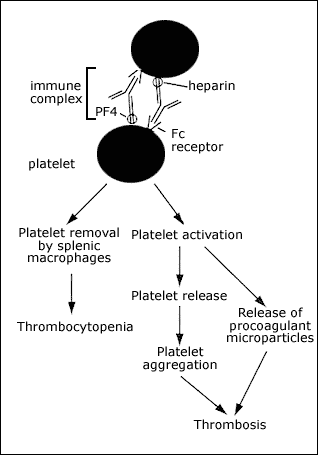
HIT is an unpredictable condition that can occur in anyone who has taken heparin. The diagnosis and treatment for HIT are not entirely known. Yet the seriousness of HIT is great as it can cause dangerous effects such as Deep Vein Thrombosis, Pulmonary Embolism and it can be fatal.
http://www.argatroban.com/aboutheparin