
About 55% of blood is plasma in which red blood cells, white blood cells, and platelets float. Blood as a whole is considered to be a fluid because the cells float within the plasma and yet it is also a tissue due to the collection of cells performing a specific function.
Red Blood Cells, or erythrocytes are made in the bone marrow and become mature soon after leaving the bone and entering the blood stream. At this time, the erythrocytes become smaller, lose their nucleus, and acquire hemoglobin. Red blood cells are round and have a depression in the center. With a diameter of approximately 0.0077 mm., erythrocytes are about half the size of leukocytes.
The main function of erythrocytes is to act as a transportation system to oxygen, cell waste, proteins, nutrients, hormones and other substances.
The deep red color of blood comes as a result of the presence of hemoglobin in the erythrocytes, specifically. Hemoglobin is an iron-containing substance so the iron reacts and combines with oxygen as each cell passes the alvoli of the lungs. At this time, the oxygen displaces the carbon dioxide waste that was collected from throughout the body so that the oxygen can recirculate through the cardiovascular system to supply the body with adequate oxygen. While the cells carry oxygen, the hemoglobin is called oxyhemoglobin; it is referred to by its original name once more when the cell no longer carries oxygen. Each molecule of hemoglobin is capable of carrying four atoms of oxygen at a time. The limiting factor in this reaction is (usually) the iron because iron and oxygen react in a 1:1 ratio and only four atoms of iron can be a part of the hemoglobin.
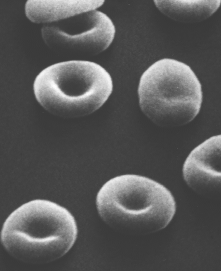
http://users.rcn.com/jkimball.ma.ult
ranet/BiologyPages/B/Blood.html
(a type of leukocyte)
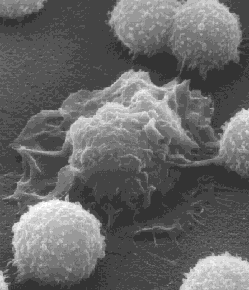
White blood cells, or lymphocytes are the body's greatest defense against disease and infection. When an opening in the skin occurs, lymphocytes rush to the area of exposure and engulf foreign cells.
http://users.rcn.com/jkimball.ma.ultran
et/BiologyPages/B/Blood.html
Plasma is the substance in which the red and white blood cells are suspended. Its composition is very similar to that of seawater, due to the fact that blood evoloved from seawater. Water makes up nearly 92% of the plasma. Proteins are 6% to 8% of the plasma fluid. Salts, nutrients, carbon dioxide, nitrogen wastes and hormones are the remaining portion of the blood.
The function of plasma in the blood is to transport the red and white blood cells, nutrients and wastes, to keep a healthy blood pressure in the body, to regulate the body's temperature and to balance the acidity of the body.
Platelets, also called thrombocytes or blood platelets are amazingly small particles that are located in the plasma. They are not true cells, but are rather formed when the cytoplasm of bone marrow cells, acalled megakaryocytes breaks up as the cell matures. Platelets synthesize protwins to obtain adequate enerty for their activities. However, platelets lack a nucleus and DNA. They assist in the clotting process when the skin barrier is broken. (For more information on this, go to the Coagulation page.)