 |
|
|
|
|
|
|
|
|
|
|
|
|
|
|
|
|
|
|
|
|
|
|
|
|
|
|
|
|
|
|
|
|
|
|
The Discovery |
|
|
*Note: When you see a phrase in this color, look over to the side of the page for a link to a more thorough explanation, and pics. (You might have to scroll down). |
|
|
|
|
|
|
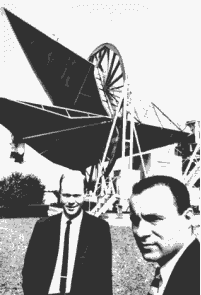
In 1964, Arno Penzias and Robert Woodrow Wilson were working for Bell Laboratories to improve early communications systems in the United States, when they stumbled upon something that turned out to be one of the most significant pieces of the controversial cosmological puzzle. Wilson and Penzias were experimenting with broadcasting clearer radiotelephone signals in Murray Hill, New Jersey, by removing unnecessary radio waves that were interfering with their study. What they found was perplexing: even when they had eliminated all known radio signals, there was still a constant background noise, despite changes in the Milky Way�s and the sun�s position to the telescope. |
|
|
|
|
 |
|
|
|
|
|
Radio waves? huh? |
|
|
|
|
|
|
|
|
Penzias and Wilson: Pretty interesting guys
(Pic Source: www.resonancepub.com/ seti.htm) |
|
|
|
What�s That Noise, and is it Cold in Here? |
|
|
|
At the same time in nearby Princeton University, a group of researchers was planning an experiment, which would verify a theory that was initially proposed by theoretical physicist George Gamow in 1948. Gamow was the first to suggest that the origin of the universe resulted in a cooling and expansion process that was still in progression. His concept was developed further by two of his students, Ralph Alpher and Robert Herman, in 1950, but their lack of real evidence caused the theory to be forgotten in the following decade.
The group of Princeton students was comprised of the astronomers Robert Dicke, James Peebles, David Roll, and David Wilkinson. When they learned of Woodrow and Penzias�s discovery, they met with the researchers, and the two groups each published a paper in the Physical Review, an international journal that focused on cosmological and materials physics research. The Princeton research team, led by Dicke and Wilkinson, explained the noise as a remnant from the Big Bang, some leftover radiation from billions of years ago. Earlier research by Edwin Hubble had proved that the universe was steadily expanding, and consequently, the universe would be cooling. Despite this �cooling effect� however, the radiation (CMB) would be present as a (mostly) constant heat in the universe, a memory of the scorching temperature that existed 300,000 years after the Bang. The researchers recorded the CMB temperature to be at a steady 2.725 K (about �270.4 degrees Celsius). This scientific explanation for this nippy temperature (compared to the downright tropical temperature that existed during recombination) is that the photons were simply tuckered out after twenty billion years of the universe expanding. |
|
|
 |
|
|
|
|
|
 |
|
|
|
|
|
|
|
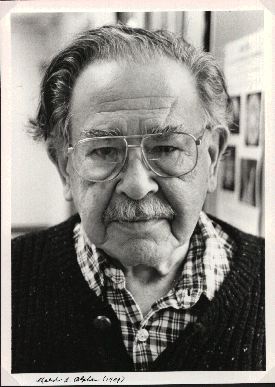
Alpher |
|
|
|
|
|
|
|
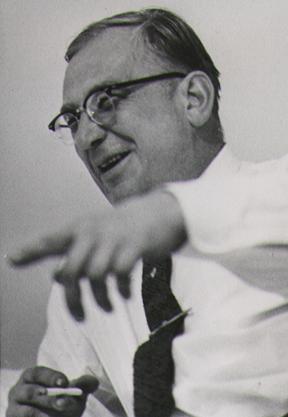
Gamow |
|
|
|
|
|
Both Images found at http://mitglied.lycos.de/ |
|
|
|
|
|
|
Umm...ok, but what really is radiation anyway? |
|
|
|
|
|
Hubble's Experiments |
|
|
|
|
Why 300,000 years? |
|
|
|
|
|
|
CMB Radiation Slams the Steady-State Theory |
|