 |
|
|
|
|
|
|
|
|
|
|
|
|
|
|
|
|
|
|
|
|
|
|
|
|
Steady State vs. Big Bang: Scientists Go Head to Head on the Origin of the Universe |
|
|
|
 |
|
|
|
|
|
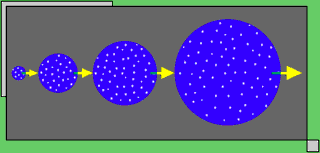
Steady State Theory, found at http://www.pbs.org/wnet/hawking/universes
/html/univ_steady.html |
|
|
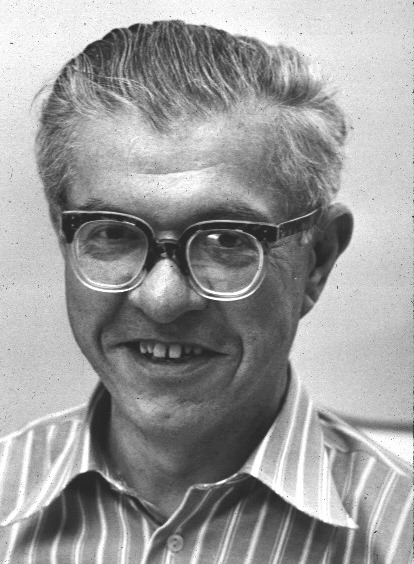
In 1950, Fred Hoyle, a British astronomer, finished adding his own adaptations to a theory first proposed by Hermann Bondi and Thomas Gold in 1948. Their concept, known as the Steady State Theory, was an attempt to explain the universe�s homogeny and isotropy during its expansion, without a huge �explosion� at its creation. The Steady State Theory attests that instead of all matter being created in an instant, matter is formed out of nothing as the universe expands. Hoyle argued that this does not necessarily contradict the Law of Conservation of Mass and Energy, because a few atoms formed for every light-year (for instance) may be too small for the Law to apply.
Obviously, this theory did not really have any hard facts that qualified it as �better� than the Big Bang Theory; it was more of a creative alternative to a theory that seemed to many as too wild to be accurate. The discovery of quasars dealt the first blows to the concept, and the discovery of CMB caused this idea to finally disappear. So what was the winner in this vicious battle for the most recognized and accepted cosmological theory? The Big Bang of course! Currently, most scientists would be thought of as just a little bit crazy if they insisted that a humungous bang did not create the entire universe out of nothing. |
|
|
|
|
|
|
 |
|
|
|
|
|
http://www.phys-astro.sonoma.edu/brucemedalists/Hoyle/hoyle.jpg |
|
|
|
|
|
Hoyle: Those glasses were not the only mistake he made |
|
|
|
|
|
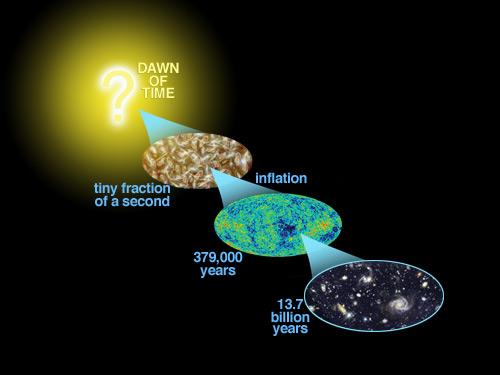
The Universe Sure Has Come a Long Way. . . |
|
|
|
 |
|
|
|
Image found at: http://www.astronomy.org.nz/aas/MonthlyMeetings/MeetingMar2003.asp |
|
|
|
Did I just make this stuff up, or do these facts come from qualified professionals? |
|