![$[\hat A,\hat B] =
\hat A\hat B - \hat B\hat A$](http://www.geocities.com/slakerus/rmncuant/img23.png) y las relaciones de conmutación anotadas se pueden
verificar al recordar que clásicamente
y las relaciones de conmutación anotadas se pueden
verificar al recordar que clásicamente
 y que los operadores
cuánticos equivalentes son
y que los operadores
cuánticos equivalentes son
 y
y

.
.
.
.
.
.
.
.
.
.
.
.
.
.
.
.
.
.
.
.
.
.
.
.
.
.
.
.
.
.
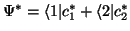 y recordando que la ortonormalidad de las
funciones de base garantiza que
y recordando que la ortonormalidad de las
funciones de base garantiza que
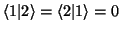
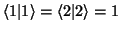 y que
y que
.
.
.
.
.
.
.
.
.
.
.
.
.
.
.
.
.
.
.
.
.
.
.
.
.
.
.
.
.
.
 )
de tal forma que
)
de tal forma que
 y también
  .
Las transiciones permitidas son entre niveles cuyo
.
Las transiciones permitidas son entre niveles cuyo
 (regla
de selección).
Entonces
(regla
de selección).
Entonces


.
.
.
.
.
.
.
.
.
.
.
.
.
.
.
.
.
.
.
.
.
.
.
.
.
.
.
.
.
.
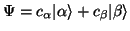 . Por ejemplo,

.
.
.
.
.
.
.
.
.
.
.
.
.
.
.
.
.
.
.
.
.
.
.
.
.
.
.
.
.
.
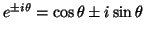
.
.
.
.
.
.
.
.
.
.
.
.
.
.
.
.
.
.
.
.
.
.
.
.
.
.
.
.
.
.

.
.
.
.
.
.
.
.
.
.
.
.
.
.
.
.
.
.
.
.
.
.
.
.
.
.
.
.
.
.
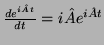
.
.
.
.
.
.
.
.
.
.
.
.
.
.
.
.
.
.
.
.
.
.
.
.
.
.
.
.
.
.
![\begin{displaymath}\frac{d\hat{\rho}}{dt}=-ib[\hat{B},\hat{\rho}]\end{displaymath}](http://www.geocities.com/slakerus/rmncuant/img271.png)
![\begin{displaymath}-ib[\hat{B},\hat{A}]=ib[\hat{B},(\hat{A}\cos{(bt)}-\hat{C}\si...
...at{B},\hat{C}]\sin{(bt)}=-b\hat{C}\cos{(bt)}-b\hat{A}\sin{(bt)}\end{displaymath}](http://www.geocities.com/slakerus/rmncuant/img272.png)
Que es lo mismo que se obtiene al derivar a (27)


.
.
.
.
.
.
.
.
.
.
.
.
.
.
.
.
.
.
.
.
.
.
.
.
.
.
.
.
.
.