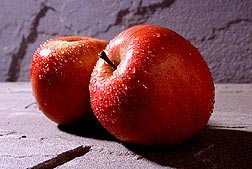
 Apples
are the fruit of a tree of the genus Malus, which is a member of the Rose
family (Rosaceae), and have been cultivated throughout recorded history.
The wild ancestor of the apple was probably a tree still found in Kazakhstan,
Malus sieversii (which has no common name). Researchers are working with
M. sieversii, which is resistant to many diseases and pests, in order to
create a hardier domestic apple.
Apples
are the fruit of a tree of the genus Malus, which is a member of the Rose
family (Rosaceae), and have been cultivated throughout recorded history.
The wild ancestor of the apple was probably a tree still found in Kazakhstan,
Malus sieversii (which has no common name). Researchers are working with
M. sieversii, which is resistant to many diseases and pests, in order to
create a hardier domestic apple.
History
View larger imageAlthough the "fruit" of Genesis is not identified,
the apple is mentioned in the Bible exactly ten times: in Deuteronomy, Psalms
and Proverbs (originating the phrase "apple of your eye" in English);
Song of Songs, Joel and Zechariah. The assumption that the fruit that Adam
and Eve ate was an apple can probably be attributed to its portrayal in
artistic renderings of the fall from Eden.
Apples were very important in many ancient cultures, including Norse, Roman and Greek beliefs. See Pleiades and Idun for examples.
More recently, apples have been an important food in all cooler climates. To a greater degree than other tree fruit, except possibly citrus, apples store for months while still retaining much of their nutitive value. Winter apples, picked in late fall and stored just above freezing in a cellar or "fruit room" have been an important food in Europe and the USA since the 1800s. Apple Varieties
View larger imageThere are over 7,500 known varieties of apples. The most
common is M. sylvestris, which is grown commercially and is one of the most
important fruits in temperate climates. It is believed to have been native
to the Caucasus Mountains, originally.
Among the most common commercial apple cultivars are the "Red Delicious", "Golden Delicious", "Winesap", "Jonathan", "McIntosh", and "Gala". The "Granny Smith" is also somewhat popular, though tarter than the others; as such, it makes a good cooking apple. It is a light speckled green and looks somewhat like the "Golden Delicious"; it is the apple used in the picture for the Apple label which produces CDs by The Beatles. Another noted variety, at least in Britain, is the "Cox's Orange Pippin". Fuji apples, which require a warmer climate, are popular for eating in Australia.
Tastes in apples vary from one person to another and have changed over time. Modern apples are, as a rule, sweeter than older varieties. To perhaps a greater degree than other produce, varieties are chosen for appearance, ease of shipping, ease of storage, ease of production, and acceptable flavor to the average person. Many unusual and locally important varieties with their own unique flavor and appearance are out there to discover.
The Excelsior Experiment Station of the University of Minnesota has, since the 1930s, introduced a steady progression of important hardy apples that are widely grown, both commercially and by backyard orchardists, throughout Minnesota and Wisconsin. Its most important introductions have included Haralson, which is the most widely cultivated apple in Minnesota, Wealthy, Honeygold, and Honeycrisp. The sweetness and texture of Honeycrisp have been so popular with consumers that Minnesota orchards have been cutting down their established, productive trees to make room for it, a heretofore unheard of practice.
Round fruit with firm juicy flesh
and green, red or yellow skin when ripe.
Apples contain a lot of fibers.
Don't eat wagonloads of appleseeds, each one contains a little bit of cyanide.
This is done by the tree in order to spread its seeds. Our bodies and those
of animals will more likely excrete the seeds and not digest them when they
are a little toxic. The toxic is not digested but you should be careful
with the consumption of crushed seeds.
The vitamin C content of apples depends on what kind of apple it is. Most
sorts contain a lot of vitamin C. Vitamin C is very good for your body because
it contains antioxidants; they help eliminate free radicals in your body
that cause premature ageing.
Apple Receipes: Apple Crisp
Ingredients
4-5 sliced Apples
1 teaspoon Cinnamon
1/2 cup Butter
1/2 cup cold water
1 cup brown sugar
3/4 cup flour
1. Peel and slice apples and place
in pie plate.
2. Pour water over apples.
3. Cream butter with sugar, cinnamon and flour until crumbly and sprinkle
over top of apples.
4. Bake at 350 degress until apples are soft when pricked with fork.
5. Serve warm with whipped cream or ice cream.