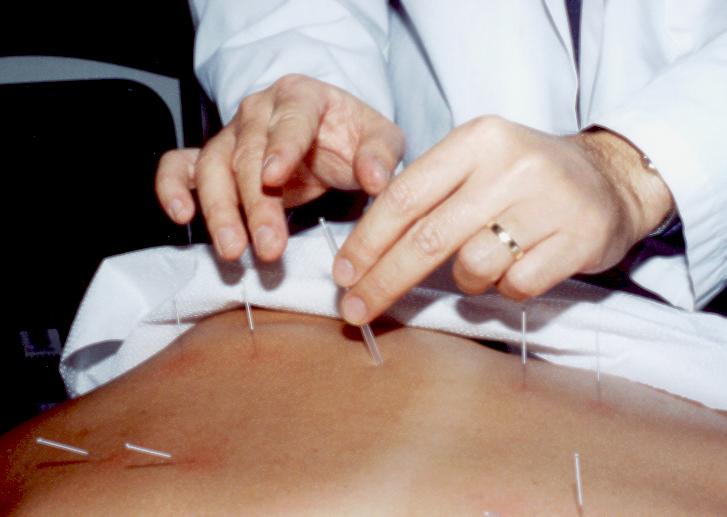

Traditional Chinese medical theory believes that there are many acupuncture points on the body connected by meridians (pathways). These meridians conduct Qi, which could be regarded as a form of energy, between the surface of the body and its internal organs. Qi is believed to help balance and maintain harmony in the body. Acupuncture has been proven to stimulate the release of opiate-like hormones and normally induces a state of deep relation, balance and healing. Another theory suggests that pain impulses can be blocked at various "gates" by stimulating certain acupuncture points.
In the late 1970s, the United Nations� World Health Organization recognized the ability of acupuncture to treat over 30 diseases. The list included:
* Neuromusculoskeletal conditions (i.e. arthritis, neuralgia, insomnia, dizziness, and neck/shoulder pain)
* Emotional and psychological disorders (i.e. depression and anxiety)
* Circulatory disorders (such as hypertension, angina pectoris, arteriosclerosis and anemia)
* Addictions to alcohol, nicotine and other drugs
* Respiratory disorders (such as emphysema, sinusitis, allergies and bronchitis)
* Gastrointestinal conditions (such as food allergies, ulcers, chronic diarrhea, constipation, indigestion, intestinal weakness, anorexia and gastritis).
In 1997, a consensus statement released by the National Institutes of Health found that acupuncture could be useful by itself or in combination with other therapies to treat addiction, headaches, menstrual cramps, tennis elbow, fibromyalgia, myofascial pain, osteoarthritis, lower back pain, carpal tunnel syndrome and asthma. Other studies have demonstrated that acupuncture may help in the rehabilitation of stroke patients and can relieve nausea in patients recovering from surgery.
Many people wonder if acupuncture treatment is painful. Acupuncture needles are sterile and disposable. They are much thinner than hypodermic needles. Most people feel little or no pain as the needles are inserted. Some people soon discover that the experience is quite pleasant. The sensation could range from excitement to deep state of relaxation. Occasionally, a small number of patients who are extremely sensitive may find needling uncomfortable. However, other methods based on the same principle as acupuncture but without needles may be used. These methods may include: Acupressure, Tui Na, Moxabustion or Gua Sha.
When you are ready for your first appointment, you should eat within three hours prior to the treatment. Typically, the patient may be asked to complete an extensive form about your background information. Then, an acupuncturist will begin by taking a complete health history, followed by a comprehensive intake. Patients are encouraged to bring any relevant medical reports or prescription medication with them so that the acupuncturist can get a complete picture of your health status. The physical exam may consist of pulse and tongue analysis as well as abdominal palpation. When the acupuncturist has arrived at a working assessment, ten to twenty acupuncture points will be selected and needles will be inserted. These needles will be retained for 15 to 20 minutes. During this time, manual or electro-stimulation may be applied to maximize the acupuncture�s effect. After the treatment, the acupuncturist may recommend Chinese herbal medicines if they are deemed to be helpful..
Many people find significant relief of symptoms after the first treatment. However, most health problems take more than one treatment to resolve. Expect to have about five treatments before a reassessment. Some chronic problems may require ten or more treatments before significant benefits accrue. Along the way though, you should see an overall improvement in your health.
Acupuncture is extremely safe when practiced by a qualified practitioner. New York State has stringent requirements for the licensing of acupuncturist. Most acupuncturists are very well trained. Many have a Masters degree or other advanced degrees. Some also have other allied health care backgrounds such as physical therapists, nurses or pharmacists. Acupuncture needles are disposable and sterile. No disease can be transmitted. However, if you have the following conditions, you should notify your acupuncturist before undergoing treatment.
* If you have a pacemaker.
* If you bleed or bruise easily or on any anticoagulant drugs.
* If you faint or experience vertigo frequently.
Your acupuncturist will give you a thorough evaluation to decide whether acupuncture is appropriate for you.