|
Information on Various Technologies Emerging in Kathmandu Valley |
|
|
last updated 08/03/04 |
 download
 gallery gallery |
|
Wireless Local Loop For Basic Telephony
Using CDMA United Telecom
Limited (UTL) is a consortium of four companies who have come together
in a joint venture, to explore various telecom opportunities in
Nepal. Out of four partners, three
are the major telecom players in India and the fourth one is a local
partner i.e. Nepalese Company. It's project is based on CDMA 2000 1x
having capacity of 50,000 subscriber. WLL-CDMA technology, which is
wireless based, is ideally suited for hilly regions of Nepal as well as
congested cities like Kathmandu where it is extremely difficult to lay
the cables. UTL commenced its Basic telephone services on WLL from
Kathmandu city. By First Year, it will expand its network to whole
valley i.e. Kathmandu, Lalitpur and Bhaktapur. In the second
and third year of operation, minimum ten more cities
are planned to be covered. System is degsined by LG company of
Korea. Intially for one year, service is run with 14 BTS ( 4FA/3
sector).Target to expand upto 45 BTS.
Click here for more about WLL and CDMA............ |
International Engineering Consortium
|
|||
|
Digital Video Broadcasting Using MPEG-2 Channel
Nepal is among the Nepal a first public broadcaster to digitally
transmit via satellite. The Thaicom-3 satellite is used for
digital transmission. The success of this innovation depends on the
acceptance of international standards. Channel Nepal has opted for the
latest norm developed in sds Asia, and is the first program
provider to use it: Digital Video Broadcast (DVB). A technique, which
enables the transmission of digitally compressed audio, video and data
signals in the MPEG-2 standard (Motion Pictures Experts Group),
recognized almost everywhere in Asia.
Click here for more about Digital Video Broadcasting............ |
|||||
|
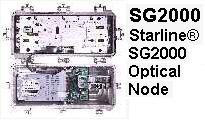
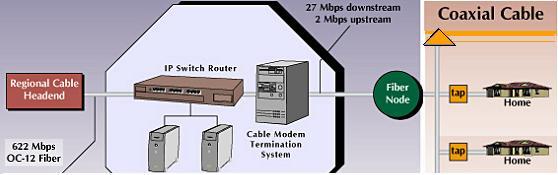
Hybrid Fiber Coaxial Network With over 7 years of expertise, Space Time Network (P.) LTD is a leader in providing premier communication solutions for the quality cable TV system in the Nepal. It all started in April 1993 when Space Time Network was granted a license from the Ministry of Information and Communication. A cable television system is in essence a method of distributing television, radio, and data signals from a central originating location to residences and businesses by three different distribution ways- 1. Coaxial cable distribution. 2. Hybrid Fiber Coaxial cable distribution. 3. Terrestrial distribution. Amoung these we select HFC Cable distribution, It consists of three main elements. First is the headend, which is the point at which all the program sources are received, assembled, and processed for transmission by the distribution network. Second is the distribution network, consisting of Fiber and coaxial cables. The optical signal leaves from the headend through fiber cable on power or telephone company poles or, in some cases, buried underground, and going down each street within the community serviced to the nodes then the signal has converts optical signal in to the electrical signal at the node. The electrical signal further distributes through coaxial cable going down each street within the community serviced. Third is the subscriber drop, which consists of the coaxial cable going from the street into the individual subscriber's home, and the related equipment required to connect the cable to the subscriber's television receiver and other devices.
Click here for more about HFC for Cable TV & Cable Modem...............
|
||||
|
|