Coronavirus
- S,
E, M, and N
u
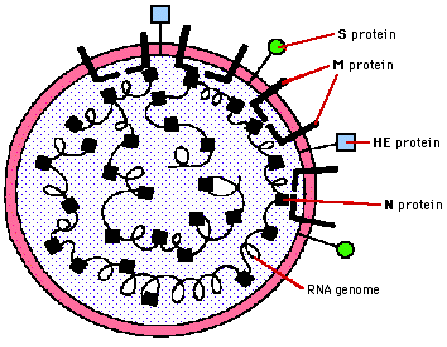
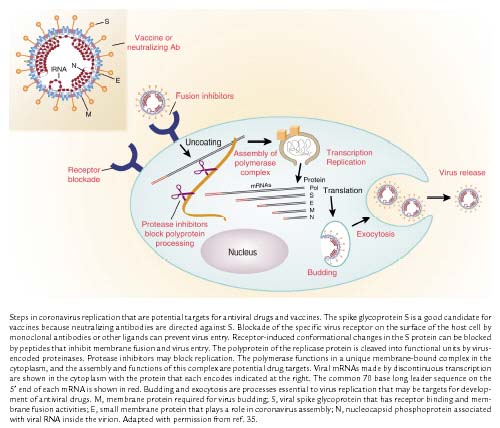
The structural proteins of coronaviruses (S, E, M, and N)
function
during host cell entry and virion morphogenesis and
release.
u
During virion assembly, N binds to a defined packaging signal on
viral RNA, leading to the formation of the helical
nucleocapsid
u
M
is localized at specialized intracellular membrane structures,
and interactions between the M and E proteins and
nucleocapsids
result in budding through the membrane
u
The
S protein is incorporated into the viral envelope, again by
interaction with M, and mature virions are released from
smooth vesicles
u
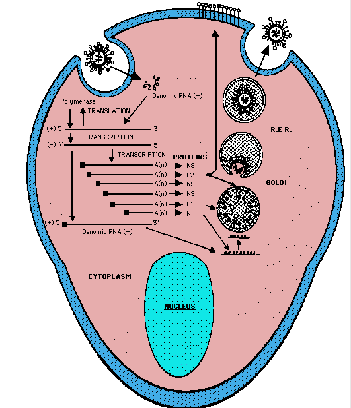
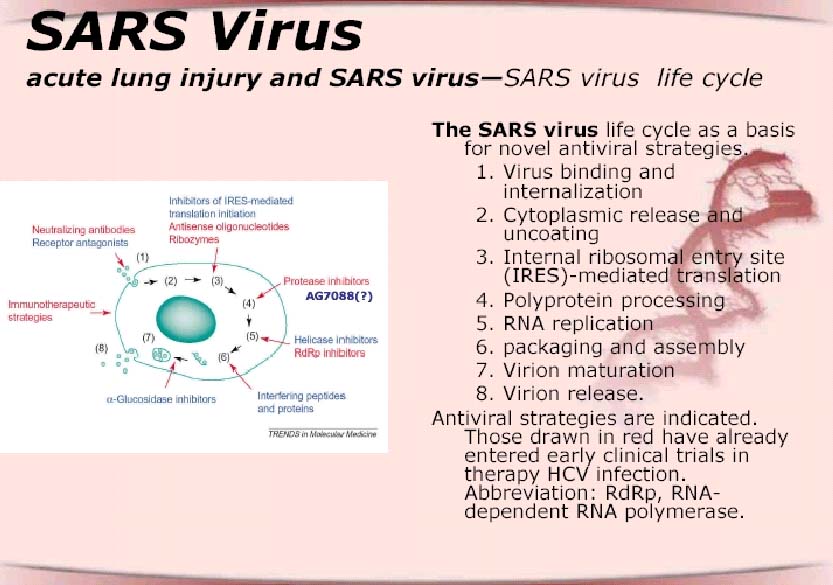
Entry occurs via endocytosis & membrane fusion
(probably mediated by E2).
u
Replication occurs in the cytoplasm
u
Assembly occurs by budding into the
golgi apparatus, particles being
transported to the surface of
the cell by the secretory nature
of this organelle & released.
u
The genome of SARS-CoV is a 29,727-nucleotide, polyadenylated
RNA,
and 41% of the residues are G or C, has
11 open reading frames.
u
The
genomic organization
(5’-replicase [rep], spike [S], envelope [E], membrane
[M],
nucleocapsid
[N]-3’) and a short untranslated regions at both termini.
u
Phylogenetic analyses and sequence comparisons showed that
SARS-CoV is not
closely related to any of the previously
characterized coronaviruses
u
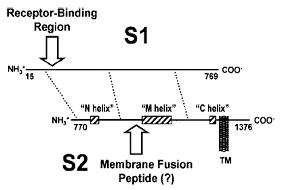
type I membrane glycoproteins :
responsible for both binding
to receptors on host cells
and for membrane fusion.
u
S
proteins also contain important virus-neutralizing epitopes
u
amino acid changes in the S proteins can dramatically
affect the virulence and in vitro host cell tropism of the virus

 SARS-CoV
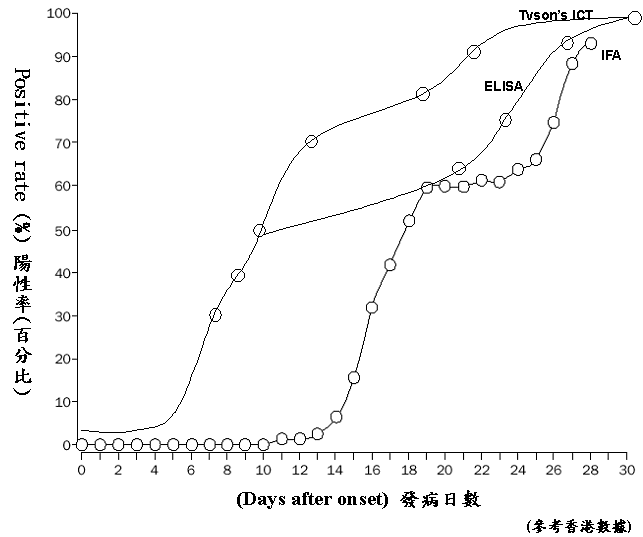
diagnosis within 15 mins
SARS-CoV
diagnosis within 15 mins