|
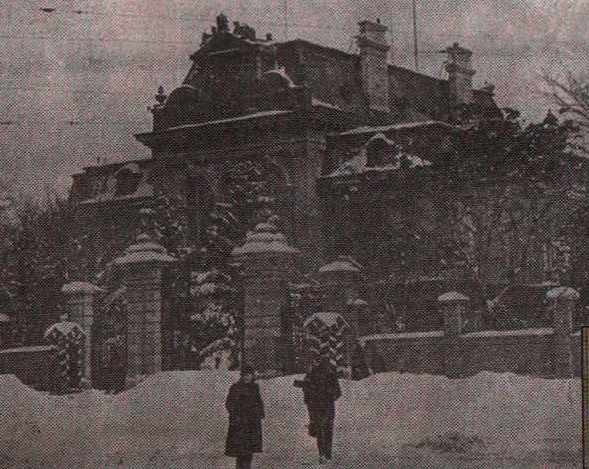
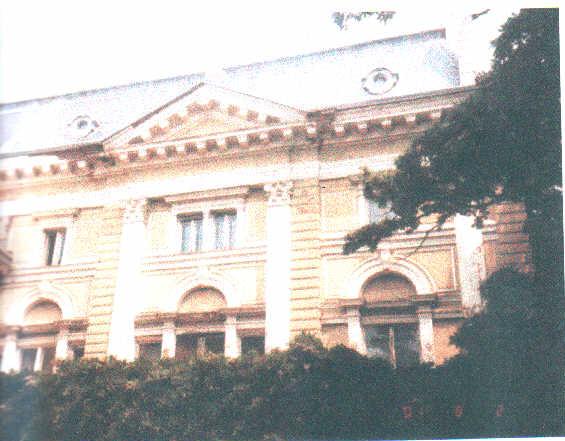
and King's Palace in Sofia, BULGARIA |
|
|
|
|
|
and King's Palace in Sofia, BULGARIA |
|
| MESSERSCHMITT FOUNDATION
- Munich is the biggest private foundation in Federal Republic of Germany
for maintaining and preserving cultural monuments of German origin
both in Germany and beyond its borders.
It was founded at 1969 by Prof. Willy Messerschmitt and at the beginning his aim was to support scientific investigations in aeronautic and space studies. Later the goals of the foundation were changed to the cultural field. With a capital of 300 million DM today MESSERSCHMITT FOUNDATION spends over 10 million DM annually for its goals. It is one of the best known foundations in Germany and Central Europe. MESSERSCHMITT FOUNDATION is the first private foreign organization donating money for the restoration and renovation of the King's Palace in Sofia and this fact is highly appreciated not only by the Bulgarian government, but also by Bulgarian people. The idea about preserving and restoring of King's Palace as one of the most precious architectural and historical monuments in Bulgaria comes from Dr. Silvia Petrova from Sofia, who did a survey about the history of the Palace and established its strong relations to German culture.
|
Mrs. Dr. Vesselinka
Petrova-Koch, Bulgarian physicist in TU-Munich, was the person that
established the first contacts with the Foundation through Prof.
Dr. Ing. Otto Meitinger - member of the board, ex-president of TU-Munich
and famous German architect. With patriotic enthusiasm and persistence
in protection of cultural and historical heritage of Bulgaria, Mrs. Koch
was the engine that pushed the project.
|
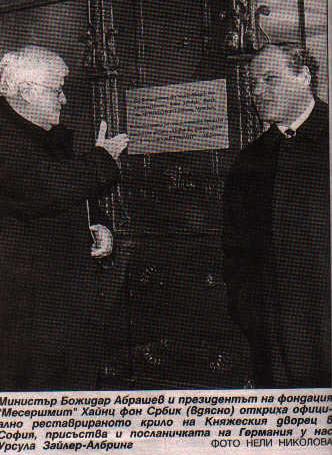 |
At 23 of November 2001, after completing the first stage of restoration of King's Palace, a thankful plate to Messerschmitt Foundation was installed on the facade. The ceremony was attended by Prof. Abrashev-Bulgarian Minister of culture, Mrs. Ursula- Seiler-Albring - German ambassador, Mr.H.von Srbik and prof. Meitinger from Messerschmitt Foundation, Mr.Peter Neri-President of Keim farben, Mrs.Vesselinka Petrova-Koch and Prof. Frederick Koch, a lot of members of the Parliament, guests and journalists. The ceremony was broadcasted by radio, television and newspapers. | 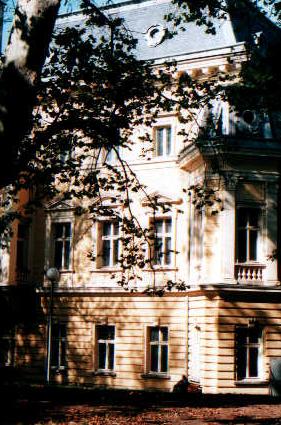 |
| At June 2002 in favour of Bulgarian-Bavarian friendship Messershmitt Foundation donated additional amount of 100 000 EUR in order to continue the restoration of King's Palace Sofia. Project has to be completed by EKSA company until June 2003. |