| If you are adventuresome and would like to make your own costume, go down to the bottom of the pages for some suggestions. |
| I thought I'd include some pictures of period costumes so that folks can get a feel for what is the appropriate garb for the event. Every person attending the wedding must be in a costume. If you come without a costume, you will not be allowed to attend. Remember to think "Medieval" and "Gothic" not "Renaissance." All of the venders in the links below offer ready made clothing in all sizes, including XXXL and Children's sizes. If the description of the item of clothing / accessory has "medieval" or 12th, 13th, 14th, or early 15th century, then it is appropriate. If, however the description is Renaissance or any date after the 15th century, it is too late. Exceptions to the above: if you wish to come in the costume of a visiting foreign dignitary of the same time period, that will be acceptable ( ie. an Aboriginal American of the 11th - 15th Cent., a Representative from one of the African Countries / Tribes of the 11th - 15th Cent., a Member of the Early Ottoman Empire of Turkey, etc.). Just make sure you've properly researched your costume and can play the part. :-) |
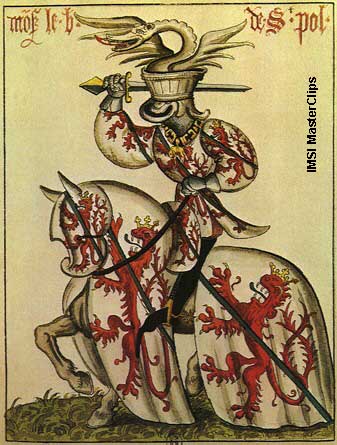 |
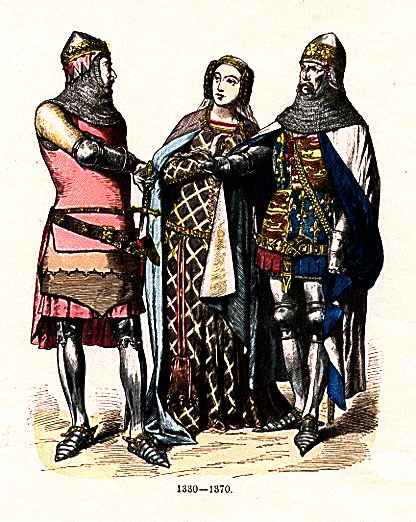 |
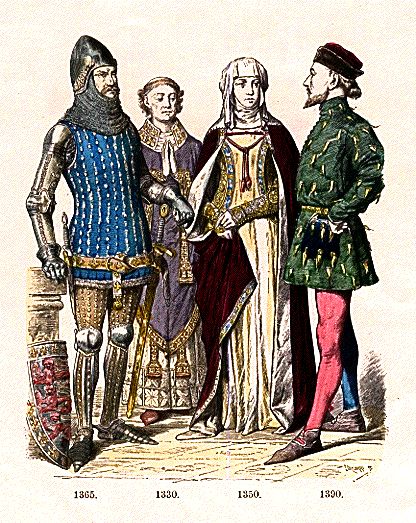 |
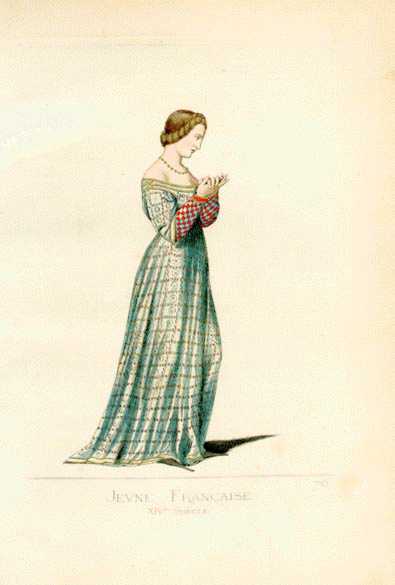 |
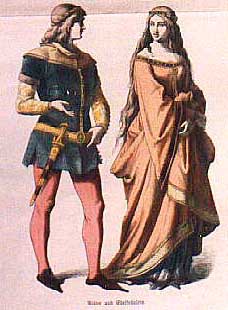
| 13th Century Noblity |
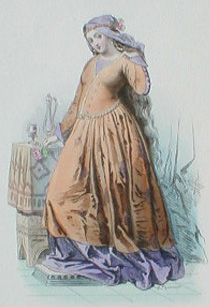
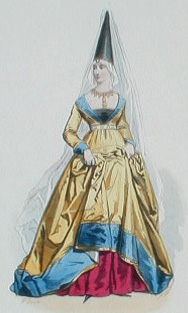
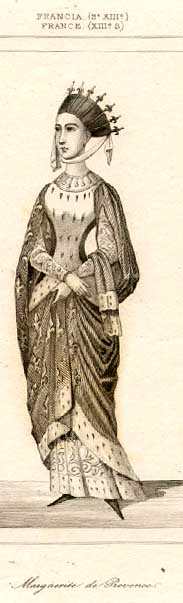
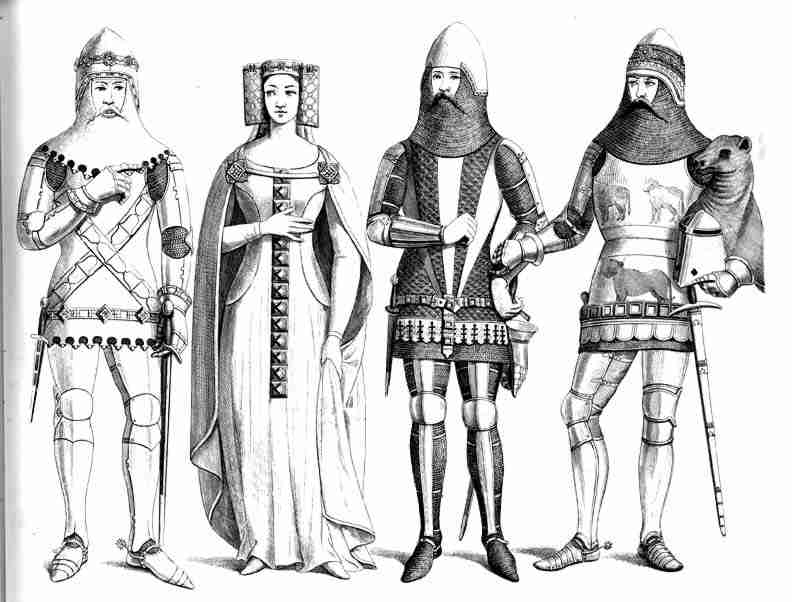
| French Mideval Lady. |
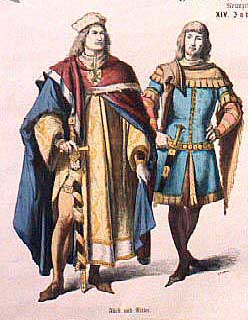
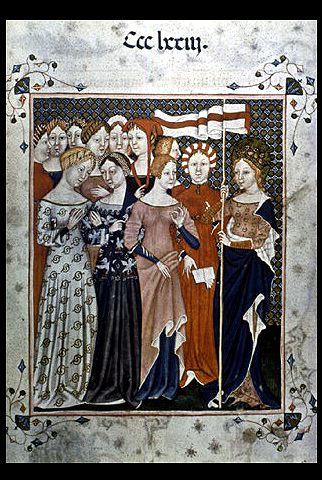
| The dress of 1365s. |
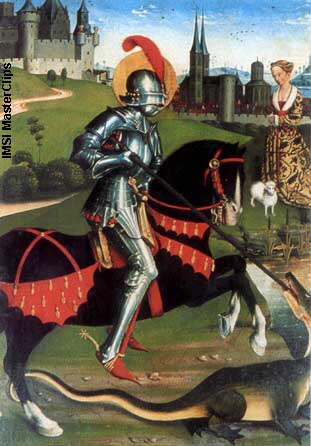
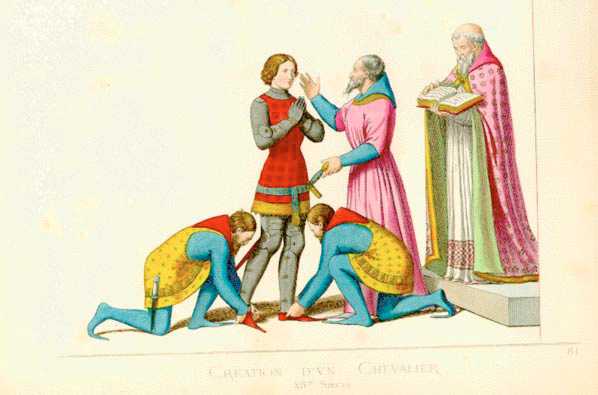
| Mideval Knight and Horse. |
 |
|
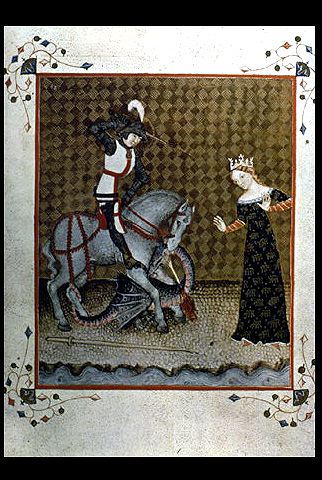
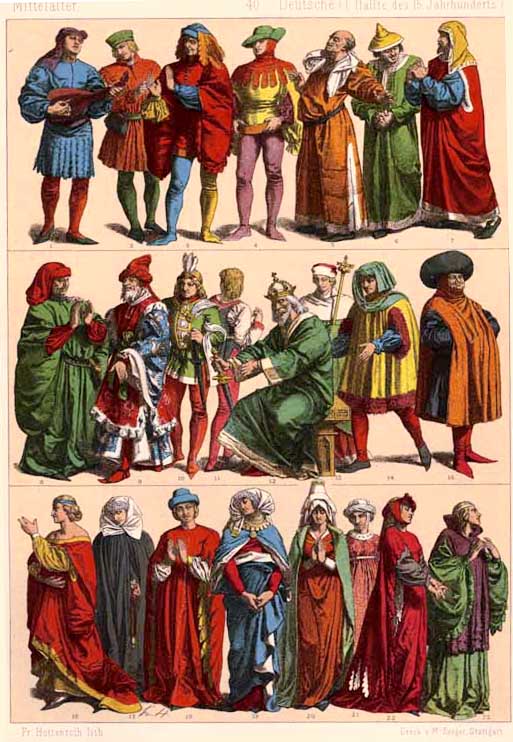
| Young maidens always wore their hair down with lots of ribbons and bows in them. Once a woman married, she had to were her hair up and covered with a vail or a hat. |
| The Medieval Costume |
|
|
| Links to Costume Suppliers |
| An Explaination |
| Here are some images of the attire of the period. Due to the number of images, I've got some examples here, and links to others so that the page will not take too long to load. |
| For the Ladies |
| For the Lords |
| For the Ladies and Lords |
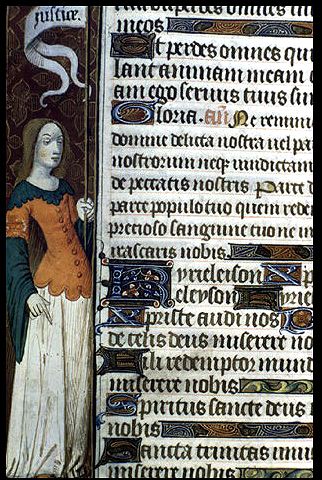
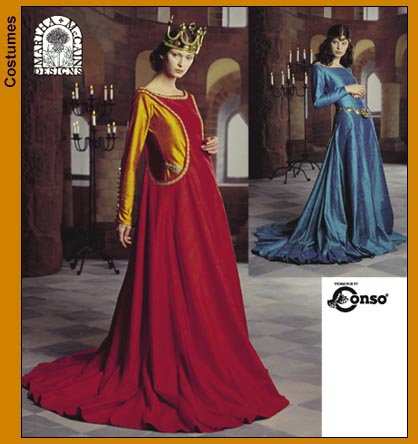
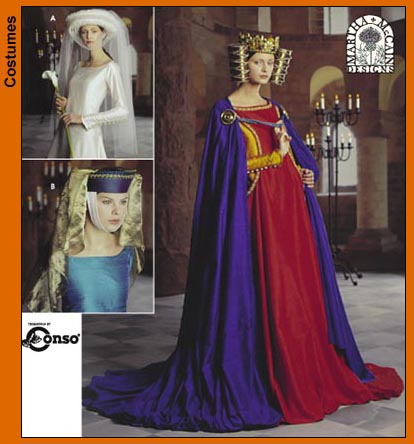
| For the Seamstress |
 |
 |
|
|
|
| Gentlemen usually wore tights or breeches with flat, pointed-toed, leather boots. They wore tunics of various lengths and tightness, depending upon the season, year, and class. Full armor was usually only worn on the battle field as it VERY heavy. Though some individual pieces, like braces, chest and back plates, chain mail and gauntlets would be warn at informal and some formal events. Swards and daggers were commonly warn at all times. |