The Spinal Cord
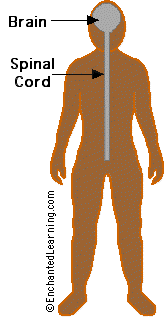
The spinal cord is a bundle of nerves that connects the brain to other parts of the body. It is supported by a series of doughnut-shaped bones called vertebrae, which surround the spinal cord.
The human spinal cord is about 43 to 45 cm long and approximately as wide as a human finger. There are 13,500,000 neurons that transmit electro-chemical signals in the spinal cord. The cord weighs approximately 35 grams. The spinal cord is supported by the vertebral column (bones), which is about 70 cm long and has 31 segments and 31 pairs of spinal nerves.
Structure of a Spinal Cord
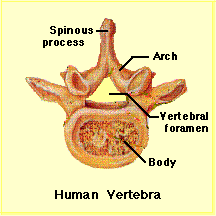
The spinal cord is made up of 31 nerves and vertebrae (or segments). There are 8 cervical (neck),12 thoracic, 5 lumbar, 5 sacral and 1 coccygeal segments. They have different functions.
The cervical or neck nerves control the head and neck, diaphragm, deltoids and biceps, wrist extenders, triceps, and hands.
The thoracic nerves control the chest muscles and abdominal muscles.
The lumbar nerves control the leg muscles.
The sacral nerves control the bowel and bladder, and your sexual activity and function.

